
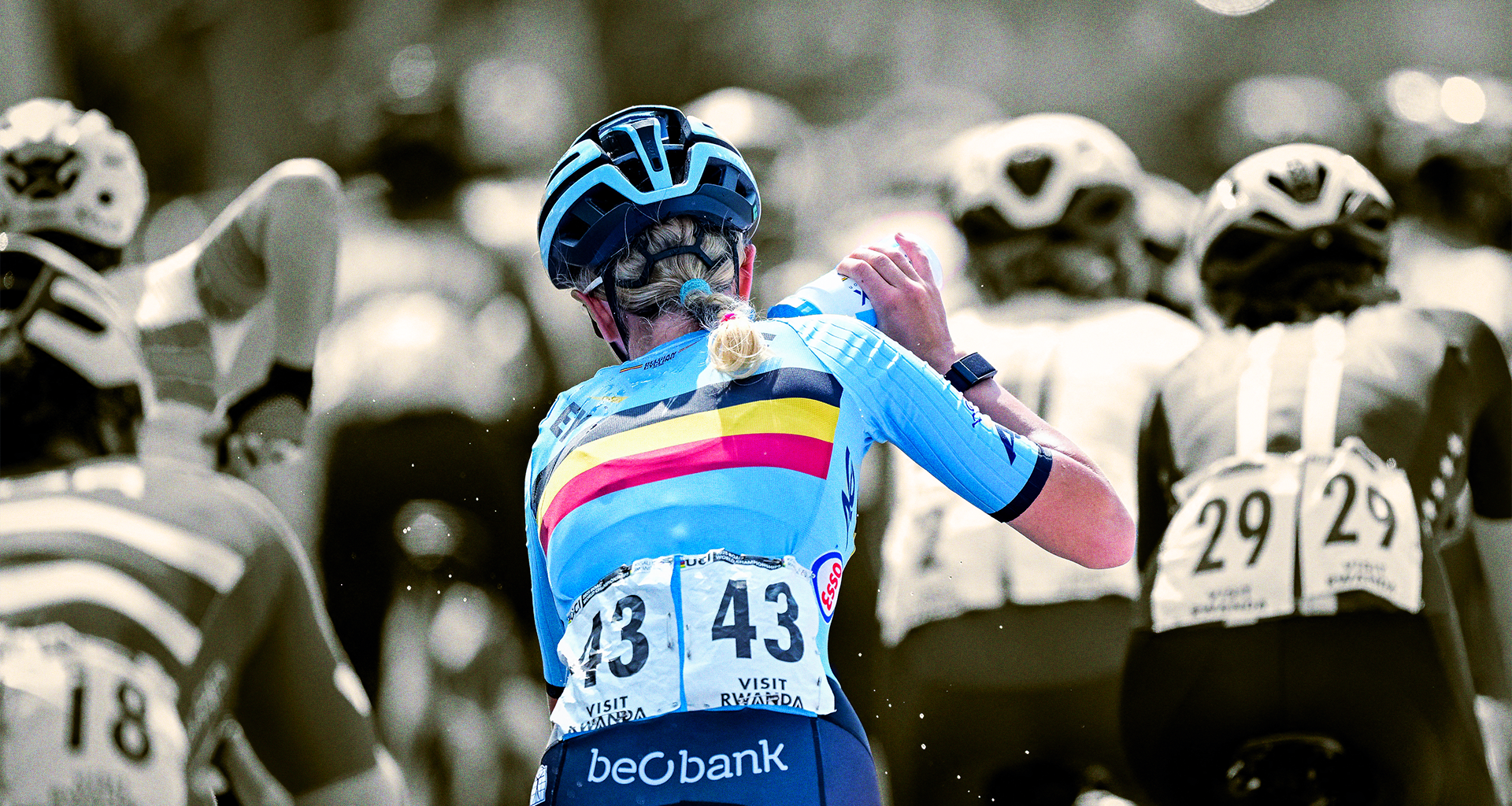
The start of the junior E3 Classic is a strange place. Just a few hundred metres up the road, WorldTour pros are getting ready in warm buses, hordes of fans already surrounding them. Round the corner, on a quiet, residential street, there are 17 and 18-year-olds getting changed in vans.
Some of the riders are actually riding WorldTour teams’ bikes, or wearing their helmets – some even their kit – but here they’re on national team duty, where budgets don’t even stretch to a camper, unless you’re Belgian.
Milling around the basic line-up of vehicles are coaches, parents, and a very small number of supporters. But the most interesting figures are those in expensive coats or team-issue jackets, chatting directly with riders, and getting their number – both metaphorically and literally.
You may like
These people are agents and scouts, here to identify the next generation of talent before they even turn 19, and – ideally – get them on their books.
Have you read these premium features yet?
We know by now that these relationships are starting earlier and earlier, with top riders turning pro straight out of junior ranks, or at least signing for a WorldTour team’s development squad. The fight for the next big star is fierce, and everyone wants to lock talent in early.
‘Scouting’ can come in a lot of different forms, and these days can happen via Instagram DMs as much as anything else, but with agents and scouts on the road throughout the year, it’s clear that nothing beats actually getting out there and meeting riders.
Junior races like E3, or perhaps the junior Trofeo Alfredo Binda a couple of weeks ago, are quietly some of the most important days of the year. Winning is important, yes, but every rider also knows that eyes from the pro ranks will be on them, and a good ride here could be a stepping stone towards a pro contract.
A rider is more than the sum of their watts
When everything nowadays is on ProCyclingStats and Strava, you might think that talent scouts can do all their work from home, just crunching the numbers to find the junior most statistically likely to become a good elite rider. But actually, they’re looking for much, much more than that.
“Personally, I look firstly at the humility of the rider,” Jayco AlUla scout Giovanni Visconti tells Cyclingnews after E3, perhaps not the first quality you’d expect a scout to pick up on.
“I like to speak with them and see how they love their sport and how they try to do their best. Clearly, we also look at the physical values and how it works in terms of results. Another Important thing is the ability to stay in a big group, the ability on a descent, for example. After the race, often I also look at their behaviour with team staff and teammates.”
What to read next
Looking at a rider’s data or power numbers is one element of identifying talent, but when it comes to spotting riders teams might want to tap up for the long term, pure numbers are not enough to go on, and big wins or high power aren’t everything.
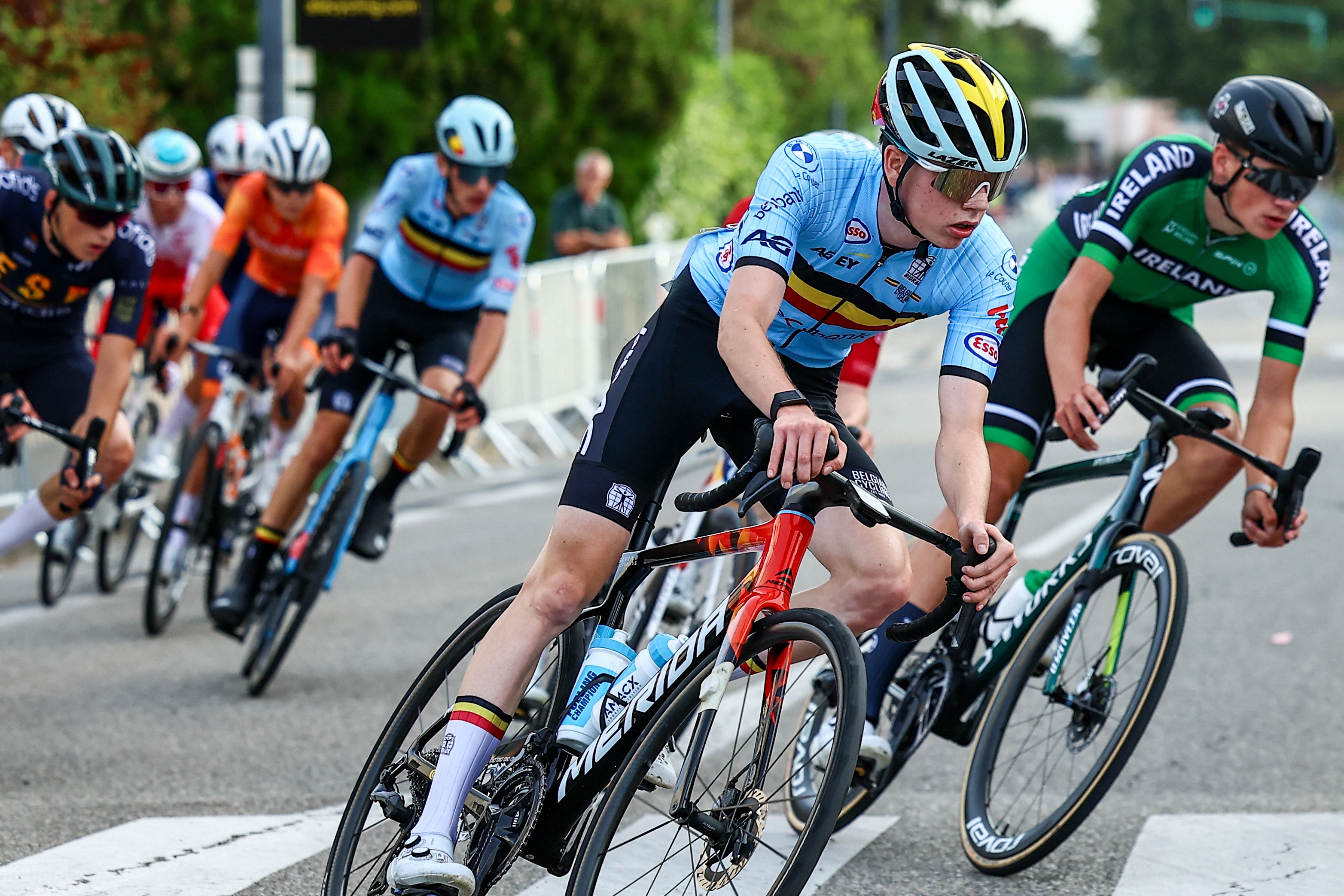
Scouts are often looking for qualitative data over quantitative when searching for next generation’s talents (Image credit: David Pintens/Getty Images)
“Values are really important, but for me they are only the base to start looking at the rider on the road,” Visconti explained. “There are riders with fantastic values that don’t show it on the road and riders who don’t have great values but show more. There has to be a compromise between results and values. From there, you know that you can work to improve.”
At a race like E3, a scout like Visconti will be at the start and finish, but also out on the course, picking out the key moments to go and watch. With no TV footage of these races, and little other reporting, being on the ground is essential.
Visconti spends a lot of his time on the road, and will be looking for specific things at specific races.
“In races like E3, I go to see the ability of the rider to keep positions, to stay in a group in a race with small and difficult roads,” he explains. “If I’m looking for a ‘Classics man’, I’m also watching the ability to read the race, to move in the right moment.”
Representatives from teams are one big part of the scouting ecosystem, but the other big part is agents and agencies. Independent agents might do it all themselves, whilst bigger agencies will have dedicated scouts, but all the agents will also have half an eye on rising riders.
“It’s crazy how competitive it’s getting now on the women’s side. People are looking at under 17s already, which, for me, is insane,” Loren Rowney, former pro and now rider agent at The Team – formerly Wasserman – says.
For Rowney, scouting is a smaller part of her job, as The Team have David Bartlett in that dedicated role, but it’s something she’s attentive to all the same, and takes a lot more than just looking at results, or even just at the main races.
“This is a good example. We had Binda a few weeks ago, and they have the Piccolo Binda race. And that actually came down to a bunch sprint. Now if you just look at the top three there, you’d think ‘OK, it came down to a bunch sprint’ but if you didn’t see the race and didn’t know [how] it panned out and you didn’t know which riders spent time off the front, it would be really hard to know what kind of athlete you’re looking at. Did they just sit in the whole race and then kick at the finish?,” she says.
“Where you can sometimes get a glimmer of the potential of an athlete is coming to these kermesses in Belgium. One of my clients was racing one on the weekend, and the girl who got second at Binda under 19s, a German rider [Edda Bieberle], I was blown away by how she rode that race.
“She had a crack and she put a minute and a half into the peloton, and there were some other strong riders there, but the way that she just attacked the race, I was like ‘this is a rider who has talent’.”

Alex Carera, founder of A&J ALL SPORTS and one of the highest profile cycling agents, signed Tadej Pogačar in 2016, before he turned professional (Image credit: Anne-Christine Poujoulat/Getty Images)
The next steps
Getting onto a talent scout’s radar is very much just the start of the story for any promising rider. A thousand different factors will come into what happens next, whether it’s how they perform in the next races, what a scout thinks of their personality off the bike, what they’re looking for in a team, and much, much more.
“After an impressive performance, I’ll try to find out if the rider has an agent or not so I contact the agent or the rider in some way and ask the permission from his parents to speak with him, and also have access to his training platform,” Visconti explains.
“Then I introduce the rider to our scouting group to discuss and decide how to act with him. From there, we try to keep in contact and see each other again in another race.”
Might there be more performance tests that the team wants to undertake with a rider? Maybe, but that’s probably less common than you think, with less tangible qualities more important to many scouts.
“Sometimes, when looking at their training platform is not enough, or there’s something not so clear, we can ask them to do a short test during their training. Nothing special. I think every team has its protocol. But often we don’t need to ask for a test,” Visconti says.
On the agent side, the goal is somewhat the same, to make connections with talented young riders – and Rowney also points to gaining the trust of a young rider’s parents as a key part of the process. However, the next steps and the aims of the partnership are different.
Agents won’t be testing a rider’s FTP, and indeed the goal of their relationship is often to be a support off the bike to help navigate the journey into pro cycling.
“A lot of WorldTour teams now will admit that they don’t have the means to develop these 18-year-olds, because it’s not just the talent side of things; you’re dealing with a very young human being here,” Rowney says.
“At the races, they’re there in a very safe environment with the team, but once they go home and the races are done, and maybe things didn’t go well, then you’ve just dropped them off in a foreign country and said ‘OK, good luck processing that’.
“And with the demands on WorldTour teams now too, sometimes that’s just not right for you, and for a lot of athletes it’s sink or swim.”
Why so early?
The big question in all of this is, why is this all happening so early nowadays? Why is the start of E3 now half race, half business meeting?
For teams, it’s clear that top riders’ careers are peaking earlier, and in the era of ultra-long contracts, it’s imperative to lock talent in early. You can’t let them be snapped up by someone else. Many team managers also talk about the importance of getting a rider enmeshed in the ethics and working style of a team early, too.
It means that there’s not a lot of choice in whether you get involved with this rat race or not.
“Junior scouting is certainly more important now than in the past. Cycling and sport in general is moving forward quickly. We can’t stop this process,” Visconti says.
“So we have to do our best to try to find talents, but also pay attention to their correct [development] and give them the best to grow up well, without forgetting that they are so young and life is not only cycling.”
On the agency side, the very fundamental reason is that the sooner you sign a rider, the sooner you can be taking a cut of their salary, which these days can be huge even for very young riders. Rowney admits that, like in any industry, there will be agents more motivated by that than anything else, but many are also very interested in caring for and nurturing their clients, particularly the youngest ones, and perhaps not pushing the pro pipeline too soon.
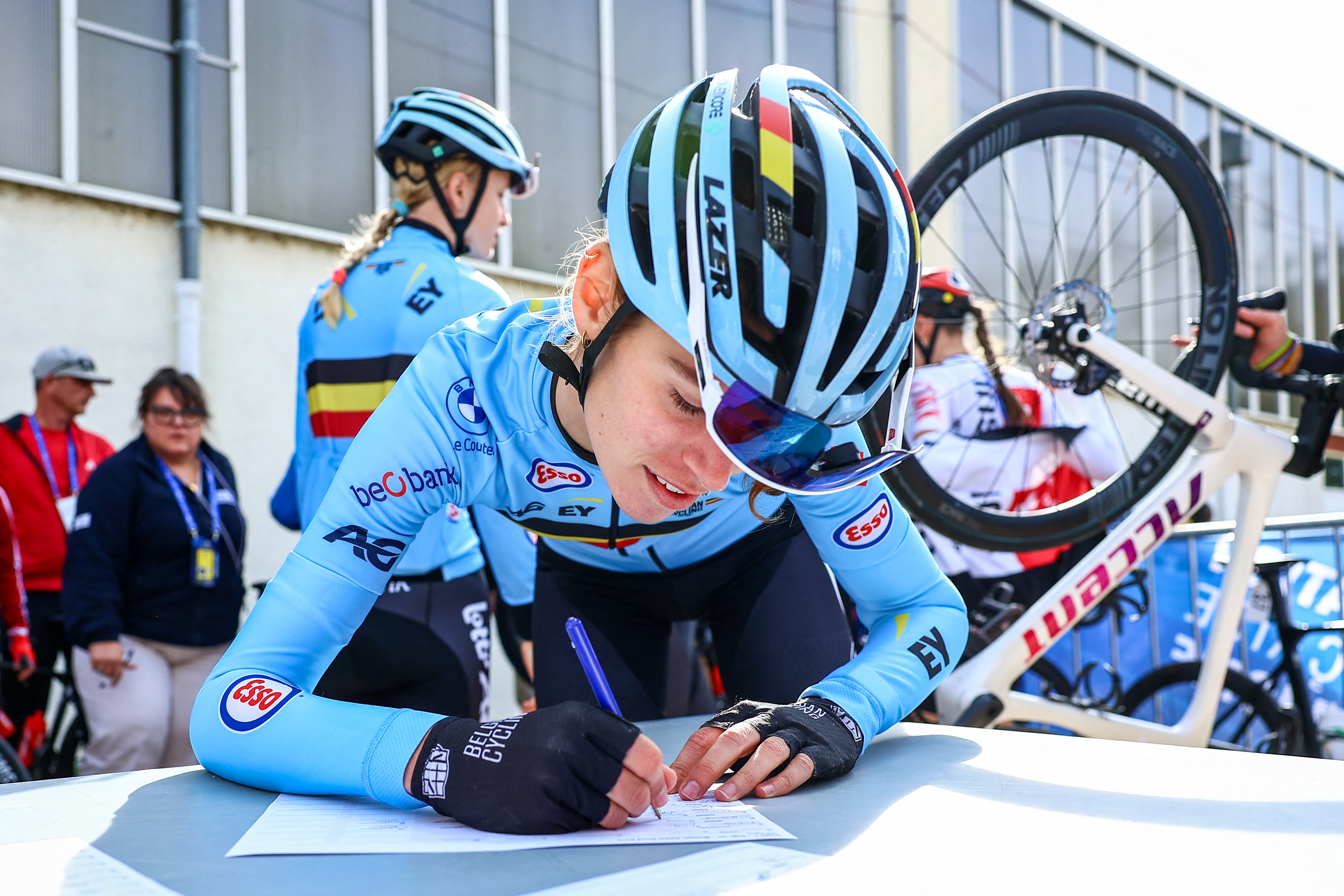
As professional cyclists peak sooner and sooner, scouts and agents put greater focus on the junior levels of the sport (Image credit: David Pintens/Getty Images)
“OK, you can have those generational talents like Cat Ferguson, but for both men and women – women more so when you consider our hormones and everything – just because you’re a phenomenal under-17 doesn’t necessarily mean it’s going to translate into being an elite athlete. Plus at that age, they shouldn’t feel that pressure,” she says.
“You can still start learning the aspects of what it means to be an elite athlete and what that looks like, the importance of good food, recovery, all those sorts of things, you can learn as a junior, but the pressure now on these young athletes is insane. And I do wonder sometimes about the emotional toll it’s taking.”
Navigating contracts is one part of an agents job, but many also help riders get set up with a new home, help them find proper rehabilitation after injuries, and many other smaller, more pastoral things.
From the outside, watching the start of E3 and prevalence of scouts, it’s easy to wonder if young riders are becoming commodities for teams and agents to fight over, or if the two sides of the scouting world are at odds, trying to get to talent before the other.
“I’ve never really though of it as like, we’ve got to get to them before they get to a team,” Rowney says. “But I’m sure that is why some agents are trying to sign under-17s, to get in there before they start making any decisions.”
“There are many agents now and they are working more every year with young talent, so we have to work with them,” Visconti adds.
“Sometime it’s easy, sometimes it’s not, but it’s part of the game. It’s not so important to find riders without agents, I think most important is that agents can give the right advice to their riders, not forgetting that the family must be the first place where important choices should come from.”
At E3 juniors, Italy’s Brandon Fedrizzi won the race, whilst Matilde Rossignoli won the important Piccolo Binda. Edda Bieberle, the second-placed rider Rowney spoke about, has already taken two more wins in Belgium since then.
These might not be names you know yet, but talent scouts will know them and everything about 50 other talented riders, too. Whether it’s on a quiet street in Belgium or in an Instagram DM, the process of unleashing the next generation of talent has very much begun.