
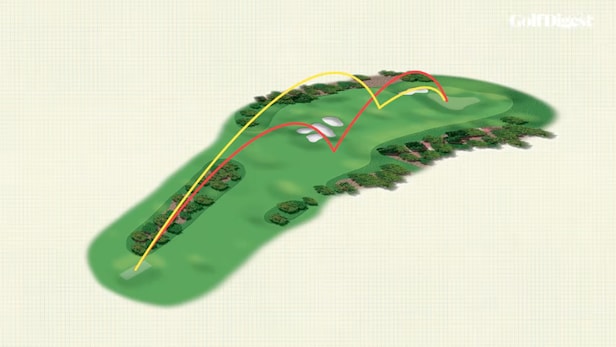
Augusta National is filled with iconic golf holes. But maybe the most interesting one happens not on the back nine, but early in the round: The third hole, one of the few holes at the Masters that’s never really been changed since its inception in the 1930s. Yet it holds up, creating a genuine strategic divide that pits tour players against their own analytics guys.
The hole is about 350 yards, a driveable par 4 on paper. But the green is elevated 30 feet in the air and the slopes are severe, so nobody actually does. When the pin is tucked on the tiny shelf on the left side of the green, like it was on Sunday at the 2025 Masters, that’s when things get interesting. Justin Rose laid back. Bryson DeChambeau laid back. Rory McIlroy hit driver. After his victory, he called the chip he hit as his approach the best shot of his final round.
Advertisement
So who was right?
The answer is that there’s no clear winner, but there’s a lot that the hole can teach us about tee-shot strategy more generally.
You can dive deeper into our most recent episode of Golf Digest’s The Game Plan right here:
When to get aggressive off the tee
Scott Fawcett of DECADE Golf has a simple framework for this: Ignore the rough and, instead, focus on the gap between actual penalty hazards.
With this in mind, golfers should get aggresive off the tee when:
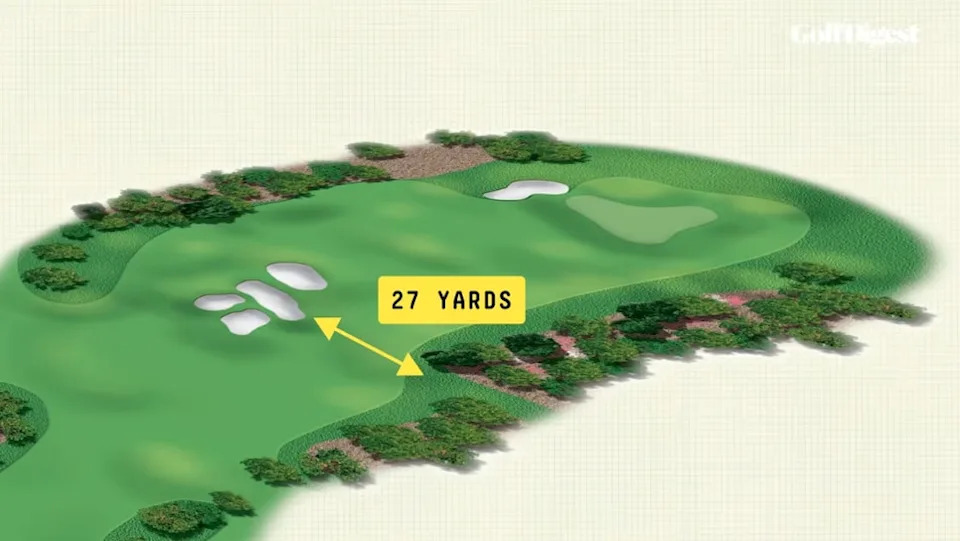
The gap between penalty hazards is bigger than their normal left-right dispersion window
They can carry the far edge of any bunker bottleneck with their driver
The green is relatively flat and pins are accessible; that’s when every yard closer matters
/content/dam/images/golfdigest/fullset/2022/Screenshot 2026-04-01 at 12.00.52 PM.png
At the third, most players carry the last bunkers at 280 yards. From about 40 yards short of the green—where most drives end up—it’s 83 yards wide between the trees. The tee shot math says driver all day, which is why Fawcett got into a heated public debate with Colt Knost when the tour pro turned TV commentator suggested laying back was the play.
Advertisement
So why do players lay back? Well, because the genius of the hole is that it gives you conflicting signals.
When to lay back off the tee
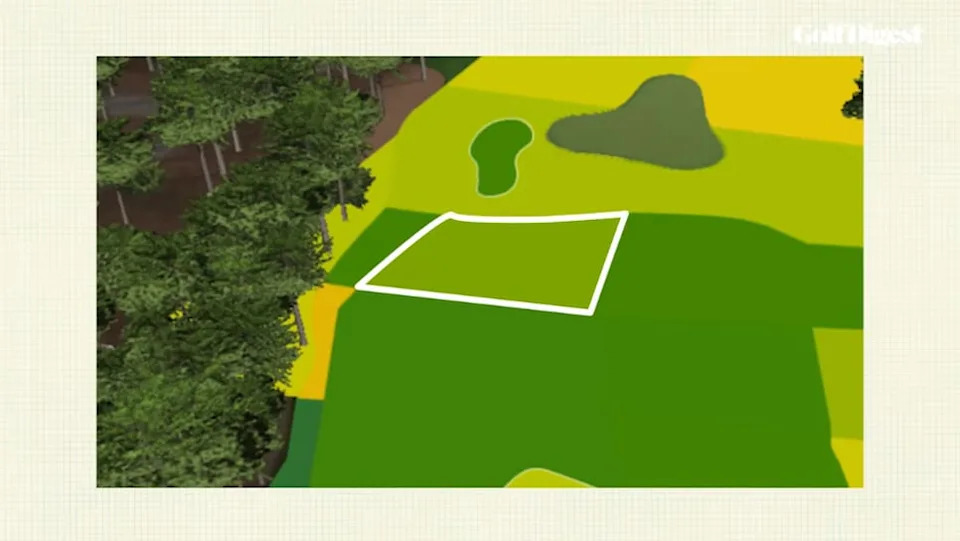
Here’s the complication: Just short-left of the green sits a little valley, and players who find it off the tee actually average a full shot higher than players who end up further back. Lay back when:
The pin is so inaccessible that everyone’s bailing to the same spot anyway; extra distance off the tee buys you nothing
Getting too close creates a short-sided specialty shot you can’t reliably execute
The elevation or slope means a stock shot won’t stop. here, the 1:1 rule adds 10 yards of roll to an already tiny target
/content/dam/images/golfdigest/fullset/2022/Screenshot 2026-04-01 at 12.00.42 PM.png
That last point is what makes this hole so tricky.
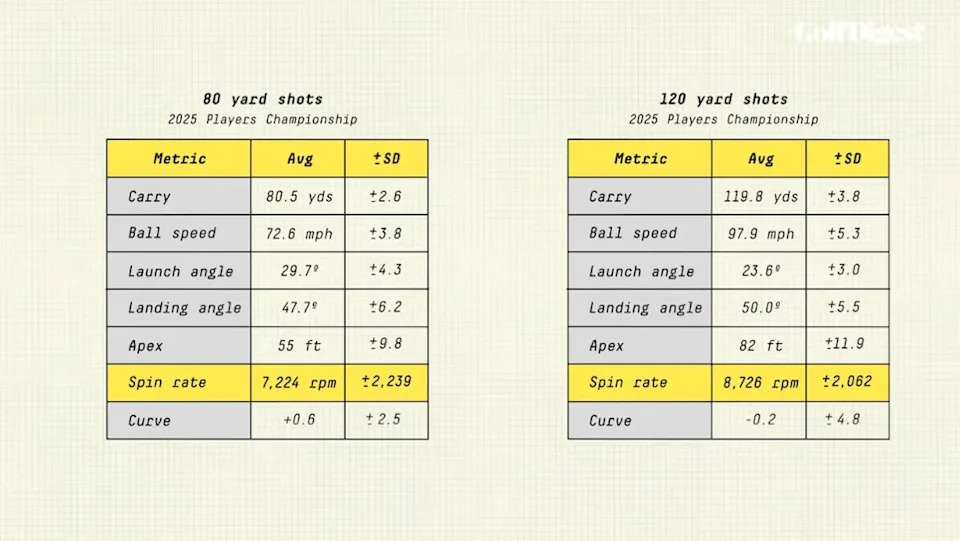
To stop the ball from that short-sided valley, you need a high-spin specialty shot producing around 8,000 RPMs—compared to the 5,000 RPMs of a normal 40-yard pitch.
Rose and DeChambeau laid back to 80 and 120 yards respectively, where normal wedge spin rates naturally hit that 7-9,000 RPM window. Boring shot, better outcome.
/content/dam/images/golfdigest/fullset/2022/Screenshot 2026-04-01 at 12.01.51 PM.png
The way pros rationalize it: you’re hitting one easy shot and one hard shot either way. Laying back just lets you pick the hard shot you’d rather face.
Advertisement
On paper it probably makes sense to push driver—but golf isn’t played on paper. It’s played on grass, where the task for players is to choose a shot they can commit to and execute. And the brilliance of Augusta’s third hole is that it gives you two vastly different options to accomplish that task.