
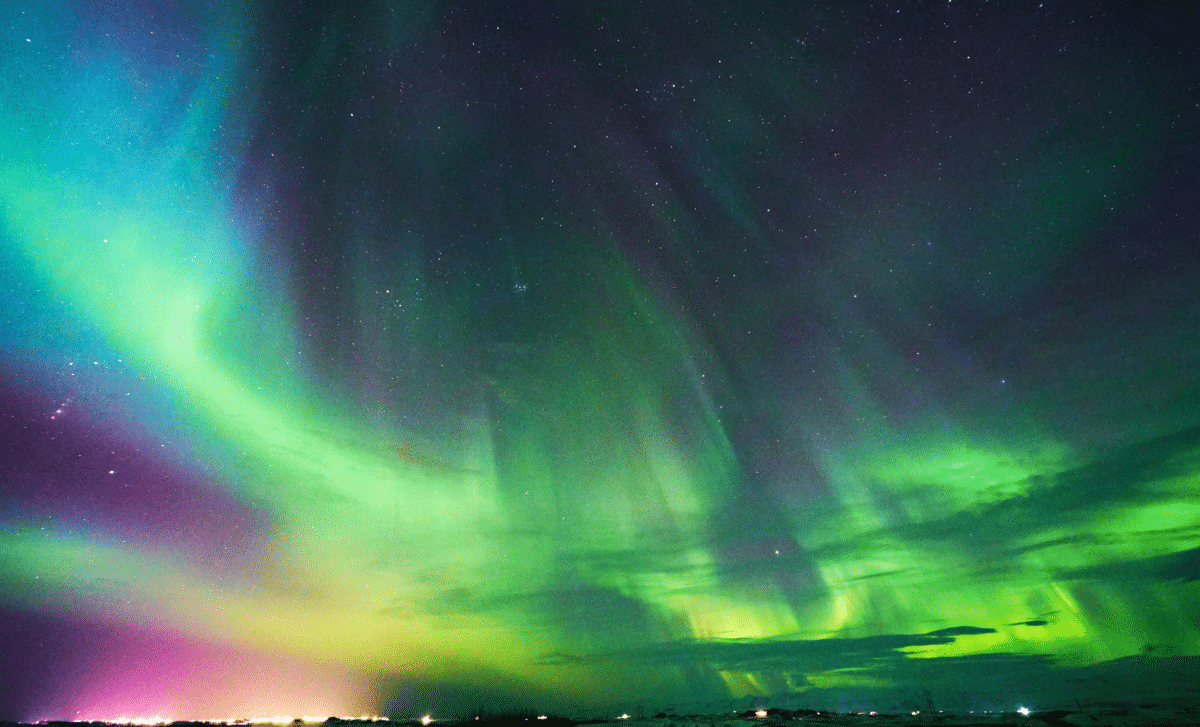
A rare and stunning display of the northern lights could grace the skies tonight, March 31, 2026, as Earth prepares for an impact from a speedy coronal mass ejection (CME) launched from the Sun. This event, tracked by NOAA, promises to light up the skies from Alaska to Wyoming, offering a once-in-a-lifetime spectacle for stargazers across 16 U.S. states. The potential geomagnetic storm triggered by this CME could intensify auroral displays, making this an extraordinary opportunity to witness nature’s cosmic light show.
The CME: What’s Happening in Space?
A coronal mass ejection (CME), an enormous burst of solar wind and magnetic fields, is currently racing toward Earth at a staggering 1,118 miles per second (1,900 km/s). This CME, which erupted during an X.1.4 solar flare on March 30, 2026, is expected to graze Earth’s magnetic field, causing a moderate geomagnetic storm. While the CME isn’t predicted to directly hit Earth, a glancing blow is enough to produce visible auroras far south of their typical locations.
The arrival of this solar phenomenon is significant not just for its potential to create dazzling auroras, but also because it highlights the active and dynamic nature of our Sun. Such CMEs can impact communication satellites, power grids, and even GPS systems, making space weather a growing area of study.
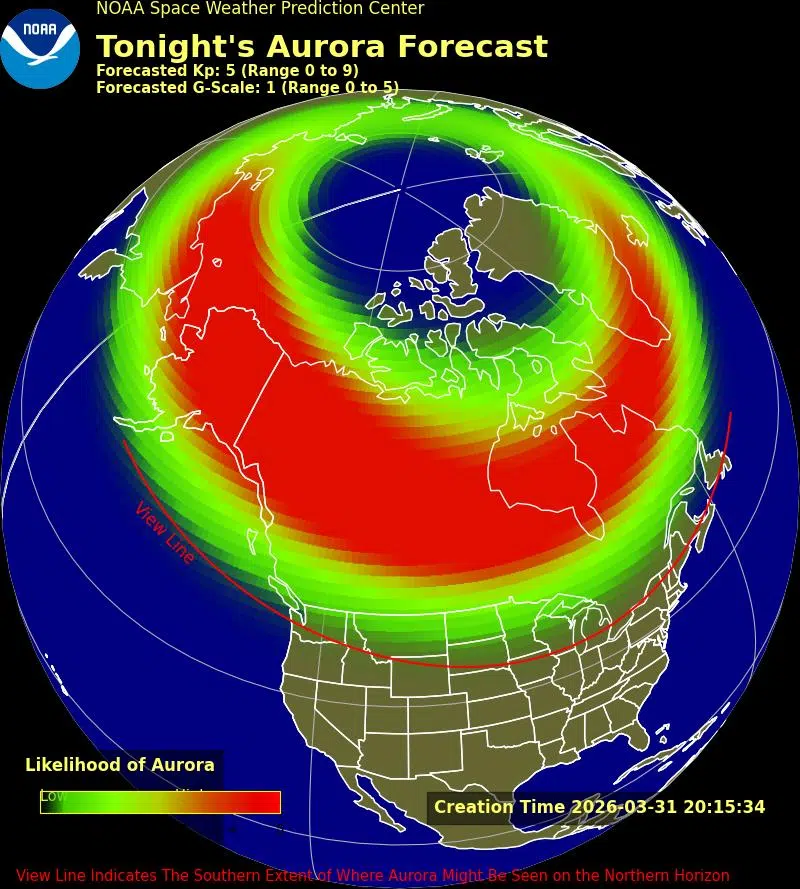 Credit: NOAA
NOAA’s Aurora Forecast: Where to Look
According to the latest aurora forecast from NOAA, the CME could cause geomagnetic storm conditions tonight, visible from the northern U.S. to parts of Canada. The 16 U.S. states that could see the auroras are:
Alaska
North Dakota
Minnesota
Montana
Wisconsin
South Dakota
Idaho
Michigan
Maine
Vermont
New Hampshire
Washington
Oregon
Iowa
New York
Wyoming
These areas are either fully or partially within the aurora view line, a region where the geomagnetic storm is predicted to have the most visible effects. The northern lights, also known as auroras, are caused by charged particles from the Sun interacting with Earth’s magnetic field, creating bright, colorful displays in the night sky. While auroras are most commonly observed near the poles, tonight’s solar event might bring the aurora as far south as parts of the U.S. Midwest and Northeast.
Best Times and Locations for Viewing
If you’re hoping to catch the northern lights tonight, timing and location are key. According to the latest forecast from NOAA, geomagnetic activity will likely ramp up before nightfall, peaking in the evening hours. The best time to view the auroras will be from 5 p.m. to 2 a.m. (April 1), with the most intense activity expected between 9 p.m. and midnight local time. However, this is subject to change, depending on the timing and intensity of the CME’s impact.
For the best experience, head to a dark location with a clear view of the northern horizon. Avoid city lights, which can obscure the faint glows of the aurora. It’s also important to give your eyes time to adjust to the darkness (about 20-30 minutes) for the best chance to see the aurora in full color. Dress warmly, as the northern U.S. can be cold at night, and be prepared for the aurora to appear suddenly and disappear just as quickly.