
Artificial intelligence (AI) is increasingly changing workplaces and threatening jobs, but students of AI planning a career in the area are among those facing the most precarious of futures.
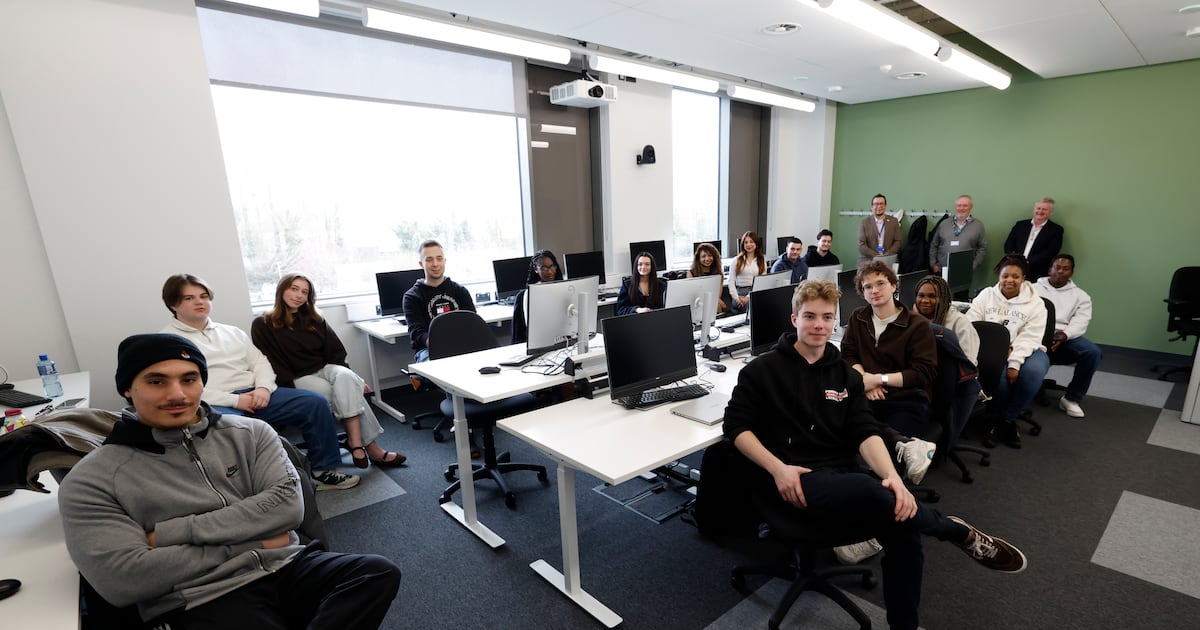
“Do I think my job will be replaced?” asks computer science student Samuel Attila Zemes at the Tallaght campus of the Technological University Dublin. “No, because I think you need people for the management of all of these resources.”
The Slovakian fourth-year student is not alone in being positive on the future in an uncertain time of rapid change. The UK’s National Foundation for Education Research found last year that the number of tech jobs there had declined by 50 per cent over five years.
The Irish Times is visiting the Tallaght campus to speak to students of AI about the prospect of them finding jobs with all the rapid changes that the technology is bringing to workplaces.
More than 600 students are on undergraduate and postgraduate AI courses in Ireland including those at Tallaght. About 100 are pursuing a master’s degree in human-centred artificial intelligence, a course intended to equip those entering the field with a knowledge of how the technology can be best utilised to benefit people.
 Student Mercy Igbinosun at the computer sciences department at TUD Tallaght. Photograph: Nick Bradshaw
Aside from night students looking to upskill in their current jobs, most students at Tallaght seeking part-time work have seen first-hand how AI is changing the world of work.
A couple of students tell The Irish Times how they struggled with the initial application stage for part-time jobs.
Student Imran Bennekrela says CVs are scanned by AI in the recruitment process and there is a “back and forth with AI checking for AI”.
“Basically there are no more humans in the process,” Bennekrela says.
Ivan Deshko has submitted about 300 job applications.
[ ‘My four children are all using AI in various ways in their studies’Opens in new window ]
“Half of them don’t even respond,” he says.
Both students found jobs with retailers, but only after somebody already working there mentioned them to managers.
Adrian Donnelly says he secured an internship at the Dublin office of a major US financial company after directly contacting the manager charged with recruiting.
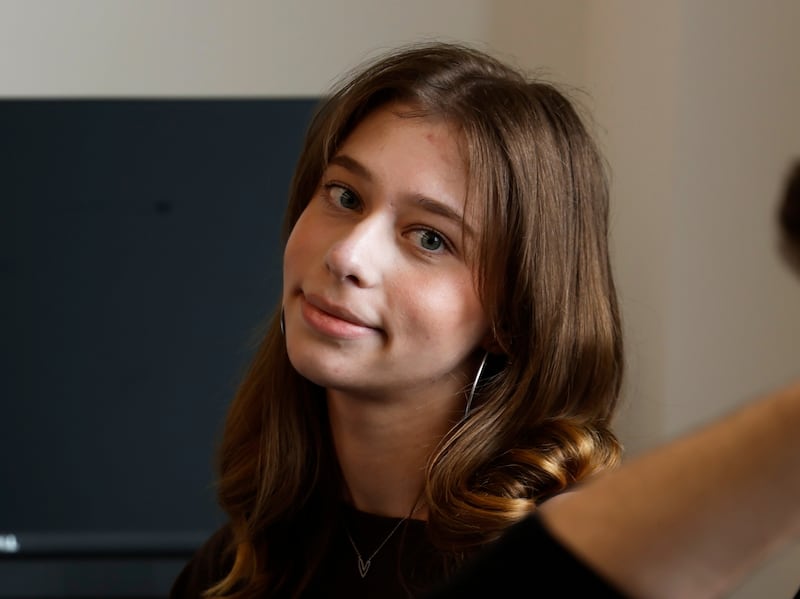 AI has caused a surge in job applications, but student Oleksandra Danylenko has seen applicants’ CVs and was unimpressed. Photograph: Nick Bradshaw
All students say AI has contributed to a huge increase in the number of job applications and made it hugely challenging to stand out.
Oleksandra Danylenko from Ukraine works part-time in a flower shop and sees the CVs that come in from others.
“Some are ridiculous – it is really noticeable,” Danylenko says.
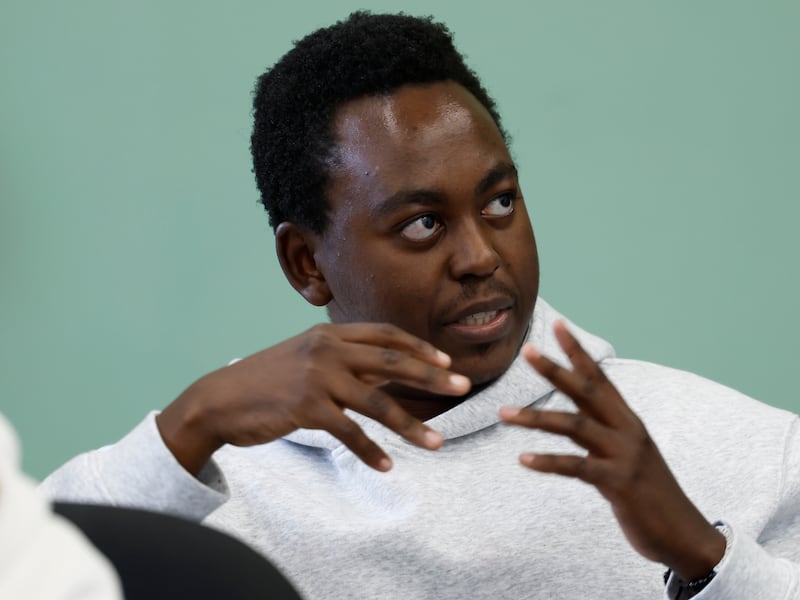 Nicholus Magak says he has found that candidates making it to interview lack the skills they claim to have. Photograph: Nick Bradshaw
Nicholus Magak, a tech worker in healthcare from Kenya studying for a master’s degree in Ireland, was asked to hire his replacement and was taken aback at interviews by how many applicants possessed few skills they had claimed to have to get that far.
“A lot of people had found the cheat sheet,” he says.
Internships are now a key component of courses, developed with employers, that offer students work experience that is otherwise hard to come by.
Trayc Keevans, global foreign direct investment director at recruiter Morgan McKinley, says employers are simply so swamped by technological change they lack time to mentor students.
[ We should be very worried about AI taking over the classroomOpens in new window ]
The wider jobs market is the greatest concern for the students.
Most of about 20 undergraduate students who meet The Irish Times, many from overseas, say they want to work in Ireland, but think they have to go abroad to find jobs. Some believe AI is used as an excuse to cut staff at companies that might have previously over-hired or feel firms need to be seen to make payroll savings to justify their AI investment.
Night students working in the area express concern for those coming behind them.
Janca Vercuil, who has 20 years of experience of the tech side of companies and works for a semi-state company, does not believe there will be a need for as many developers in future because the work can be automated.
“If the AI understands the question, it can write you code in any language much faster than a human can. You have to still oversee it but it can do a lot of the work,” Vercuil says.
Matthew Padden, an experienced manager, says he is beginning a new project using AI at the firm where he works; it is a project that would ordinarily have been contracted out to a team.
He advises people looking for work “to be at the intersection of as many Venn diagrams as you possibly can”.
“Be able to talk about business, have the soft skills required to show people that you’re not just a one-dimensional programmer,” he says.
“Anyone who thinks that they can just survive as an expert programmer … can forget about it because the code-inputting is just going to be automated.”
Barry Feeney, head of the school of enterprise computing and digital transformation at Tallaght TUD, says courses have been changed, with input from the industry, to tackle challenges students face.
But he suggests the tech revolution has a while to run yet.
“AI isn’t going to do all of the things that people say it is yet – it’s not there yet,” he says.
They are trying to teach people about new tools to solve problems and “not how to be the old traditional coder”.
One of the department’s lecturers, Maurice Martin, who spent 16 years in senior roles at Microsoft, says opportunities should not be underestimated, with a “huge gap” in knowledge between those who design business strategy and those who build systems.
“In the past, your systems might have been 80 per cent human, 20 per cent tech; now maybe it’s 50-50 and in the future it might be 90 per cent tech, but you’re still going to need a lot of people to build those tech systems, to understand them, to validate them – that’s a whole lot of new jobs,” he says.
“It is a skill to understand how you can solve problems,” says another lecturer, Fernando Perez Tellez.
“It might be using AI or not, but you need to understand where you can integrate it to solve a problem.”
[ ‘You should freak out’: Brussels grapples with warnings from the AI frontierOpens in new window ]
Aidan Connolly, chief executive at Dublin-based AI and data analytics firm Idiro Analytics, says companies know they have to adapt because of the changing employment landscape.
“There will be lay-offs and from a human perspective that’s far from ideal, but being in business is a bit like being in The Hunger Games: you don’t get a say in the rules, they are what they are and you have to compete,” he says.
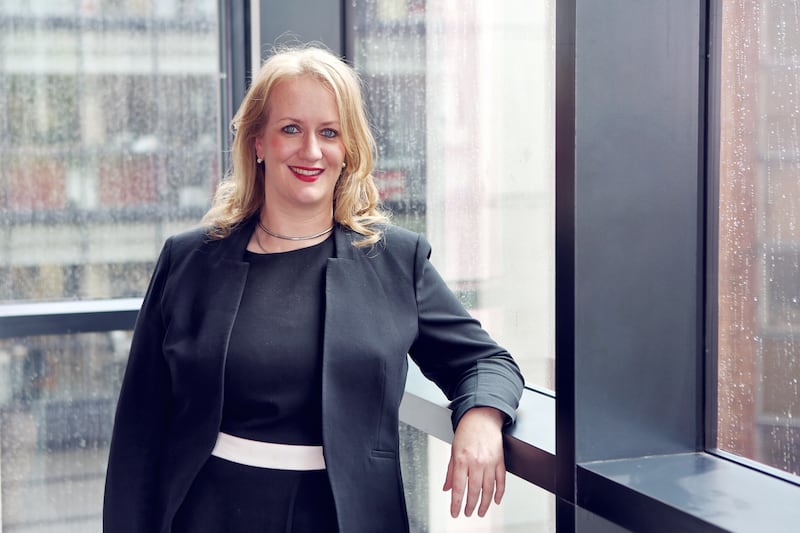 AI is also creating jobs as well, says Trayc Keevans of Morgan McKinley
Keevans, the jobs recruiter at Morgan McKinley, says tech graduates are definitely still needed but expectations are different and “employers are looking for stronger portfolios, better practical project work, communication skills”.
Major companies such as Open AI and Anthropic are all hiring graduates and experienced people “so actually AI is creating employment as well”, she says.
Getting a first job and some experience is much tougher now, she says, as companies are swamped with the pace of change and there is not the same room as before for interns or new hires.
“But if you think of any time of high unemployment, there are still people employed,” she says. “So it’s going to be a question of having the mindset to be one of those who is employed.”
[ ‘Humanity needs to wake up’ to AI dangers, says Anthropic chiefOpens in new window ]