
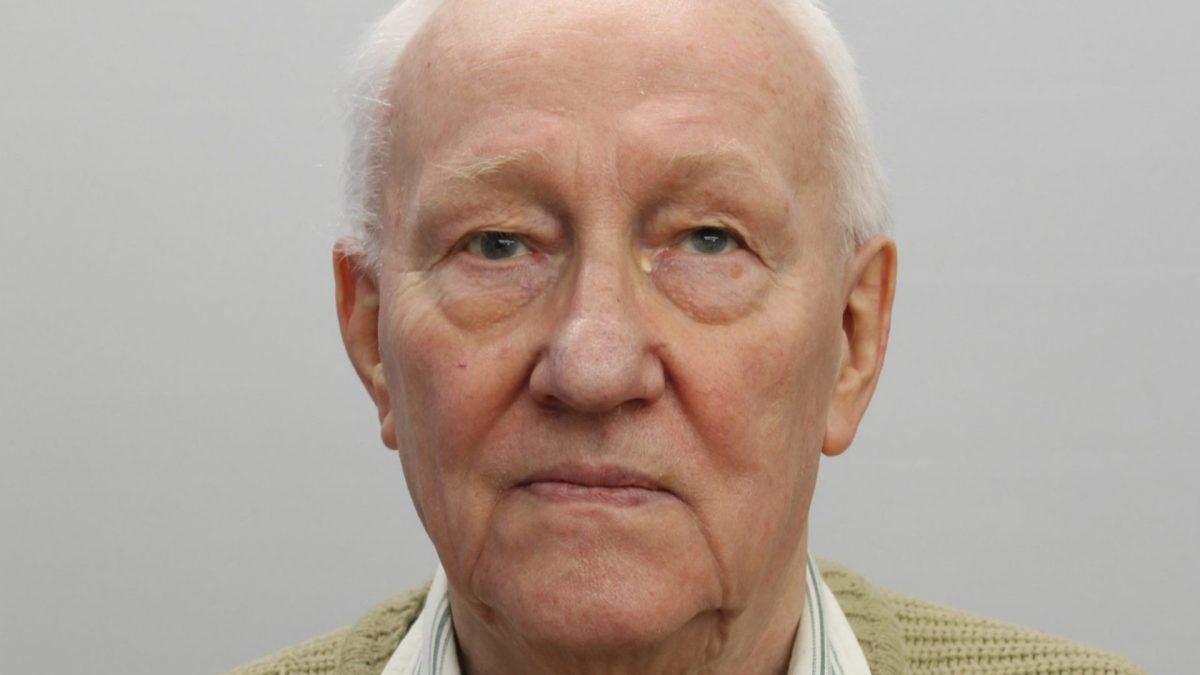
Self-employed people who retired with little or no pension are a “forgotten generation”, according to 76-year-old Peter Williams.
Peter, who retired at the age of 67, is now a full-time carer for his wife, Anne, and is worried his £55,000 pension pot will not be enough – especially as the couple rent privately.
Peter was self-employed for most of his career and has no workplace pension, with both he and Anne living off their state pension.
New FeatureIn ShortQuick Stories. Same trusted journalism.
Although he was employed during the early stages of his career in the 1970s to the late 1980s, he was not eligible for a workplace pension.
He said: “I worked for a US IT company – which struggled. There was no operation outside the US, so I was paid in dollars and was self-employed – not by choice.
“In my 60s, I had to find somewhere that would ‘take me on’. I ended up working for a home improvement company and a solar solutions company. Just about everybody was self-employed.”
Peter took out a private pension in the late 1980s but stopped paying into it during periods when he struggled to make ends meet, leaving him with around £55,000 in a single pot that has so far remained untouched.
He retired at 67 because he wasn’t earning much, and his wife, Anne, was doing well in her job in recruitment.
“Anne was doing nicely in her job, so I took over all domestic chores and ferried her to and from work. I sort of grew into retirement.”
The couple were living in Southampton and, in 2016, decided to downsize after being unable to meet the final mortgage payment, taking on a smaller mortgage of £50,000.
But Anne was diagnosed with lung cancer and had to undergo numerous operations, as well as suffering from a perforated ulcer, which saw her spend time in intensive care and was indefinitely signed off from work.
“Unfortunately, Anne was taken to hospital two weeks after moving into our new home. Anne’s medical problems continued during 2016 and 2017,” Peter said.
“This much smaller property didn’t even have a downstairs loo, which Anne just couldn’t manage.
“We had a commode in the kitchen for a period of time, and she just had to crawl up the stairs at night. So, we basically sold on very quickly.”
The couple sold their property within a few days of putting it on the market and moved to Skelmorlie, Scotland, in 2019, having previously visited and liked the area.
Peter is now a full-time carer for his wife, whom he has been married to for 30 years, and the pair rent a bungalow for £895 a month.
It has served them well but it is owned by a private, elderly landlady and they have no idea how long they will be able to remain there.
“Over the seven years we have been renting, the value of our capital has gone down, and the cost of properties has gone up. So the gap has got bigger.
“We could possibly just about manage to buy a smaller place on a lifetime mortgage, but we like where we live currently. We look out the window and across the Clyde,” Peter said.
Although Anne built up a private pension pot of £20,000, the couple do not currently draw income from their private pensions and instead live off their state pensions, which equate to £2,000 a month.
Anne also receives £400 a month from the adult disability payment, the Scottish equivalent of the personal independence payment (PIP).
Peter said he wants to keep their pensions invested as it has taken some hits in recent years.
The couple also have £100,000 in Premium Bonds from the house sale they made before moving to Scotland, and average about £400 a month in prizes, but are hoping for a “big win” to restore some financial security.
Despite having this money stored away, they still have far less than is recommended for a comfortable retirement.
Pension UK’s Retirement Living Standards says that for a couple to have a “moderate” standard of retirement, they would need £43,900 a year, while to have a “comfortable” level of retirement, a couple would need £60,600 a year.
As many people spend decades in retirement, this amounts to a sizeable sum and does not include housing costs, which Peter and Anne are paying.
It means their money must stretch much further than many other pensioners who have private pensions or other forms of income.
Data published last month by the Department for Work and Pensions (DWP) also revealed 80 per cent of self-employed people are not saving consistently enough for later life.
Marianna Hunt, personal finance expert at Fidelity International, said: “For the self-employed, the barriers are very real. Irregular income and the lack of employer contributions can make it much harder to commit to regular pension saving. Without more targeted support, there’s a risk that many could face a more financially uncertain retirement.”
Peter said: “I never even thought about pensions in my early employment. Some people think of self-employment as little more than a means of reducing taxes, but it was more of a survival mode for me.
“I’ve had some good times, but in retrospect, have no idea what I would have done substantially different – but I no doubt made some costly ‘wrong turns’. Clearly, had company pensions become mandatory during my earlier years in employment for all companies, then that would have made a huge difference.”