
Published on
02/04/2026 – 10:02 GMT+2
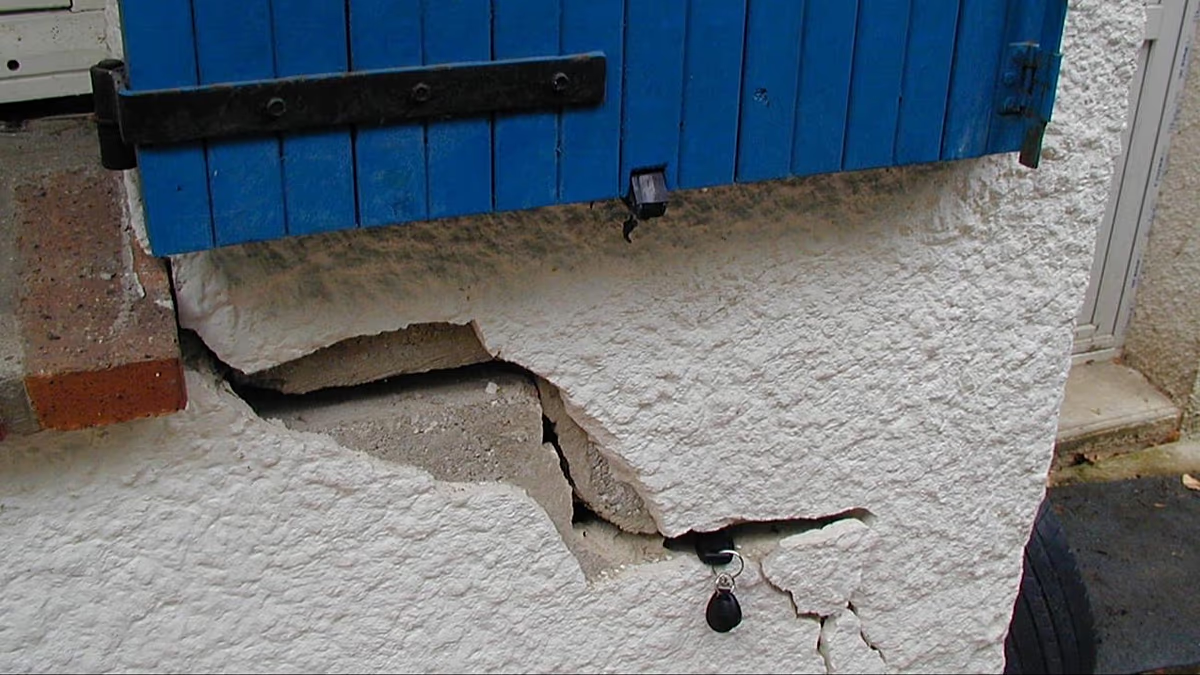
Rupturing pipes, distorted doors and windows, and huge cracks on your home.

ADVERTISEMENT
ADVERTISEMENT
These are the threats that face more than 12 million properties in France, as heat-trapping gases continue to bake the planet and fuel extreme weather events.
Human-made climate change is exacerbating a phenomenon called clay shrinkage-swelling, or RGA (Retrait-Gonflement des Argiles) – which can trigger severe structural issues to detached houses.
The French government predicts that more than half of the mainland is now at medium or high risk of RGA, particularly for houses built using concrete blocks since the 1970s.
Why are French homes shrinking and swelling?
During dry periods, clay soils lose their moisture and start to shrink, risking the foundations of homes to collapse. When heavy rainfall hits, the clay starts to swell, absorbing excess water.
The alternation of these dry-then-wet periods are repeated over time, gradually weakening soils and foundations. It can be worsened by several factors, including poor drainage systems and tree roots being located too close to homes.
“This phenomenon affects 54 per cent of detached houses in France,” a spokesperson for the Ministry of Ecological Transition tells Euronews Earth.
“On average, clay shrinking and swelling costs €1 billion annually in compensation under the natural disaster scheme.”
The latest map published by the French government shows that the most vulnerable areas at risk of clay shrinkage are Allier, Alpes-de-Haute-Provence, Dordogne, Gers, Indre, Lot-et-Garonne, Meurthe-et-Moselle, Nord, Puy-de-Dôme, Tarn and Tarn-et-Garonne. Around three million homes in these regions are considered “high risk”.
Is climate change making things worse?
Global warming aggravates this phenomenon, as higher temperatures increase the frequency and severity of heatwaves and flooding.
For every 1℃ rise in air temperature, the atmosphere can also hold around seven per cent more moisture, which can lead to more intense and heavy rainfall.
Last year, France was battered by extreme heat that plunged large parts of the county into drought. An intense heatwave in August pushed temperatures up to a scorching 43.4C – contributing to 2025 being the country’s third hottest summer on record.
Researchers at Imperial College London and the London School of Hygiene and Tropical Medicine found that climate change was responsible for 68 per cent of the estimated 24,400 estimated heat deaths in summer 2025 – having raised temperatures by up to 3.6C. 1,444 of these deaths were in France.
Earlier this year, France witnessed its largest rainfall streak on record, lasting from 14 January to 22 February. The heavy rains sparked severe flooding across western France, causing around 4,000 people to be forced into emergency shelter.
By mid-February, evacuations were underway in several areas, as hundreds of homes and buildings were reported damaged.
The UK’s Met office warns that 2026 is likely to be another year where global average temperatures hit 1.4C above pre-industrial levels. With global warming fuelling extreme weather, France risks repeating intense dry and wet periods that can wreak havoc on its housing.
To tackle the issue, the government is trialling the Argile prevention fund, which aims to carry out vulnerability assessments and ensure that preventative work is carried out before any incidents to clay homes occur.
If you’re concerned about clay shrinkage, you can see if you’re eligible for financial support here.