
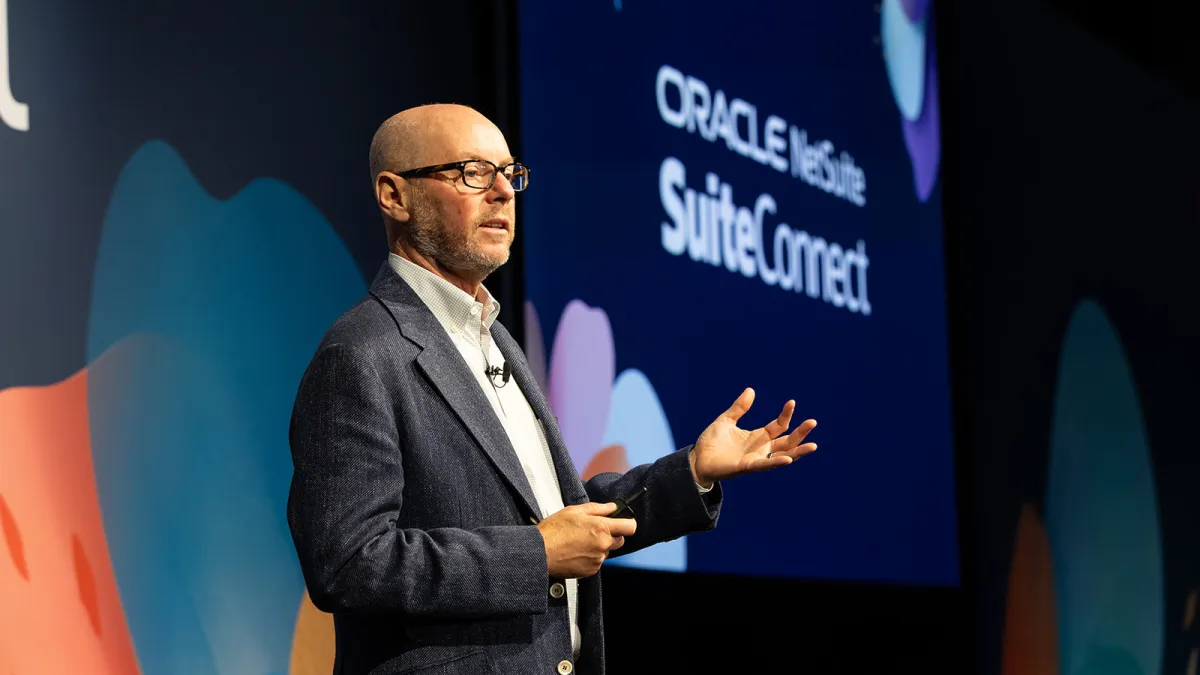
The founder of the US technology group NetSuite has raised the prospect that artificial intelligence could mean fewer people use the management software he launched from a shop above a hair salon in 1998.
Evan Goldberg developed the first remotely stored enterprise resource planning (ERP) system in Silicon Valley, with backing by Oracle’s Larry Ellison. The technology took off and the business was acquired by Oracle in 2016 for $9.3 billion. It is now used by 44,000 businesses around the world, including the likes of Octopus Energy, Yoto and PensionBee in the UK.
Speaking to The Times at the launch in London of a range of NetSuite AI-powered task automation tools, Goldberg said it remained unclear how radically the use of management software would change.
Enterprise newsletter
Advice and inspiration for entrepreneurs in The Times Enterprise Network’s briefing.
Sign up with one click
“There are a lot of questions where it is just unknown right now how AI is going to play out,” he said. “Does it mean fewer people are going to be using ERP systems and the like or does it mean more people are going to be using them? We don’t know yet. It is something we are monitoring.”
Goldberg said NetSuite was not seeing any “dramatic changes” in its use by customers at present and added business adoption of AI would take longer than evangelists for the technology anticipate, giving companies such as NetSuite time to adapt themselves.
“When you are inside the Silicon Valley bubble you think everything is going to get revolutionised immediately. But the way the technology really works is that it takes time for people to adopt it, they are used to doing things in a certain way. They want to work faster and better but they can’t drop everything.
“All of these technology trends when they play out in the real world take longer than you might expect when you are in the middle and seeing how powerful they are. We have some time to determine how people’s usage patterns of these systems are going to change.”
Goldberg was speaking as the Competition & Markets Authority, the competition regulator, said it would investigate Microsoft’s business software services to determine whether the tech group’s dominance has limited customer choice and inhibited innovation. The regulator also said it had agreed with Microsoft and Amazon Web Services reductions in levies related to the use of their cloud services by businesses using third-party software providers.
Oracle is cutting thousands of jobs as it restructures to focus on its investments in AI. A spokesman for Oracle declined to comment on both the merits of the CMA’s intervention and the reported job losses.
However, Goldberg likened the impact of the shift to AI-powered business software to the adoption of air over sea travel for Atlantic crossings. NetSuite, he said, had already made the shift to be in the “transportation” business.
“We are about giving you great information, helping you run your business more effectively. That is always going to be useful. The things we do to secure your data and making sure you can access it reliably, and making sure we are imbuing our systems with best practices from 44,000 customers, those things will still be super-valuable. It is just the medium by which we do it is going to change dramatically over the next few years.”
He continued: “If you had asked someone what they wanted out of a business system 50 years ago, they probably would have said, ‘Ideally, I would like it to identify the patterns that I don’t see; I’d like it to take away a lot of the manual work that I have to do; I’d like it to recommend possible new approaches I can take that will help my business to succeed.’ That was all far outside the capabilities of the systems back then and now we are in a situation where the promise of these systems has grown enormously. It is the job of companies like NetSuite to realise that potential.”
The tech group launched a series of apps on Wednesday in the UK that are designed to enable businesses to give mainstream AI tools such as Anthropic’s Claude and OpenAI’s ChatGPT access to the business data held by NetSuite in a controlled way. Later this year, it is releasing NetSuite Next, which it says will see AI fully embedded into its software, automating tasks such as a company’s monthly financial close, and enabling users to mine for information and insights using natural language prompts rather than query filters and drop-down menus.
Customers will also have the option to build their own AI agents using third-party tools to meet specific tasks. However, Goldberg said he did not think the arrival of tools such as Anthropic’s Claude would see businesses building their own ERP systems from scratch.
“We feel that what we provide will remain for the foreseeable future very critical. At the same time, there is enormous opportunity for people to use these systems more effectively, to customise them to their business more easily so they are really tailored. AI coding agents may not be building an entire ERP system because you don’t want to be managing that for the rest of your existence, but maybe they are helping take an existing system like NetSuite and make it work better for your particular business.”
NetSuite’s original focus on software that supported business finance teams and enabled remote and secure storage of business data, positioned it well for when broadband speeds and mobile devices encouraged businesses to slash investment in their own onsite IT hardware and to shift to more flexible working.
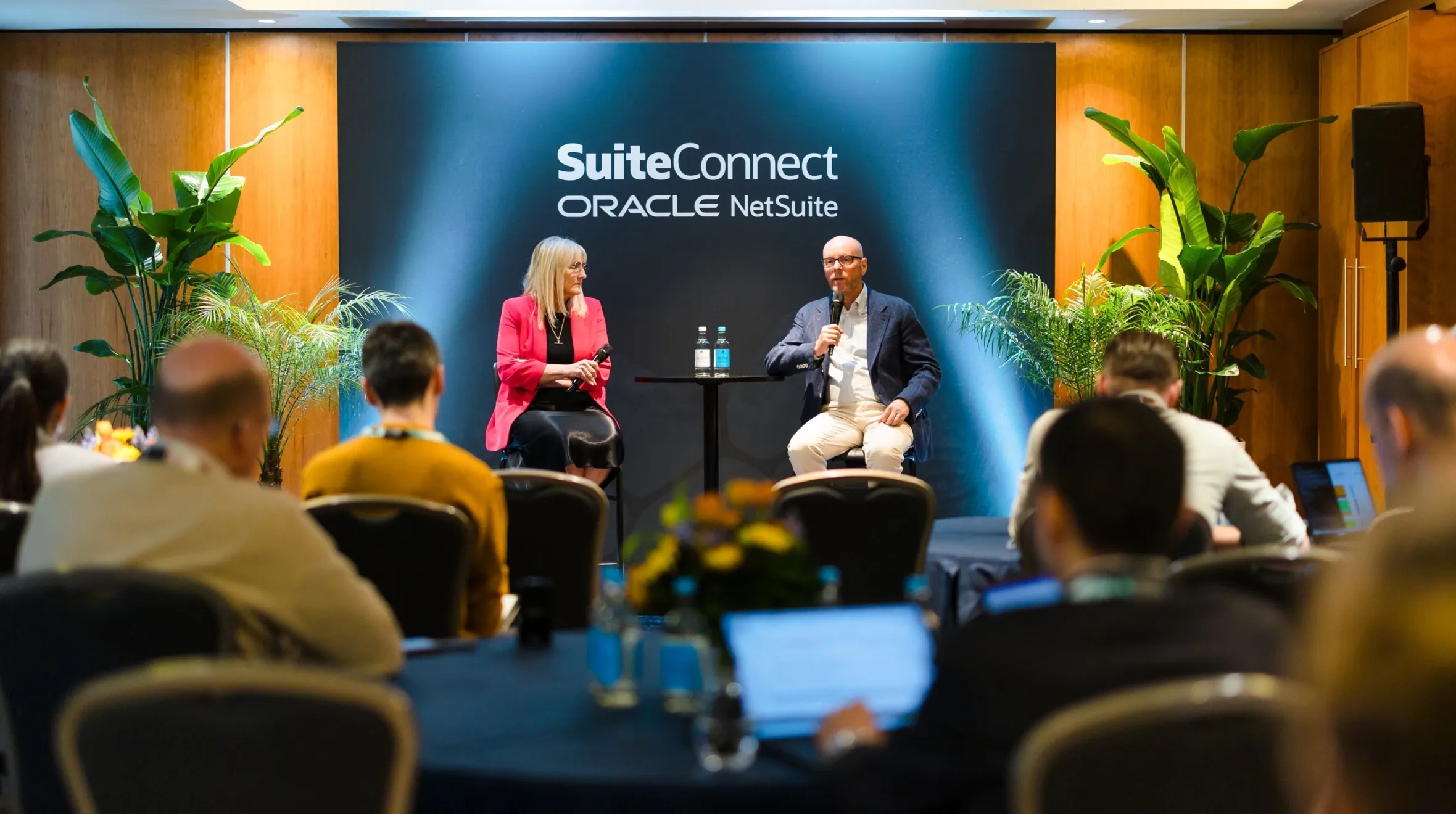 Evan Goldberg and Nicky Tozer, Oracle NetSuite’s senior vice-president
Goldberg acknowledged that the utility of the original software was now being challenged by AI. “There are new opportunities for businesses to solve the problems that we have been solving in different ways. And yet the benefit of experience still exists. There are some things you can do faster with AI and there are some things that you can’t do faster with AI. That accumulation of real-world experience with real businesses, that data is still not out on the internet. The wealth of data that we have about how customers use NetSuite successfully is our own.”
How far will automation of business data tasks go? Goldberg said even with key tasks automated by AI, such as the financial position of a business at any moment in time, he did not expect chief executives to be doing the jobs of a chief financial officer any time soon.
“The CFO may be able to be used in more strategic ways. The fact is that everyone in business has an important list and an urgent list and they know they spend way too much time on the urgent list and not enough time on the important list. If there is one thing that AI can hopefully do is to shift that balance for everybody.”