
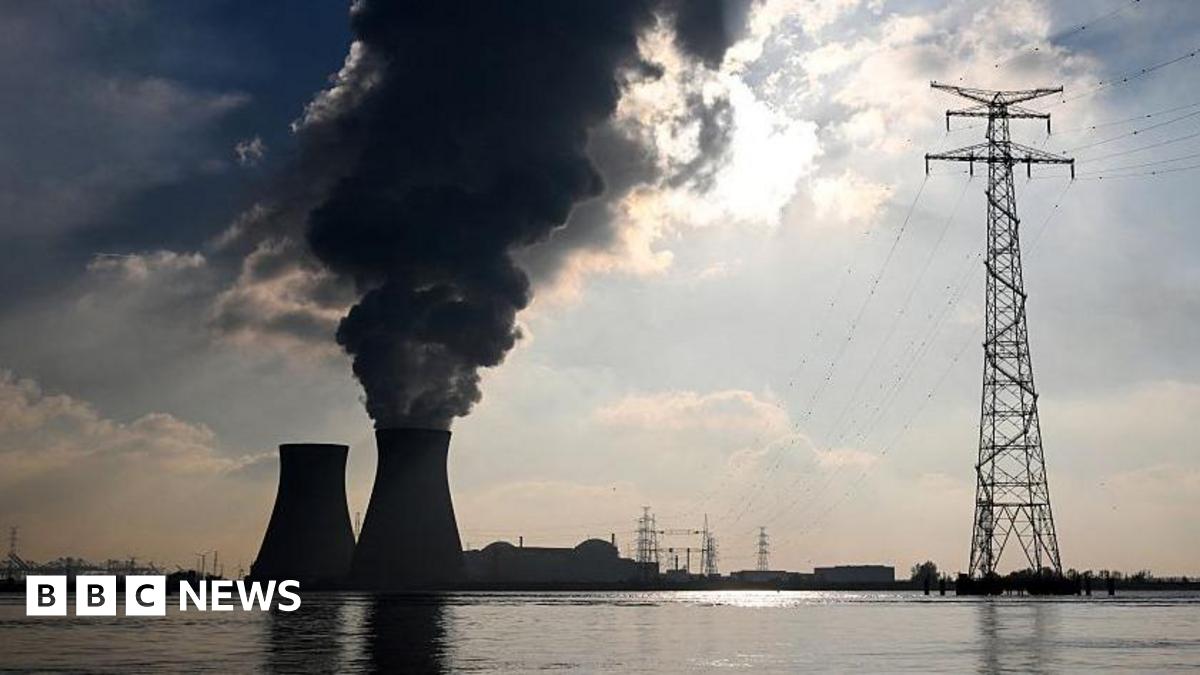
Environmental groups warn investment in nuclear energy can divert funds and political attention from speeding up the development of renewables, and an added layer of strategic risk is that a number of Central European countries, especially Hungary and Slovakia, still depend on Russian nuclear technology and uranium.
“You’re ignoring the history of nuclear in Europe if you think it can just slot in [as an easy energy crisis solution],” Chris Aylett told me. He’s a Research Fellow at the Environment and Society Centre, Chatham House.
Nuclear energy is part of the solution, he believes, but many European nuclear reactors are old and governments need to invest considerably just to maintain or extend their working life.
“The main challenge is maintaining existing share [of nuclear power]. If governments really want to increase the share, they need a lot of time and a lot of money.”
But many of Europe’s governments are indebted, cash-strapped and faced with numerous, competing priorities – such as how to maintain welfare and boost defence spending to the levels promised to US President Donald Trump.
Nuclear is also being beaten on price as the costs of wind and solar have gone down, Aylett points out.
So, with price and practicality in mind, the European Commission has rushed to embrace the concept of small modular reactors (SMRs).
SMRs are viewed as more cost-effective sources of nuclear power. They can be mass factory-produced and are particularly well-suited to meeting the energy demands of AI data centres, the production of hydrogen and local heating networks.
A €330m (£288m; $381m) EU nuclear energy investment package, external has just been unveiled, with strong support for SMRs. Brussels hopes to bring the up and coming technology online by the early 2030s.
The focus on SMRs is international. Last week, the US and Japan announced a $40bn project to develop SMRs in Tennessee and Alabama, while last month Emma Reynolds, the environment secretary, published the regulatory justification for Rolls-Royce’s plan to become the first company to try to build SMRs in the UK.
But as attractive as they sound, SMRs are viewed as unproven at commercial scale. As of early 2026, no construction licences had been granted anywhere in the EU.
Nuclear fusion research is also benefiting from EU attention, though. The EU aims to develop the first commercial fusion power plant online.
But for now, most in Europe still rely on fossil fuel imports.
It is plainly in the continent’s interest to be more energy independent, Aylett argues, so as not to be exposed to the whims of exporters including erratic authoritarians, or algorithms in oil and gas commodity markets.
European governments clearly see nuclear as part of the medium to long-term solution. But what of the here and now?