
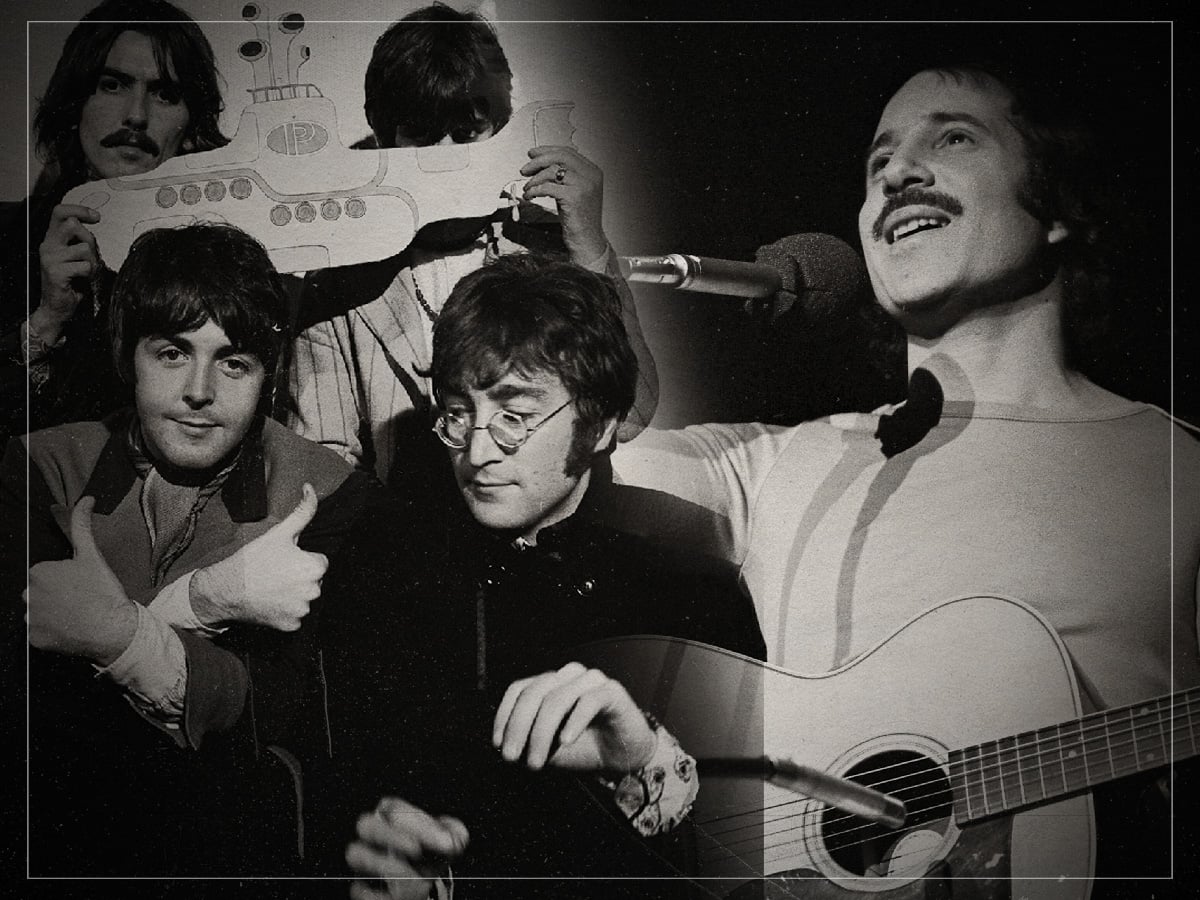
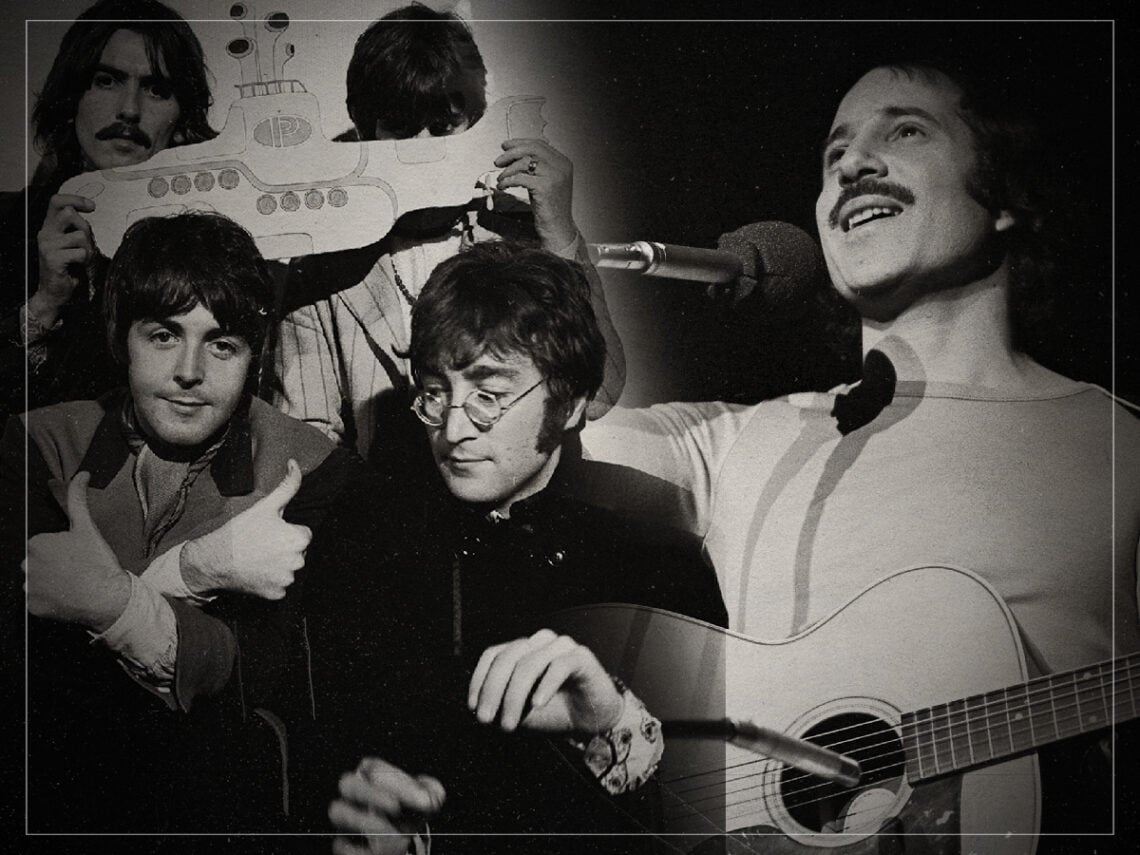
(Credits: Far Out / Apple Corps / Harry Chase / Los Angeles Times / UCLA Library)
Sat 4 April 2026 3:00, UK
Paul Simon didn’t claim to be one of the greatest songwriters in the world when he first started.
A lot of his tunes were far more sophisticated than the traditional pop fluff coming out at the time, but even from a poetic perspective, he was always going to be in the shadow of people like Bob Dylan if he was going to spend his days with an acoustic guitar draped around him, singing tunes like ‘The Sound of Silence’. But compared to every other musician that was breaking through at the time, Simon knew better than to try to compete with some of those who seemed to be one notch above everybody else.
Then again, some of the biggest names in rock and roll were always going to be outside of Simon’s wheelhouse. He wasn’t exactly the most engaging presence in the world when he worked with Art Garfunkel, and even though he found ways to keep his music changing, there was no way that he was going to be a David Bowie figure or even a Mick Jagger figure whenever he made his tunes.
Which is probably why his band is doing a lot of the heavy lifting on many of his tours. The heart of all of his greatest tunes is about watching all of the band members play off each other, and even though he is the orchestrator behind everything, it makes a lot more sense to let some of the greatest musicians in the group grandstand than have to banter with the crowd every single time he sings.
Because, really, the studio was where he always thrived at getting the sounds that he heard in his head. The rhythmic aspect of music is what appealed to him more than anything, and when he wasn’t limited to the duo format anymore, everything from Still Crazy After All These Years to Graceland had a lot more going for them than a bunch of tunes with a handful of acoustic picking patterns thrown into the mix.
Around the time that Simon and Garfunkel were peaking, though, The Beatles had already been showing everyone the way forward for rock and roll. The last few records they worked on had all been about finding the right songs and testing the limits of the studio with George Martin, but when Simon first heard Sgt Peppers, it was like he had witnessed the band take a quantum leap compared to what every songwriter was doing.
He could hold his own next to the best songwriters in America, but Simon felt that the magic that he and Garfunkel created was nothing compared to what he heard out of the geniuses from Liverpool, saying, “[Art] wasn’t competitive with me. We were signed together. I really thought of us as a duo, and as a group, and that was fine. The Beatles were a group. But I do remember thinking, when Sgt Pepper came out, ‘I can’t believe that somebody is so much better than I am, that they are so far ahead.’”
And it’s not hard to see what Simon saw in what the Fab Four created. There was a bit more fanciful tunes across the album, but compared to the albums before, where they had flirted with making more adventurous material, a song like ‘A Day In the Life’ was the leap off the creative diving board and into uncharted territory that no one else would have ever thought of when making a rock and roll song.
The Beatles had taken the plunge and were never going to go back, and while Simon could still make as many creative left turns as he could in his solo career, that kind of adventurousness was a reminder of how confined he was as part of a duo. The Fab Four may have eventually grown sick of each other as well, but Simon felt that no one seemed to have the same kind of internal chemistry that was that spectacular.
ADD AS A PREFERRED SOURCE ON GOOGLE  The Far Out Beatles Newsletter
All the latest stories about The Beatles from the independent voice of culture.
Straight to your inbox.