
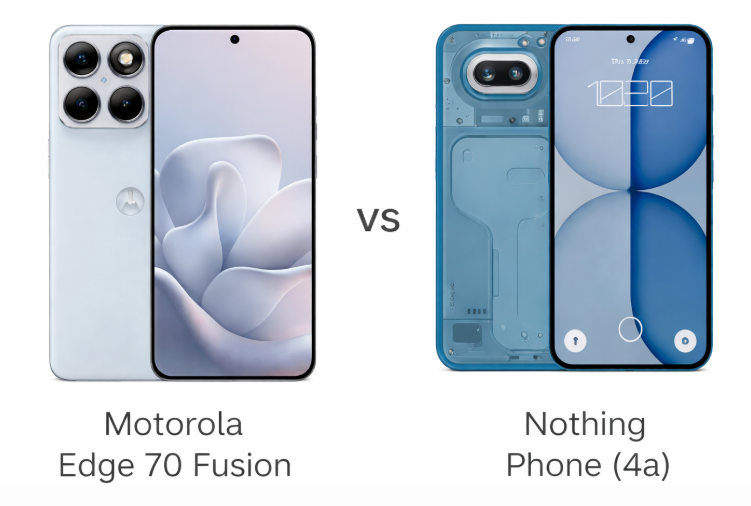
Motorola Edge 70 Fusion and Nothing Phone (4a) target the same mid-range space but take completely different approaches. One leans toward durability and value, while the other focuses on design and innovation. This comparison breaks down which device actually delivers a better everyday experience for different types of users.
Please Note: When you buy something using the links in our articles, we may earn a small commission at no cost to you.
FeatureMotorola Edge 70 FusionNothing Phone (4a)Winner Display6.78″ AMOLED, 144Hz, 5200 nits6.78″ AMOLED, 120Hz, 4500 nits peakMotorola – Smoother & brighterProcessorSnapdragon 7s Gen 3 / Gen 4Snapdragon 7s Gen 4Nothing – More consistentRAM & StorageUp to 12GB + 256GBUp to 12GB + 256GBTie – Same setupRear Camera50MP + 13MP50MP + 50MP + 8MPNothing – More versatileTelephoto❌ No✅ 3.5x optical zoomNothing – Dedicated zoomSelfie32MP (4K video)32MP (1080p)Motorola – Better videoBattery5200mAh / 7000mAh5080mAh / 5400mAhMotorola – Bigger batteryCharging68W wired50W + reverseMotorola – FasterBuildIP68/IP69, ruggedIP64, glass backMotorola – More durableSoftwareAndroid 16 (near-stock)Nothing OS 4.1Nothing – Cleaner UIPrice₹27,000 (~$250)₹32,000 (~$450)Motorola – Better valueDisclaimer: Specs are based on available data. Actual performance may vary. Verify details from official sources before buying.
Please Note: When you buy something using the links in our articles, we may earn a small commission at no cost to you.
1. Design and Display
Build and Feel
The Motorola Edge 70 Fusion focuses on durability with IP68/IP69 protection and a tough, practical build that feels more “ready-for-anything.” It leans toward reliability over flair. Meanwhile, the Nothing Phone (4a) stands out instantly with its transparent back and Glyph lighting system, offering a more expressive and modern aesthetic. It feels more lifestyle-oriented, while Motorola feels more functional and rugged.
Display Quality
Motorola pushes ahead with a 144Hz AMOLED panel and an extremely high peak brightness, making it excellent for outdoor visibility and ultra-smooth scrolling. Nothing counters with a 120Hz AMOLED display featuring better PWM dimming and HDR tuning, which can feel easier on the eyes during long usage. While Motorola is technically brighter and faster, Nothing’s display feels more balanced and refined for daily comfort.
Verdict
Motorola wins for durability and raw display brightness, but Nothing offers a more distinctive design and eye-friendly screen. Choice depends on whether practicality or personality matters more.
2. Specifications Including Battery
Performance
Both phones run on Snapdragon 7s-series chips, but the Nothing Phone (4a) uses the newer Snapdragon 7s Gen 4 globally, giving it a slight edge in efficiency and sustained performance. The Motorola Edge 70 Fusion varies by region, which makes its performance slightly less consistent. In real-world use, Nothing feels a bit more stable during heavy multitasking and gaming sessions.
Battery and Charging
Motorola clearly dominates battery flexibility with options going up to a massive 7000mAh, paired with fast 68W charging. It is built for endurance users who prioritize longevity. Nothing, however, delivers a more balanced setup with around 5400mAh and 50W charging, plus reverse wired charging, adding convenience. Motorola lasts longer, but Nothing feels more versatile.
Verdict
Motorola is the better pick for battery life and fast charging, while Nothing edges ahead in consistent performance and practical charging features.
3. Camera
Main and Secondary Lenses
Nothing Phone (4a) takes a clear lead with a versatile triple-camera setup, including a periscope telephoto lens with 3.5x optical zoom. This adds real flagship-like flexibility for portraits and zoom shots. Motorola sticks to a simpler dual-camera system, delivering solid primary shots but lacking depth in versatility. Nothing’s camera system feels more complete and creative.
Selfie Camera
Both phones feature 32MP selfie cameras, but Motorola allows 4K video recording, giving it an advantage for content creators. Nothing limits selfie video to 1080p, but it maintains good color consistency and HDR.
Verdict
Nothing wins overall due to its telephoto lens and advanced video features like Dolby Vision. Motorola is reliable, but Nothing clearly offers more creative freedom.
4. Pricing
The Motorola Edge 70 Fusion is priced at around ₹27,000 ($250), while the Nothing Phone (4a) sits higher at approximately ₹32,000 ($450). This creates a noticeable gap, positioning Motorola as a value-focused option and Nothing as a mid-premium offering.
Is the Price Justified
Motorola delivers exceptional value with strong durability, a brighter display, and huge battery options at a lower price. It feels like a practical deal for users who want maximum hardware for less money. Nothing justifies its higher price with better cameras, a refined software experience, and a unique design that stands out in a crowded market.
Verdict
Motorola offers better value for money, while Nothing justifies its premium with features that feel more polished and distinctive.
Disclaimer:
Prices are approximate and may vary based on country, region, and applicable taxes.
5. Conclusion
Motorola Edge 70 Fusion stands out with its rugged durability, brighter 144Hz display, and massive battery options, making it ideal for heavy users and long-term reliability. Nothing Phone (4a), on the other hand, shines with its Glyph interface, periscope camera, and cleaner Nothing OS experience, offering a more premium and modern smartphone feel.
Verdict
Motorola is the smarter buy for budget-conscious users who want durability and battery life. Nothing is a better choice for those who value design, camera versatility, and a more refined overall experience.
Final Winner: Motorola Edge 70 Fusion – Best for value, battery, and durability
Alternative Pick: Nothing Phone (4a) – Better for camera, design, and UI
Disclaimer: This comparison is based on the specifications provided and is intended for general informational purposes. Actual performance, camera results, battery life, and overall experience may vary depending on real-world usage, software updates, and individual preferences.
Read More: