
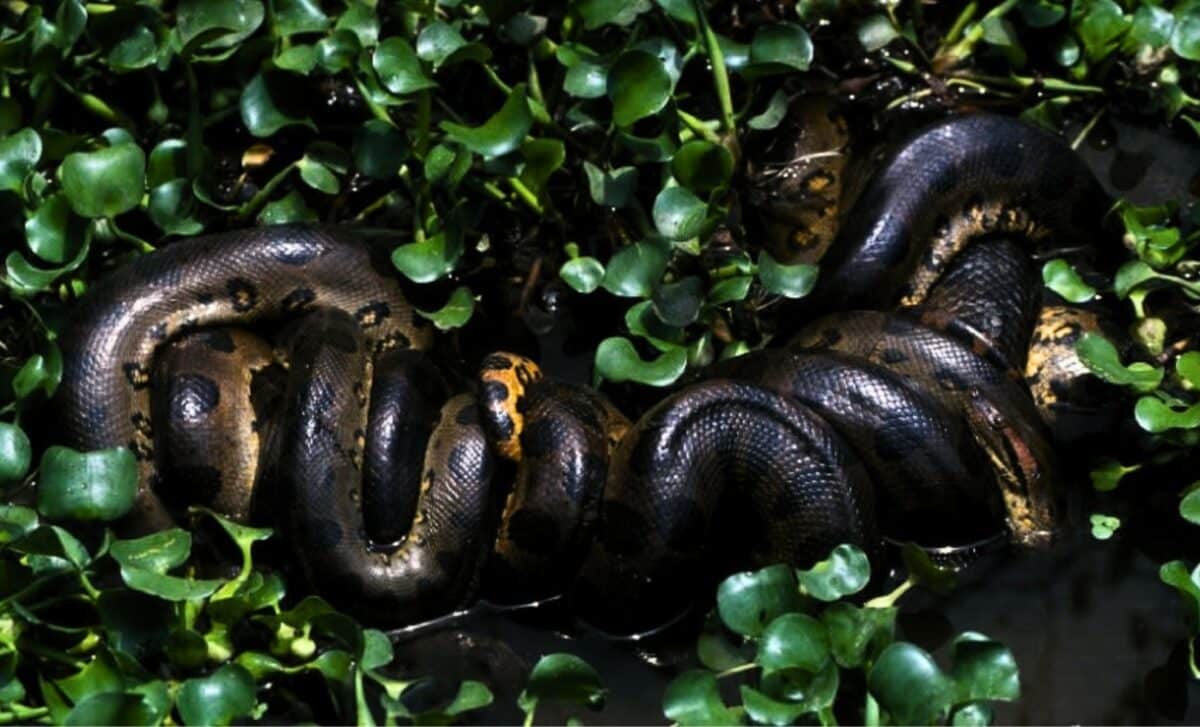
A team of scientists has identified a previously undocumented species of giant anaconda while filming a television series with Will Smith in the Ecuadorian Amazon. The newly named northern green anaconda (Eunectes akayima) is genetically distinct from the well-known southern green anaconda (Eunectes murinus), with a 5.5 percent genetic divergence between the two.
Researchers encountered a female measuring 6.3 meters (20.7 feet) during a 10-day canoe expedition guided by Waorani hunters. The Waorani people, who consider the anaconda sacred, report snakes in the area exceeding 7.5 meters (24.6 feet) and weighing around 500 kilograms (1,100 pounds). Professor Bryan Fry from the University of Queensland led the team, which included anaconda expert Dr. Jesus Rivas from New Mexico Highlands University.
A Discovery 10 Million Years in the Making
The research team received a direct invitation from Waorani Chief Penti Baihua to explore the Baihuaeri Waorani Territory in the Bameno region. The expedition took place while filming National Geographic’s upcoming Disney+ series Pole to Pole with Will Smith, where Professor Fry served as scientific leader as a National Geographic Explorer.
Genetic analysis shows the northern green anaconda diverged from its southern relative nearly 10 million years ago. For perspective, humans and chimpanzees differ by only about 2 percent. The research team noted this is not a morphological variation but a completely separate species with millions of years of independent evolution.
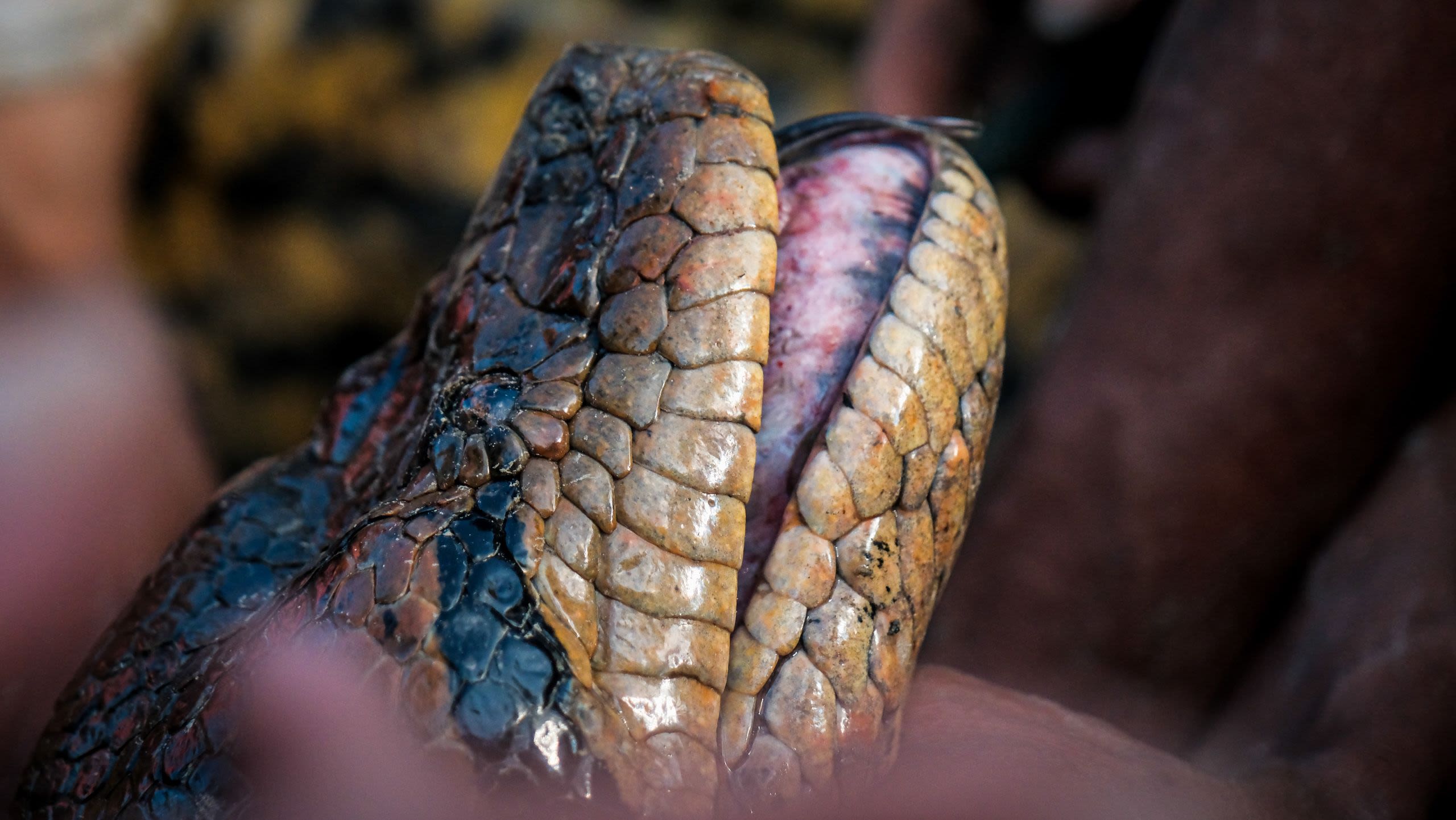 A close-up photo of a snake head, with it’s mouth slightly parted. Credit: Bryan Fry
“The size of these magnificent creatures was incredible – one female anaconda we encountered measured an astounding 6.3 metres long,” Professor Fry said. The findings were published in MDPI Diversity.
The team paddled canoes down the river system, finding anacondas lurking in the shallows waiting for prey. They compared their genetic samples with specimens collected elsewhere by Dr. Rivas, using the snakes as indicator species for ecosystem health.
Indigenous Knowledge Made the Discovery Possible
Waorani hunters who guided the expedition are listed as co-authors on the scientific paper. “Our journey into the heart of the Amazon, facilitated by the invitation of Waorani Chief Penti Baihua, was a true cross-cultural endeavour,” Professor Fry said. “The importance of our Waorani collaborators is recognised with them being co-authors on the paper.”
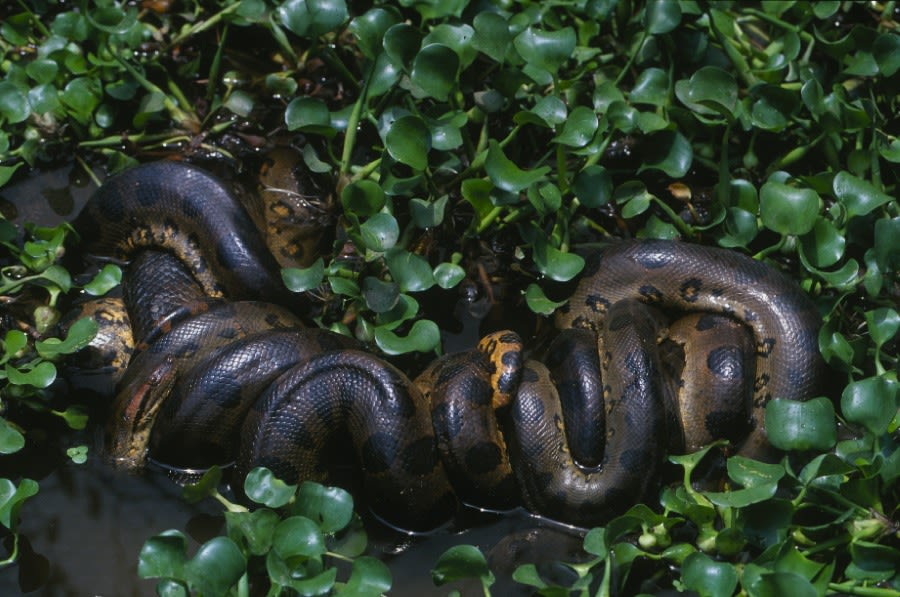 Northern green anaconda ‘breeding ball’. Credit: Jesus Rivas
The Waorani people number approximately 4,000 and speak a language isolate unrelated to any other known language. Their ancestral lands lie between the Curaray and Napo rivers, about 80 kilometers (50 miles) south of El Coca in Ecuador’s Napo, Orellana, and Pastaza Provinces. Since the 1940s, their territory has been threatened by the oil industry and illegal logging.
As many as five Waorani communities, the Tagaeri, Huiñatare, Oñamenane, and two Taromenane groups, remain in voluntary isolation. The name Waorani (plural of Wao, meaning “person”) historically excluded outsiders, whom they called Cowodi (meaning “cannibal”), reflecting trauma from the 19th and early 20th-century rubber boom.
In the traditional animist Waorani worldview, no distinction exists between physical and spiritual worlds. As one Waorani put it, “The rivers and trees are our life.” The Huaorani evolved very flat feet, which help them climb trees. Shamanic medicine uses ayahuasca and a newly identified mushroom (Dictyonema huaorani) with compounds similar to Psilocybe.
In 1990, the Waorani won rights to the Waorani Ethnic Reserve: 6,125.60 square kilometers (2,365.11 square miles). In August 2023, Ecuadorians approved a referendum to stop oil drilling in Yasuní National Park, which overlaps the reserve. Notable Waorani leaders include Nemonte Nenquimo (2020 Goldman Environmental Prize, TIME 100) and Alicia Cawiya (vice-president of the National Waorani Federation).
Threats to the New Species and Its Habitat
The discovery, first reported by Daily Galaxy, comes with an urgent warning. Deforestation from agricultural expansion has caused an estimated 20-31 percent habitat loss in the Amazon basin, a figure that could reach 40 percent by 2050.
Additional threats include habitat degradation from land fragmentation, industrialized agriculture, forest fires, drought, and climate change. The research team warns that without urgent protections, Eunectes akayima may disappear faster than it was discovered.
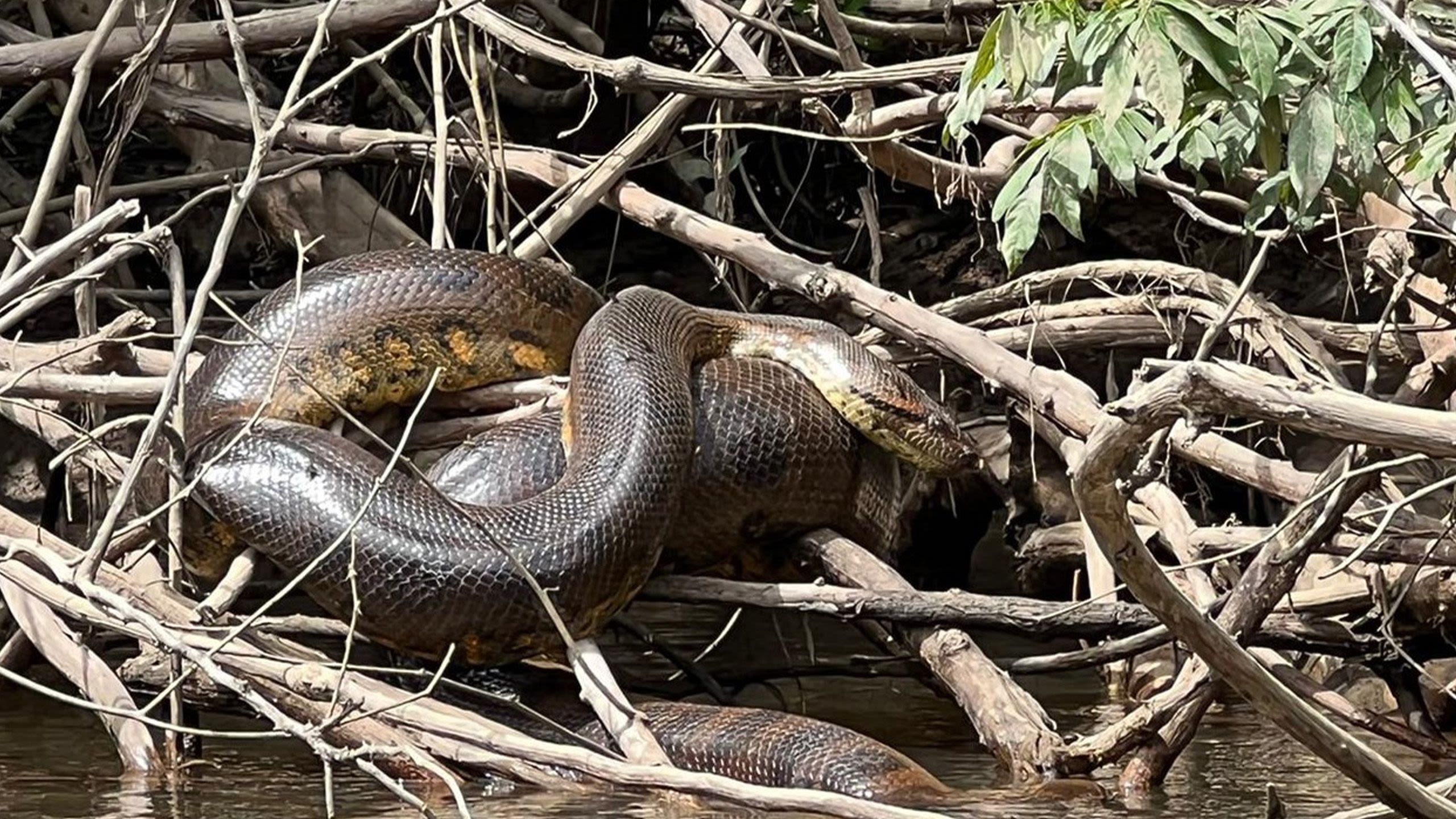 Northern green anaconda on a riverbank. Credit: Bryan Fry
The northern green anaconda appears restricted to the upper Amazon basin, a region still poorly surveyed but increasingly threatened by oil exploration contracts, illegal logging routes, and infrastructure projects. The same conditions that preserved these environments, isolation, low commercial access, Indigenous control, are now under assault.
Professor Fry’s next research will focus on heavy metal pollution in the Amazon. “Of particular urgency is research into how petrochemicals from oil spills are affecting the fertility and reproductive biology of these rare snakes and other keystone species in the Amazon,” he said. “It’s not only these gigantic snakes that are facing environmental threats, but almost all living things in the region.”
What This Means for Snake Biology
The identification of Eunectes akayima rewrites scientific understanding of anaconda distribution and evolution. Long-standing Waorani reports of 7.5-meter anacondas, once dismissed as exaggeration, now carry new credibility.
Unlike the widespread southern green anaconda, this new species has a much smaller range. The discovery proves that major vertebrate species can still be found in the Amazon, often thanks to Indigenous stewardship, even in an era of satellite imaging and AI-driven modeling. Vast portions of the basin remain biologically undocumented.
Whether the northern green anaconda survives depends on an alliance between local sovereignty, scientific urgency, and global environmental policy. Professor Fry’s upcoming work will assess how industrial runoff affects fertility and development in the region’s keystone species.