
The continuity announcers of old seemed very much a part of their channels, but strangely above it all and unexcited, as if not wanting to push one programme more than any other. Everything was neutral; here is our offer. It wasn’t so much “take it or leave it” as “it would be awfully nice of you to look in, if you like”.
There were some attempts made in the 1970s to make BBC Presentation slightly funkier. A special trailer of clips for the evening’s schedule would burst forth, backed by groovy instrumental hits of the day – Machine Gun by The Commodores or The Crunch by the Rah Band – though, wonderfully, these nearly always ended with Glover or Bolgar saying something like, “then, at five minutes to eleven, Beethoven’s Razumovsky Quartets recorded last October at the Wigmore Hall”.
It wasn’t until the new century that the informality got out of hand. In the old days, you’d sometimes hear announcers on the more far-flung regional stations – Ulster or Grampian – passing comment on the shows, saying things like, “You will never guess what that Deirdre Barlow is up to tonight,” which was quite charming. But in the past 20 years, announcers across the board are making too much chummy comment, trying too hard to be our friends. This always feels self-aware and forced; even now, a chirpy BBC voice saying “Denise was not expecting THAT!” over the end credits of EastEnders makes me squirm.
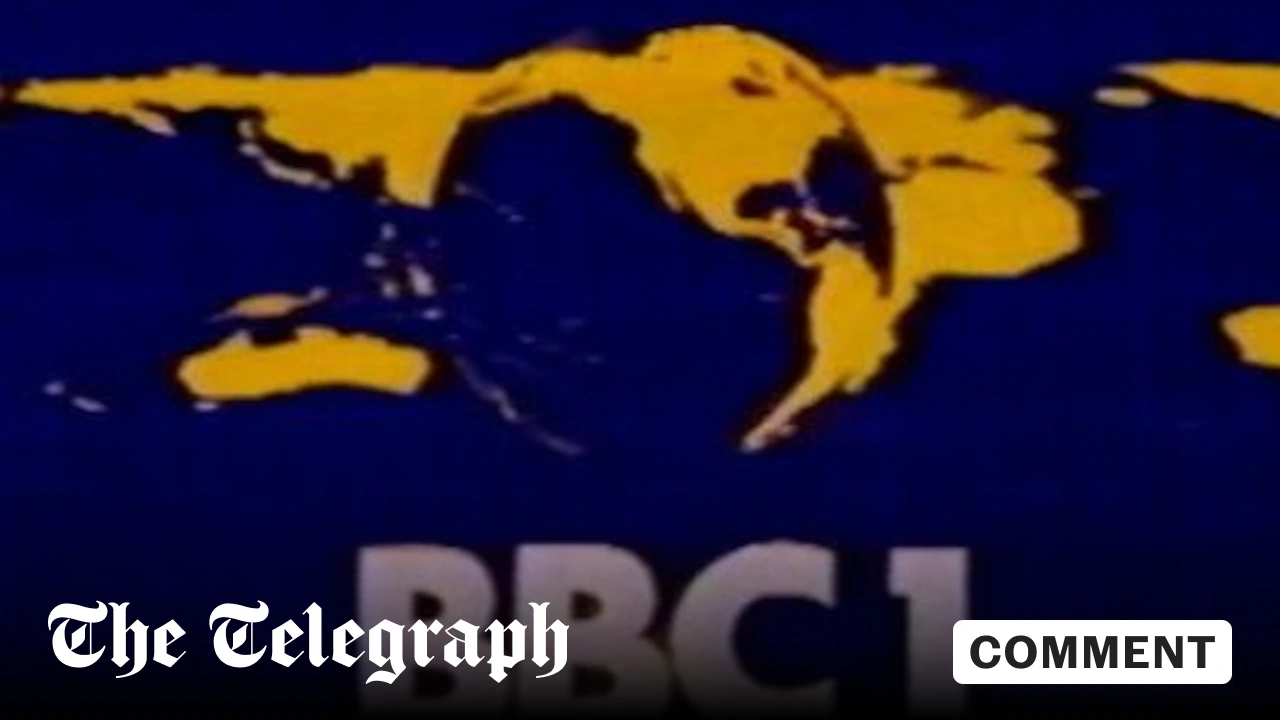
This was of a piece with the retiring of the BBC globe symbol. The globe was a neutral icon: it had, quite literally, no side. Nothing could be more inclusive (except maybe for any aliens tuning in). The balloon of the late 1990s was an interesting update. But that was then replaced in the early 2000s by specially shot idents of “our communities” engaged in choreographed dance – often extremely heavy-handed and off-putting.
We were simultaneously treated to the increased use of strong regional accents. This was a clumsy misunderstanding of the original point of the Received Pronunciation voice adopted by the BBC in the 1920s. Far from being a device to exclude, RP was actually a levelling to enable easier general understanding. We forget that regional accents and dialects used to be much thicker, leading to much misunderstanding among the British Armed Forces in the First World War. (My parents were born in the 1930s and still had problems deciphering the phonemes in Brookside 50 years later.)
The idea that the RP voice was a soft Southern posh voice is just wrong – “posh soft Southerners” sound quite different from RP. But that standard continuity voice that told us Britain was still Britain and that everything was okay… it had to go, part of the general progressive push to dismantle that still, neutral centre of Britain. (It’s interesting to track the “standard” TV voice of the ages, in advertising as much as continuity – from “John Glover” to chirpy “Jane Horrocks” to – increasingly now – Multicultural London English.)
The regularity and reliability of continuity is a lost world, from an age in which TV itself used to wake up and go to sleep. An AI entrepreneur should copyright those old BBC voices for the computer assistants of we 21st-century folk. It would be nice to have at least the illusion that everything is still ok.