
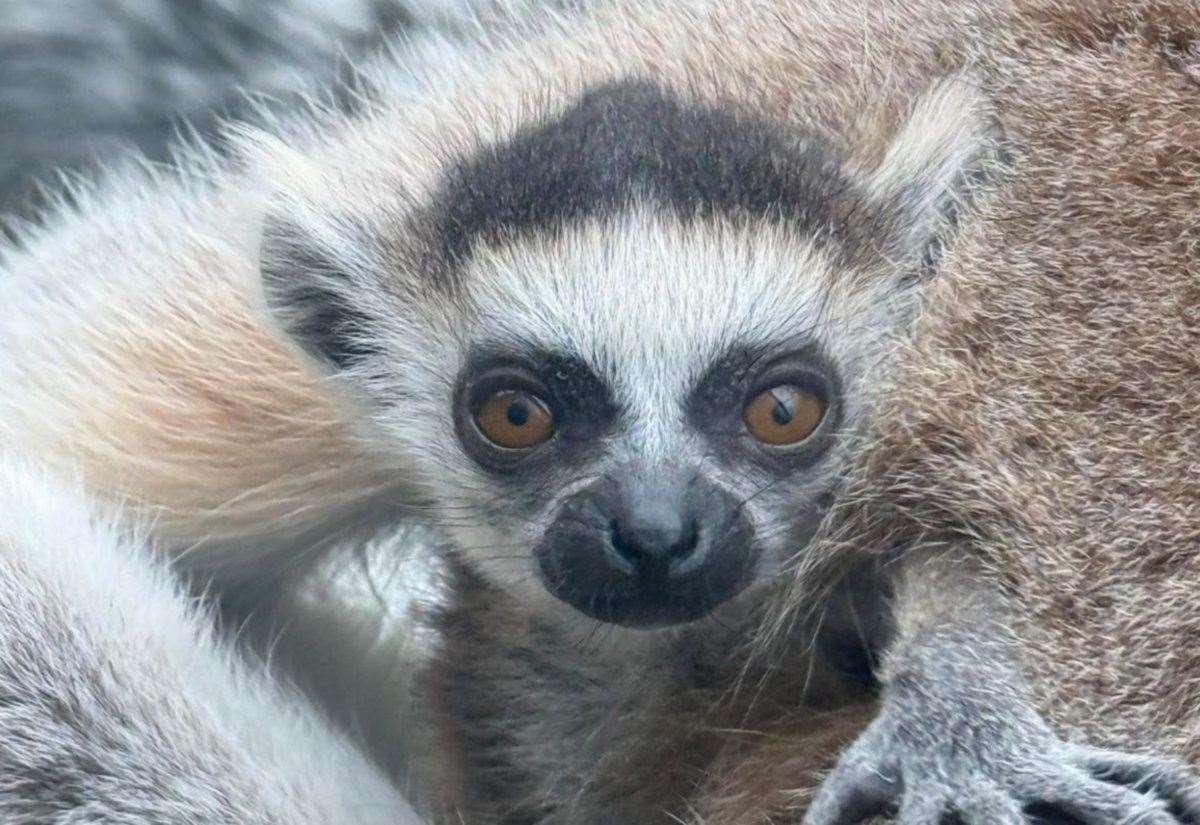
A pub and zoo is celebrating a double dose of adorable new arrivals after welcoming two baby ring-tailed lemurs.
The pair were born at The Fenn Bell Inn in Hoo, where a special conservation project operates alongside the village pub.
 The babies and their mothers are being closely monitored by staff as they grow. Picture: The Fenn Bell Conservation Project
Staff confirmed that both adult females, Terri and Goggles, gave birth just days apart, with the first infant arriving on March 22 and the second on March 24.
Keepers say it is still too early to determine the babies’ genders, but they are being closely monitored as they develop.
The births have led to the temporary suspension of the site’s lemur experiences to allow the mothers and their young time to settle in.
The Fenn Bell Inn is home to Medway’s first licensed zoo and houses a range of rescued and captive-bred animals, including otters, birds of prey and meerkats.
It has grown in popularity for its up-close encounter experiences and first opened a dedicated lemur enclosure in 2018.
Two little baby lemurs have been born. Picture: The Fenn Bell Conservation ProjectMore details, including names, will be revealed soon. Picture: The Fenn Bell Conservation Project
Harry Potter star Michael Gambon has also visited the site twice and helped feed the animals alongside zookeepers.
Announcing the latest arrivals via their Facebook page on Friday (April 3), the team said they were “thrilled” by the births and promised updates, including potential name reveals, in the coming weeks.
Visitors have been told to “stay tuned” as the youngsters continue to grow behind the scenes.
Ring-tailed lemurs are a distinctive species known for their striking black-and-white striped tails and social nature, typically living in groups in the wilds of Madagascar.
They are classified as endangered, with populations under threat from habitat loss and hunting.