
Fothergill had warned me that reaching the gorillas could be a challenge. They are not territorial, they range about, and depending on where they are in the forest, it can mean a steep trek of several hours, in high altitude. Luckily the group is hanging out close to the perimeter of the park. Konstantin, our guide, tells us that the gorillas are nearby, in the bamboo. The bamboo is sugary for gorillas, and acts like alcohol, and I’m told it’s like having a couple of beers.
In a clearing, Konstantin announces us to the gorillas with a few throaty grunts, called pig grunts, to herald our arrival. There, sitting nonchalantly in the long grass, thoughtfully chewing a bamboo shoot, is Ubuzu. He is vast, glossy, majestic – and very close. Next to him is one of the younger females, lounging. I stare at Ubuzu, transfixed. He looks back, unimpressed.
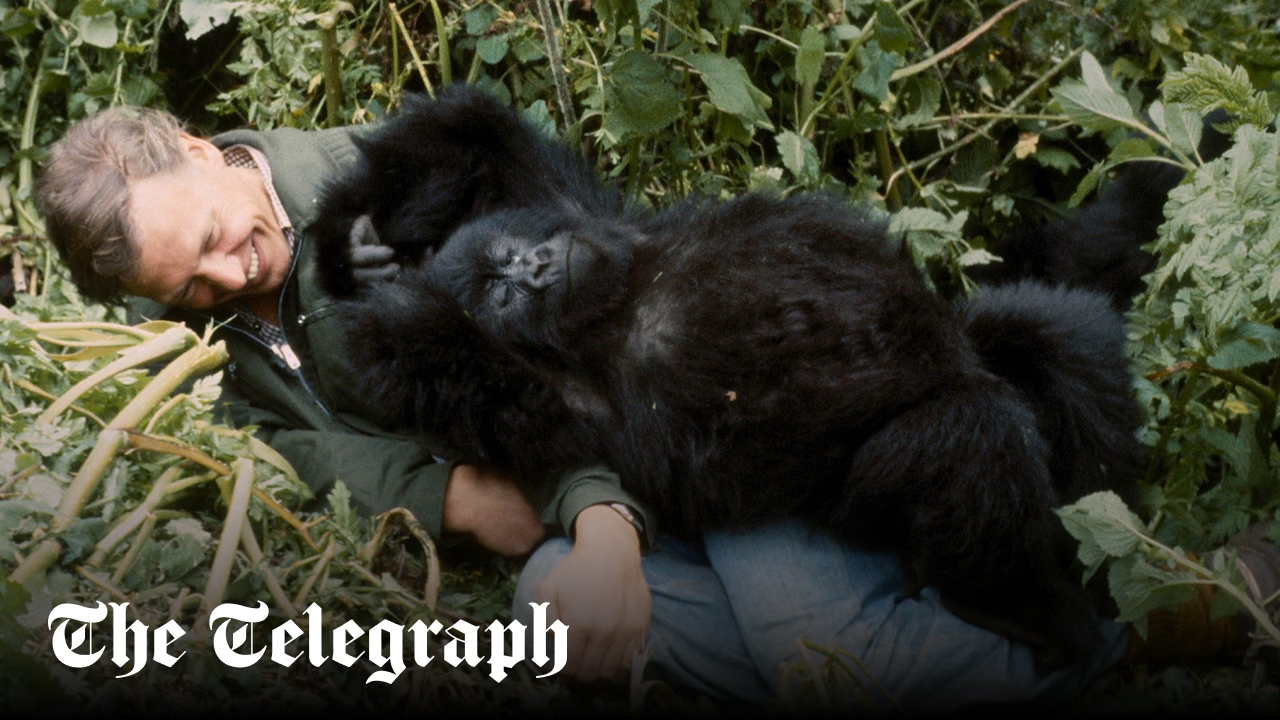
It’s an extraordinary feeling to be so close to a gorilla. A cross between awe and familiarity. The peaceful scene is interrupted by an entrance from little Ubi, who bounces in out of nowhere then climbs merrily up a bamboo shoot and swings on it, falls off and rolls about like a delighted toddler.
The film’s principal photographer, Ben Cherry, has a special camera of his own design strapped to his middle, with gyro-stabilisers to keep it steady as he follows the gorillas; the result is that the viewer feels entirely central to the action.
Roughly 25,000 visitors a year come to see the Rwandan gorillas. It costs around £1,200 (£150 for Rwandans) and groups of eight at a time are permitted to stay for an hour. Each habituated gorilla group gets one visit a day so that they don’t get overexposed: it’s not a zoo. A percentage of the revenue from tourism is shared with the local communities.
None of this would have happened without Fossey’s work. After setting up camp in Volcanoes National Park in 1967, she ended up spending 18 years there among the gorillas. Gradually, she habituated the gorillas to her presence, studying their behaviours, habits and relationships with each other, becoming a renowned expert – as Jane Goodall was to chimps – and enlightening the world as to their gentle natures and high intelligence. She learnt to communicate with them and kept years of extremely detailed notes and data, at the same time battling the poachers who were decimating their numbers.
Her particular favourite was a gorilla called Digit, with whom she struck up a special relationship. In December 1977, he was found decapitated and with his hands hacked off. He had been killed by poachers while defending his family. After that, Fossey became reclusive, smoking and drinking heavily, and her aggressive tactics and vicious treatment of the poachers she caught was resented by the local people.