
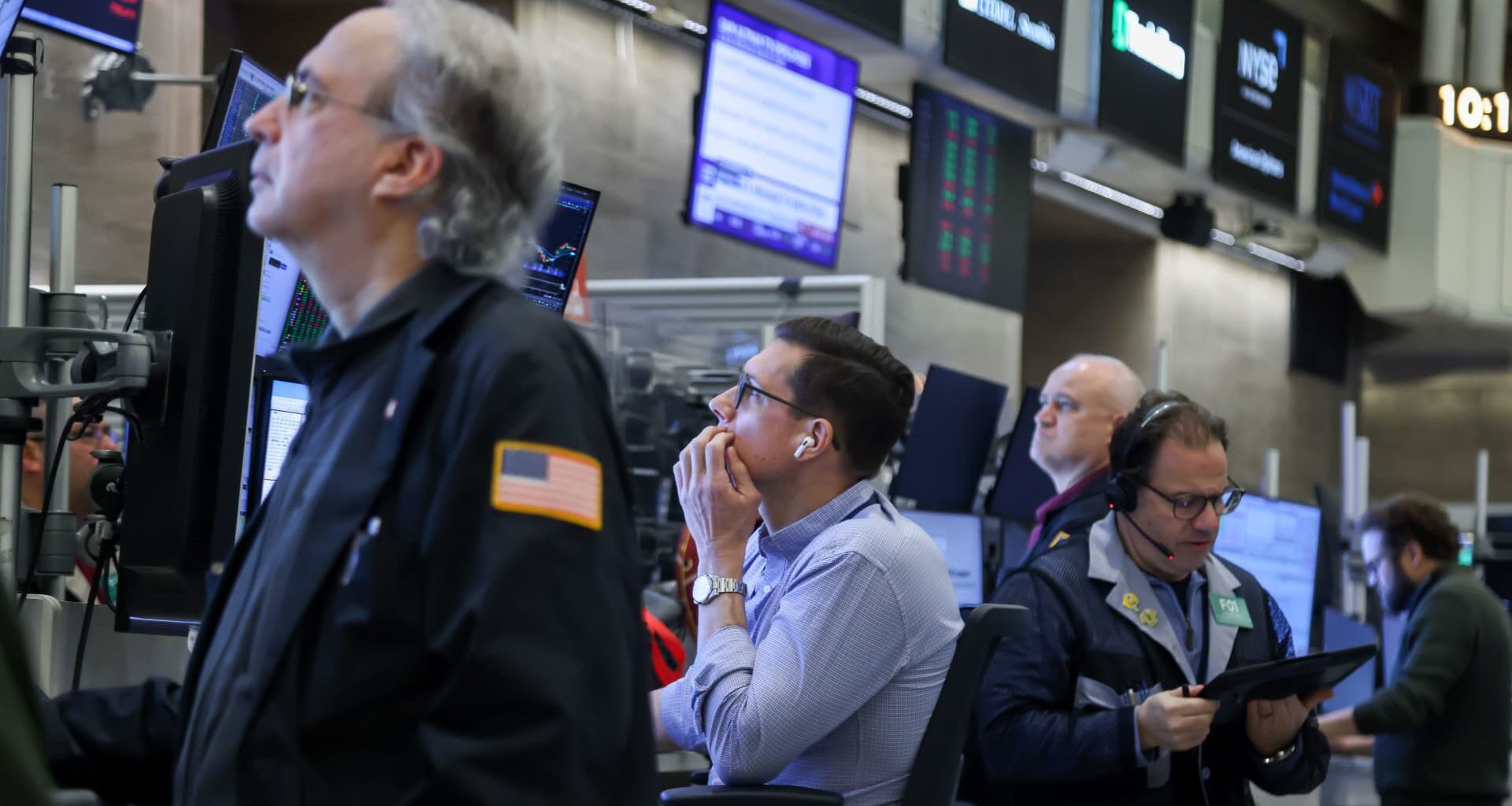
Traders work on the floor of the American Stock Exchange (AMEX) at the New York Stock Exchange (NYSE) in New York, US, on Monday, Feb. 9, 2026.
Michael Nagle | Bloomberg | Getty Images
Treasury yields held steady on Monday after Friday’s nonfarm payrolls report for March came in stronger than expected.
On Monday, the yield on the 10-year Treasury fell less than 1 basis point to 4.341%. The 2-year Treasury gained less than 1 basis point to 3.858%. The 30-year Treasury yield slipped less than a basis point to 4.898%. The bond market closed early Friday, wrapping up at 12 p.m. ET.
One basis point is equal to 0.01%, with yields and prices moving inversely.
The U.S., Iran and regional mediators were discussing a potential 45-day ceasefire as part of a deal that could lead to an end to the Middle East war, according to reports by Axios and Reuters, citing U.S., Israeli and regional sources. The framework, which could come into effect on Monday, was put together by Pakistan, an unnamed source told Reuters.
The main domestic focus was on Friday’s release by the Bureau of Labor Statistics that the U.S. economy added 178,000 jobs in March, far above the Dow Jones consensus among economists of 59,000. The unemployment rate fell to 4.3% from 4.4%, largely due to a big drop in labor force participation.
“The March employment data showed a strong rebound from February’s weak numbers but likely won’t completely reassure markets as a deeper look suggests a labor market that is limping along,” said Ryan Weldon, portfolio manager at IFM Investors. Layoff data earlier last week “ticked up for the first time in three months and job openings remained lower than expected. Higher oil prices are likely to flow through to higher input costs and ultimately higher inflation.”
The March consumer price index is reported this Friday, the first since the outbreak of war in the Middle East, and excluding food and energy is expected to rise at an annual rate of 2.7%, up from 2.5% in February, according to economists surveyed by FactSet.
Overseas, bond investors kept a close eye on developments in the Persian Gulf and Strait of Hormuz for clues into the future path of the global economy. On Sunday, President Donald Trump issued an expletive-laden ultimatum, vowing to turn Iran into “Hell” if the Islamic Republic doesn’t reopen the Strait of Hormuz by 8 p.m. ET Tuesday. Hours later, in an interview with Fox News, Trump said he was hopeful that a deal could be reached with Tehran Monday.
Iran rejected Trump’s latest threats, saying that the strait would only reopen after Tehran is compensated for damage from the war, and continued strikes across the Gulf over the weekend, including Kuwait’s oil headquarters.
The war, now in its sixth week, has sent energy prices soaring and prompted fixed-income investors to reprice the deteriorating inflation outlook, pulling back bets that the the Federal Reserve will lower interest rates this year.
The 10-year Treasury yield has gained about 36 basis points, up from 3.962% before the conflict started, near the highest levels since mid-2025.
“Bonds have declined alongside equities, suggesting stagflation rather than a recession,” said Oriano Lizza, a trader at CMC Markets Singapore, warning of heightened volatility in the lead-up to President Trump’s Tuesday deadline.
A ceasefire or peace deal could lower WTI oil prices by $20 to $30 and push the S&P 500 index higher by up to 5%, according to Lizza’s estimates, while U.S. strikes on Iranian infrastructure, such as electrical power plants, could raise crude prices to a range of $130 to $150 per barrel and send the Cboe Volatility Index past 35. The VIX recently traded at 25.11.