


Molly had intrusive sexual and violent thoughts (Picture: William Lailey/SWNS)
‘You think you’re a monster, that you don’t deserve to exist.’
These are the words of 22-year-old Molly Lambert whose mental health condition convinced her she was a paedophile.
She lives with Pure-O Compulsive Disorder, a sub-type of OCD where compulsions are mainly mental, rather than physical, affecting roughly 10% of those with obsessive compulsive disorder.
As a teenager, Molly experienced intrusive sexual and violent thoughts that made her fear she was a danger to others.
After seeing a TikTok video about P-OCD – the paedophilic theme within OCD involving unwanted sexual thoughts or images about children – Molly was diagnosed herself in August 2025.
She stresses P-OCD is not paedophilia and chose to share her story to help others suffering in silence. The condition has caused her to obsess over themes including harm, morality, sexuality, and existence.
‘It’s not being a paedophile – it’s that these thoughts exist and your brain latches onto them,’ she explains. ‘OCD is all about uncertainty. It tells you “what if?” and you can’t prove it wrong.’

Molly was diagnosed with this specific type of OCD in 2025 (Picture: Molly Lambert / SWNS)
She describes how different themes felt like ‘the same lie in a different disguise’. For Molly, the thoughts themselves were distressing, but she says they never reflected her intentions or desires.
Unlike some forms of OCD that involve physical rituals, her compulsions were internal.
‘I would replay thoughts, overanalyse everything, check comments, and second guess myself constantly,’ Molly, a digital PR worker and mental health advocate from Deansgate, Manchester, says. ‘You feel like you can’t relax.
‘Intrusive thoughts can appear suddenly and feel vivid, I could be thinking about breakfast and suddenly imagine being stabbed.’
She explains the cycle – resisting compulsions causes anxiety spikes, but giving-in strengthens the pattern. Even now, stress or fatigue can make the thoughts feel stronger.
For years, she felt trapped in what she calls ‘dark spirals’ of shame.
‘The shame is in how you see yourself,’ Molly adds. ‘Even years later, that feeling can linger.
‘When you’re figuring out who you are, OCD attacks everything and makes you question your identity.’
Her recovery has not been straightforward. She first had therapy in 2023, which helped temporarily, but by 2024 her panic attacks worsened, leading her to try hypnotherapy. She was formally diagnosed in 2025.
‘The aftermath of recovery is awful, the shame is still there, just quieter,’ Molly says. ‘You have to deal with ongoing feelings.’
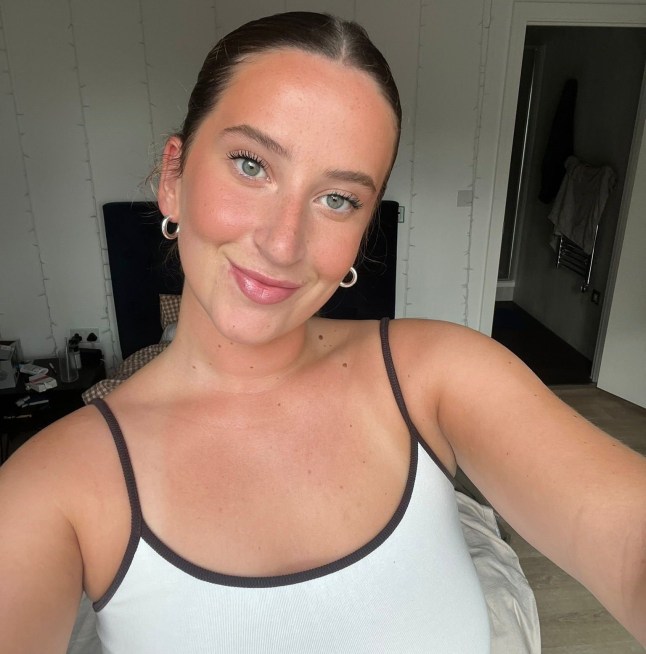
Molly is speaking out to let other people know they aren’t alone (Picture: Molly Lambert / SWNS)
It was speaking openly that was the turning point for her. ‘Externalising it helped the most. For years I avoided talking about it, but once I did, it felt like the air cleared,’ she adds.
Since speaking out about her condition online, she’s received more than 1,000 messages from people of all ages who’ve never told anyone about their intrusive thoughts. Many described years of fear, shame, and isolation.
‘The response has been overwhelming,’ Molly shares. ‘People say they’ve been crying, that they’ve felt like this for years and never told anyone.
‘Parents have reached out saying they have obsessions about harming their children. Some people said they ended up in psychiatric wards or tried to take their own lives.’
She believes the taboo nature of these thoughts makes them more dangerous.
‘People don’t talk about it, and that makes it worse,’ Molly adds. ‘Some messages are from people in their 50s who have been silently suffering their whole lives. It shows how common and hidden it is.’
The ‘Pure O’ problem
Pure-O exists as a term but OCD UK doesn’t consider it a separate form of obsessive compulsive disorder.
The organisation says Pure-O nearly always comes with outward compulsions too, making the term ‘imprecise’.
These physical compulsions could be:
Checking (various types of checking, from checking on Google to checking for own body reactions/sensations)
Seeking reassurance from loved ones or avoidance of particular objects, places or people that trigger obsessional thoughts
Watching movies of an adult nature to check if there is arousal
An OCD UK spokesperson says: ‘Pure-O is like any other form of OCD, it will involve both obsessions and compulsions, and treatment approaches would be no different than those used for every other type of OCD.’
Molly also believes the stigma may be even stronger for men.
‘If I was a man, I’d be terrified to open up,’ she explains. ‘OCD doesn’t pick gender, but men may fear being judged or accused. That’s why awareness matters – it’s not about desire or intent.’
Despite her intentions, going public has led to a torrent of abuse.
‘I’ve been called a “nonce” and told to die,’ she says. ‘I had to delete Facebook, and my mum helps manage messages.
‘If people understood traditional OCD, they’d see the same patterns in other forms. Reactions can push sufferers further into themselves, and that’s why it’s dangerous.’
She tries her best to give out advice to those who confide in her, telling them to ‘observe [the thoughts] and recognise the pattern’.
‘You have to label it so it loses power,’ Molly says. ‘People want it to stop immediately, but understanding it is the only way.

Molly gets a lot of abuse online from sharing her experience
(Picture: Molly Lambert / SWNS)
‘It gives people permission to step back and realise it’s their brain – not them being a monster.’
Despite ongoing struggles, she remains determined to help others.
People have sought help, got diagnosed, or realised they’re not alone after hearing my story. That’s what matters,’ she explains.
‘I wish I had earlier awareness, it could have saved me years of suffering. People message me saying they thought they were the only ones.
‘It’s heart breaking, but it shows how vital it is to talk about it and to break that silence.’
Do you have a story to share?
Get in touch by emailing MetroLifestyleTeam@Metro.co.uk.
Arrow
MORE: He was the perfect man – then I smelled his Guinness farts
Arrow
MORE: ‘Sectioned and given electric shock therapy – but I had a deadly brain bug, not depression’
Arrow
MORE: My autistic daughter is living in hell – no one is helping
Comments
Add Metro as a Preferred Source on Google
Add as preferred source
The Slice
Your free newsletter guide to the best London has on offer, from drinks deals to restaurant reviews.