
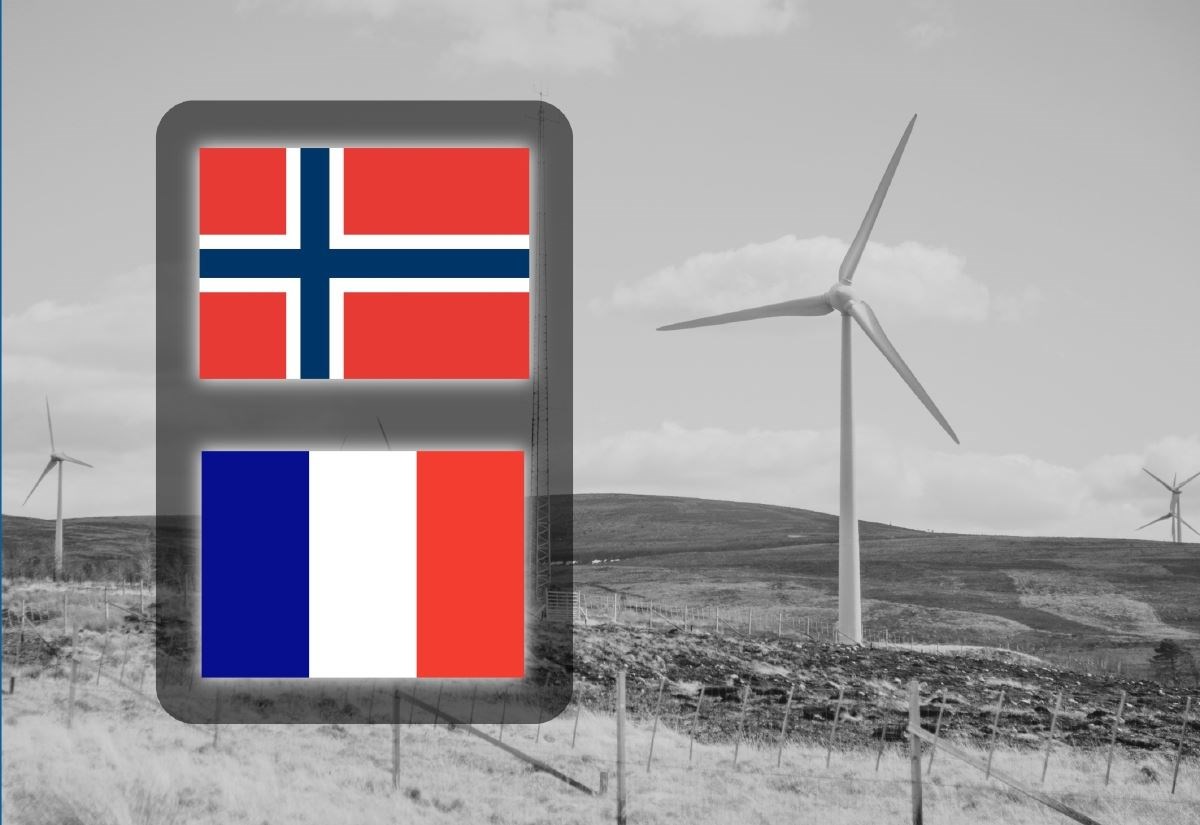
This is the first part of our three-article series looking at who owns Moray’s energy. In this story, we look at how profits from some projects are flowing into the finances of governments across Europe – leading to calls for more to stay in Moray.
Communities are receiving just a fraction of the proceeds of energy projects generating millions in profit for governments abroad, we can reveal.
 The first part of our series focusses on wind farms owned by the Norwegian and French states.
In response to our findings, critics said the lack of adequate compensation for local people at a time of rising energy bills was a “political time bomb”.
Moray is home to dozens of projects which either generate or store renewable energy, with windfarms playing the biggest role.
There are currently seven windfarms awaiting planning approval which, if signed off, would bring the area’s total capacity to almost 2GW.
According to wind industry guidance, this would generate enough electricity to power more than 1.3 million homes per year.
And nearly half of this capacity – around 600,000 homes worth – is owned by companies backed by European governments.
Located south of Dufftown, the Dorenell Wind Farm is among Moray’s biggest renewable energy projects…Picture: EDF Power Solutions
These firms send profits from renewable energy developments back into their country’s public purse.
But local taxpayers have no similar ownership stake over projects on their doorstep.
Instead, renewable energy developers have been asked to follow government guidance by setting up funds which provide grants to local projects.
However, historically, neither developers nor owners have had a legal obligation to provide a certain level of community benefit.
Instead, the level of contribution has been decided through negotiations with community representatives.
We have compared the amount of cash flowing back to governments abroad with the level of these community benefit payouts.
We discovered a stark disparity between the two, leading to calls for more public and local ownership along with concerns that communities are being exploited by the renewables industry.
‘Unacceptable’ lack of public ownership
Earlier this year, the Moray Trades Union Council (MTUC) commissioned research into the level of community benefit payments pledged by local windfarms.
In response to our findings, based on MTUC’s work along with other sources, the organisation argued it was “unacceptable” for taxpayers in other countries to own a large stake in Moray’s energy infrastructure while local taxpayers do not.
David Blair is secretary for the Moray Trades Union Congress.
Secretary David Blair argued that communities were “fed up” of not seeing the benefits of renewables development.
“Community benefit funds are a small fraction of total profits,” he added.
“The real money is in ownership.”
‘Not even close’ to a fair share
Councillor Draeyk van der Horn (Forres, Green) said the level of benefit flowing back to local people was “not even close” to a fair share.
Councillor Draeyk van der Horn – Scottish Greens – Forres. ELGIN, Moray – Councillors meet at Moray Council headquarters in Elgin ahead of the full council meeting on January 28, 2026. Picture: Daniel Forsyth.
Communities were effectively being “tipped with loose change while someone walks away with the wage packet”, he argued.
He said this shortfall, amid rising energy costs, was a “political time bomb” which worsened community opposition to renewable energy projects.
“We provide the land, the wind and the consent, others collect the dividends,” Cllr van der Horn said.
“If this were happening in a developing nation, commentators would call it resource colonialism.
“When it happens here, we are told it is just how markets work.
“Yet what we are seeing is the extraction of cheap energy that we have to buy back at vast costs.
“Communities are handed small cheques, while foreign states strengthen their balance sheets with Scottish wind.
“We don’t need to exaggerate the story, the numbers already do that.
“Voluntary community benefit funds are not justice, they are public relations.”
How much are developers encouraged to pay?
Current Scottish Government guidance states that windfarms should offer a community benefit package of £5000 per megawatt (MW) of capacity each year, adjusted for inflation.
This level was adopted as the suggested level of contribution back in 2014.
In February, ministers launched a new consultation about changing these guidelines to increase the suggested payout to £6000 per MW.
However this is a significant decrease, adjusted for inflation, compared to the value of the £5000 figure in 2014.
These community benefit payments are voluntary, and there has historically been no formal obligation to provide a given amount.
Earlier this year, Moray councillors backed plans to take legal advice around whether these contributions could be made mandatory under updated Scottish Government planning rules.
No details about the outcome of this legal advice have been released.
We have looked at how state-owned companies operate their community benefit funds in Moray, along with the profits and dividends paid to their state shareholders.
The two largest public-backed firms operating wind farms within Moray’s borders are the French firm EDF and the Norwegian firm Statkraft.
‘Community ownership of Dorenell Windfarm ‘isn’t something that can be explored’
The Dorenell Wind Farm is the EDF Groups’s biggest onshore windfarm in Europe…Picture: EDF Power Solutions
The Dorenell Windfarm, south of Dufftown, is the biggest renewable energy scheme currently operating in Moray.
It is also the largest European onshore windfarm controlled by the EDF Group, which is owned by the French state.
Dorenell Windfarm Limited is owned through joint venture EDF Energy Renewables Holdings Limited, which is 51 per cent owned by an EDF subsidiary and 49 per cent owned by UK-based private equity and pension interests.
The second-largest stake in the windfarm is owned indirectly by investment firm Dalmore Capital, while the City of Wolverhampton Council owns 12.25 per cent.
Dorenell, which has 59 turbines and a capacity of 177MW, entered operation in 2019.
The latest accounts for Dorenell Windfarm Ltd, for the year to December 31, 2024, show that the company generated profits after tax of £22.7 million.
During the same period, it also paid out a total of £30 million of dividends to shareholders.
That means EDF’s 51 per cent share would have netted the state-owned group more than £15 million.
Under the current Scottish Government guidelines, Dorenell’s 177MW capacity would see a community benefit payment of £885,000.
However, during the year to March 2025, the Dorenell Wind Farm Community Benefit Fund paid out less than half of this – at just £397,252.
A spokesperson for EDF defended the rate of community benefit payments, stating that its rate of £2525 per MW had been agreed before the Scottish Government’s £5000 target came into force.
The firm also claimed grants through the community fund were just a “small part” of direct payments in the local area, adding that Dorenell had created 14 jobs within an hour of the site.
EDF also provides a number of contributions to the local area, including annual payments to Moray Council for road and infrastructure maintenance.
In 2022, EDF received planning permission to create an even-larger wind farm named Clash Gour.
This development, near the existing Berry Burn Windfarm south of Dallas, would see a total of 48 turbines installed with a total capacity of 225MW.
The EDF spokesperson confirmed that this project will follow the £5000 per MW figure, leading to an annual community benefit of more than £1.1m.
However, the spokesperson said the company would not consider increasing this to the Scottish Government’s new proposed amount of £6000 per MW, since “financial forecasting” had already been done.
EDF added that it is currently “seeking opportunites” to allow community ownership of its projects which are currently in the development stage.
However, the spokesperson said this “isn’t something that can be explored” in the case of Dorenell, since it is already in operation.
The firm added that community ownership had been “offered” in the case of Clash Gour.
Norwegian state firm has ‘always followed Scottish Government guidance in place at the time’
Another key player in Moray’s renewable energy sector is the Norwegian state-owned Statkraft.
The firm controls the Berry Burn Windfarm, owning a 51 per cent stake in Wind UK Invest Ltd – a joint-venture alongside the Chinese state.
This company owns two other onshore wind farms in the UK, the Baillie windfarm near Thurso and the Alltwalis development in Wales.
Berryburn windfarm, south of Forres…Picture: Becky Saunderson..
According to the firm’s latest accounts, payouts to state-backed shareholders topped £19 million in the year to December 31, 2025.
Of this, £14 million came from the Berry Burn Windfarm alone – which turned a £9 million profit during the previous year.
But community benefit payments linked to the windfarm came to less than £250,000 in the same time period.
The Berry Burn Community Fund pays out £2500 per MW each year, adjusted for retail prices compared to 2014.
This is only half of the community benefit suggested by the Scottish Government in 2014.
Asked about the gap, a spokesperson said: “Statkraft has always followed the Scottish Government’s recommended guidance on community funding in place at the time each wind farm proposal was submitted into planning.”
The planning application for the Berry Burn Wind Farm was submitted in September 2004, but the Berry Burn Community Fund’s constitution was signed off in August 2014.
This was months after the Scottish Government planning policies adopted the £5000 target.
In the decade between 2013 and 2024, Statkraft has paid more than £2.1m into the fund – half the amount that would have been provided under the Scottish Government’s target.
The Statkraft spokesperson also said that all monitoring, operation and maintenance of its windfarms was carried out by its own teams – regardless of the ownership status.
“Statkraft has developed and built a number of wind farms across the UK and is proud to have contributed over £5.5m so far in community funding to local projects and initiatives,” the spokesperson added.
“The majority of this funding has been delivered in Scotland, and Statkraft has always followed the Scottish Government’s recommended guidance on community funding in place at the time each wind farm proposal was submitted into planning.”
‘Community benefit funds are a small fraction of total profits’
In response to our findings, the MTUC said that communities were not receiving enough compensation from local renewables projects, and pushed for local communities to be given more of a say.
“It is unacceptable that the people of Sweden, Norway, France and China have public ownership of Moray’s energy while the people of Moray don’t,” secretary Mr Blair said.
“These countries show that public ownership is not only possible, it’s successful.
“Communities across the north of Scotland are fed up being asked to host renewables infrastructure that we don’t own.
“GB Energy has recently announced £1bn to support locally owned energy, and we need to make sure Moray is at the front of the queue to access this funding so we can own more of our own energy.
“We also insist that all parties in the upcoming Scottish election should commit to using devolved powers to back local public ownership of renewables.
“This could be as simple as more rooftop solar on public buildings, right up to ownership stakes in major projects.
“Local public ownership would mean we can support local jobs and supply chains, keeping money in Moray and reducing our exposure to the whims of global markets.
“Moray’s trade unions will leave no stone unturned to ensure our natural energy wealth truly benefits Moray’s workers and communities.”
Do you want to respond to this article? If so, click here to submit your thoughts and they may be published in print.