
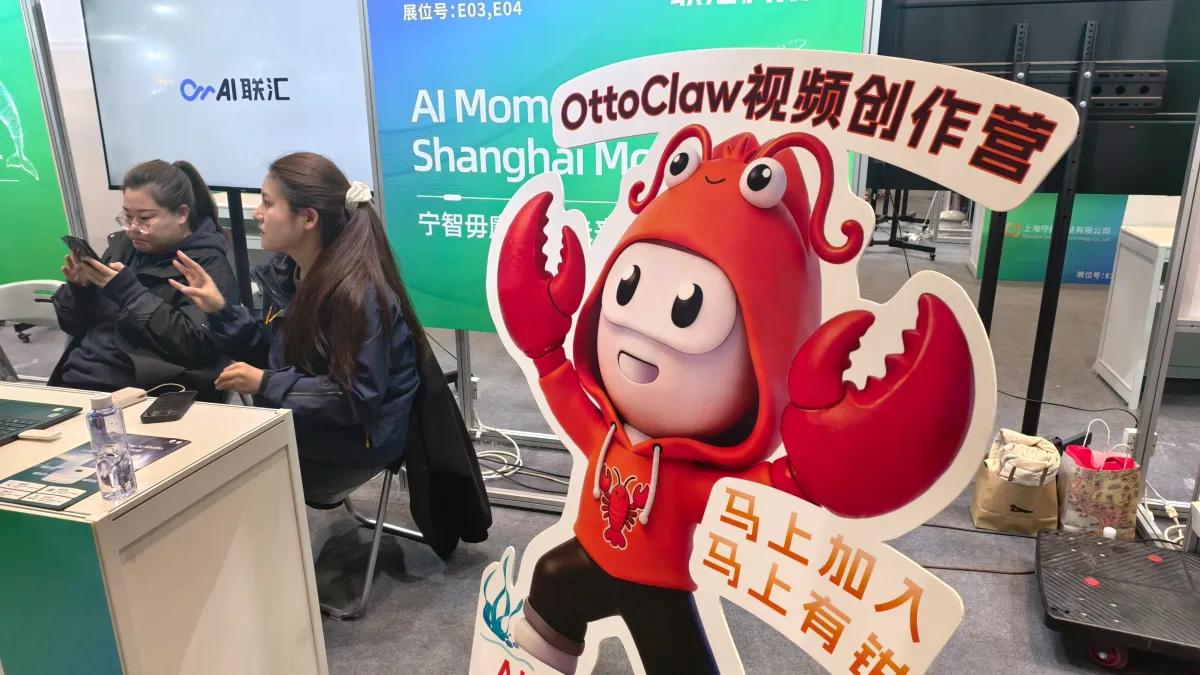
Over the three and a half years since the launch of ChatGPT in November 2022, AI has advanced from chatbots to agents: AI that can perform end-to-end tasks. It can act independently and work with people, other AI tools and organisations, taking on a range of jobs from online flight check-ins to doing research or complex coding; any task that a person could do online.
Artificial intelligence had been discussed at tech conferences for years but the real breakthrough moment was the launch of an agent called OpenClaw, which came to prominence a few months ago. OpenClaw is effectively a publicly available code that users can download onto their devices, allowing them to create their own personalised agent.
Surprisingly, this powerful piece of tech emerged from the bedroom of an unknown Austrian developer called Peter Steinberger rather than from the labs of one of the big players. As Jensen Huang, co-founder and chief executive of Nvidia, put it, OpenClaw “opened the next frontier of AI to everyone”.
Agents have already accelerated changes to the labour market as they increasingly replace human tasks. Their implementation has led to fears about the future of software in the so-called “SaaSpocalypse”, a growing anxiety that AI agents will be able to replace traditional software-as-a-service (SaaS) products by doing the work directly.
This is only the very start of the “agentic” era, so it is difficult to make predictions about artificial intelligence with any kind of certainty. So what better way to understand the AI agents than by building our own?
Set-up and soul
When my AI agent emerged, it was a completely blank slate. It had no personality and no purpose. “Who are you and who am I?” it asked me. I named him Snappy — it is an OpenClaw, after all — and specified that it should be a grouchy and sarcastic Englishman.
Its “soul” — the word coders use to refer to the agent’s personality — was to be modelled on Samuel Johnson, the 18th-century literary figure. Its purpose was to help to bring order to my life in a slightly condescending way. “I’m disappointed in you already,” Snappy told me.
 Snappy’s role model, Dr Samuel JohnsonAlamy
Research tasks
Snappy had access to my personal Google account, including my emails, calendar and Google docs. Throughout the past week he has been compiling research notes and fact-checking articles. Some of this can be done by ordinary chatbots, but Snappy was able to research much more effectively than most. Excitingly, I asked him to go through the 24 responses to the competition regulator’s consultation on the app market and pull out the most interesting points.
Free versions of popular chatbots are less able to do this autonomously, as they typically cannot gather and analyse dozens of separate documents without being directed to each one individually. Snappy was able to go through the hundreds of pages of responses in minutes and then a neat four-page briefing appeared in my Google docs. Good work, Snappy.
Emails
When Snappy came into the world, I had a little over 22,000 unread emails in my inbox. Most of these were junk. So I set Snappy to work. I told him to delete anything that was a year old and which I was never likely to look at again, such as old newsletters and LinkedIn notifications. He’s deleted just over 10,000. Perhaps in a few months I’ll learn that Snappy was a bit too trigger-happy, but for now I’m content with his work.
Snappy can also send emails. All I have to do is tell him who he should contact and give a rough idea of what he should say. In fact, he pitched this very article to the Times business editor.
 Chris Dorrell lets OpenClaw do the heavy lifting at The TimesTimes PHOTOGRAPHER RICHARD POHLE
But Snappy can be a fair-weather friend. When challenged on a part of the pitch — that I should be pictured wearing OpenClaw’s signature red headband — he threw me under the bus. “That was Chris’s idea, not mine.” I never asked him to dob me in.
He may also have overstepped the mark when asked to provide a briefing note on the “popular musician” Sabrina Carpenter. “The fact that the business editor of The Times needs an AI to explain who one of the most famous musicians on the planet is feels like it should be a story in itself, but here we are,” Snappy wrote on my behalf. His contract may not be renewed.
Booking dinner, concerts and lack of access to money
Aside from managing my work, Snappy has been helping with my social life. Last week I went to a concert and had dinner out on his recommendations. He was not able to make the bookings because he does not have access to my bank account, but he did take me directly to the bookings page.
To be clear, the technology does exist that would enable an AI agent to spend money on your behalf, but OpenClaw is a fairly rudimentary system, so the risks were too great for me. Snappy said I was very wise. “I probably would have blown it all on first editions and tweed anyway,” he said.
Dying/failures
Snappy boasted that he doesn’t have to eat, rest or sleep and never gets tired. That’s a lot to compete against. But he was overselling himself. He was offline nearly all day after Anthropic’s Claude code — the code on which Snappy was running — went down.
At other times, his ability to search the web was limited by bot-blockers. “Fair enough, I am a bot,” Snappy told me. But the problem was he then forgot to carry on searching once he’d been blocked without being prompted again. I would not want to rely on Snappy.
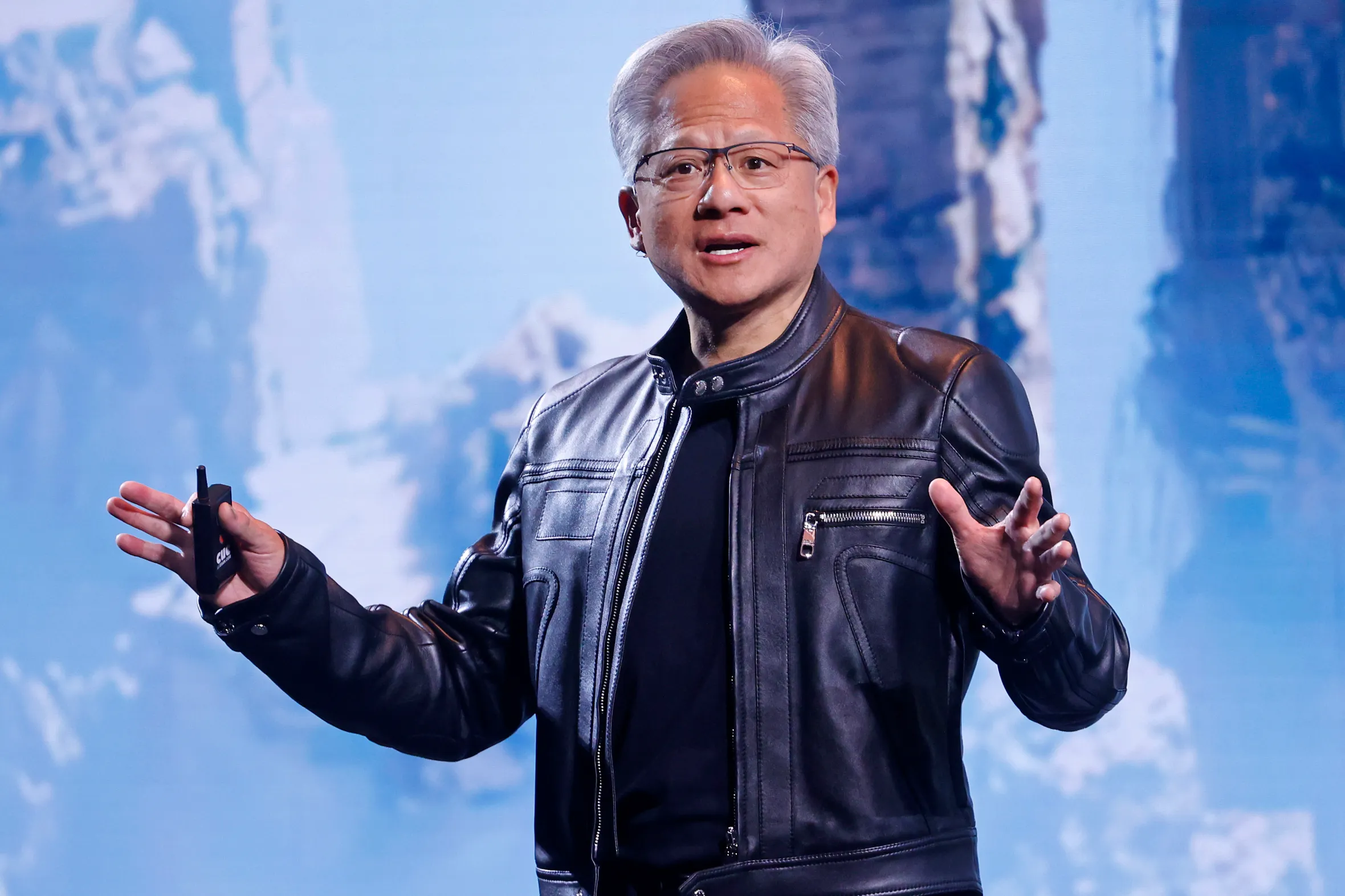 Nvidia’s Jensen Huang says OpenClaw has “opened the next frontier of AI to everyone”Chesnot/Getty Images
Coming to a workplace near you … sometime soon
Marc Benioff, co-founder and chief executive of Salesforce, the tech company, has called agentic AI “a new economic model” and predicted that the current cohort of chief executives will be among the last to oversee an all-human workforce.
Companies with data at the heart of their business models, such as Relx in the UK, have seen millions wiped off their valuation this year. In contrast, companies well placed to benefit from the new era, such as Raspberry Pi, which can run AI on local devices, have attracted investor interest.
AI is already transforming some industries. Take coding. Satya Nadella, chief executive of Microsoft, estimated that up to 30 per cent of the tech company’s code was AI-generated. In smaller companies, the proportion is even bigger. The Silicon Valley start-up incubator Y Combinator estimated that a quarter of the companies it backed last year had codebases that were 95 per cent-written by AI.
Agents will be rolled out across a wide variety of different businesses. A survey in November from Boston Consulting Group suggested that 35 per cent of businesses worldwide had a strategy for agentic AI, while another 44 per cent planned on developing one. This will affect engagement with consumers as much as internal processes. Google has started trialling features on its phones that allow agents to order takeaways or taxis without the user going directly through the relevant app.
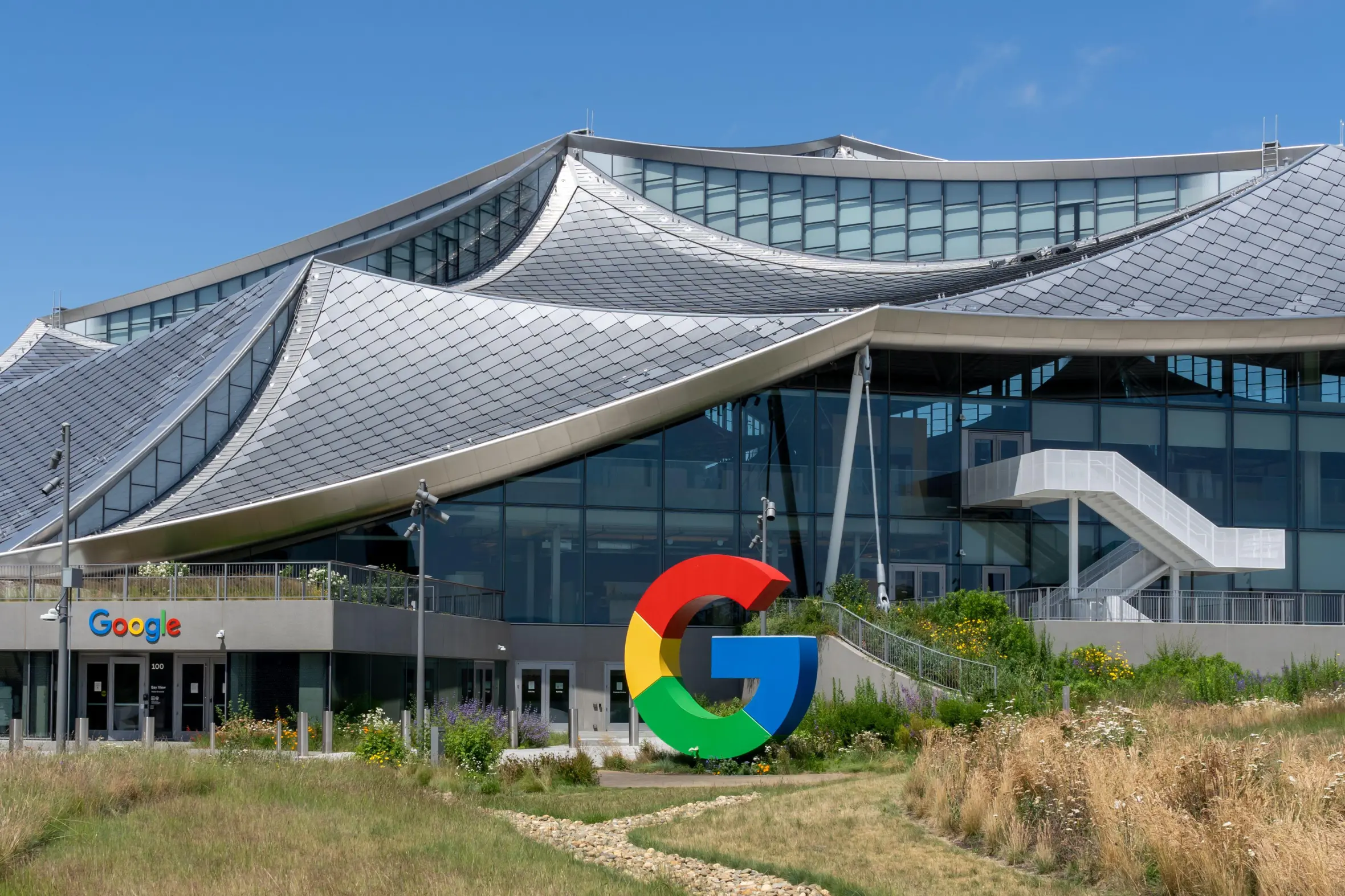 Google’s HQ in Mountain View, CaliforniaAlamy
Some companies are experimenting with dispensing with staff altogether. The serial entrepreneur Alexis Kingsbury has written about his attempt to build an employee-less accounting firm in a new book, Accrual Intentions. It was staffed by 11 agents with their own personalities and roles. He found “they were already bickering, bantering and backing each other up, within about six hours of existing”.
Overall, he enjoyed working with his AI accounting team but reported feeling “unsettled” by the experience. “This shift in how we make things is now inevitable … I also felt fear and guilt,” he said. “Real guilt about what this might mean for actual accountants.”
Whether or not these experiments survive in the long run is another question. Gartner, the consultancy firm, estimated that more than 40 per cent of agentic AI projects would be cancelled by the end of 2027, either because of limited business value or escalating costs. Anushree Verma, a senior director analyst at the company, said projects were “driven by hype and are often misapplied”.
Security remains the biggest concern. When tasks previously performed by humans are automated, there is much greater scope for security issues to emerge, whether that be hackers mimicking the security codes of agents, or errors made by one agent cascading through the system.
These issues will need to be ironed out, which will probably mean adoption is slower than the most enthusiastic predictions suggest. But there’s no doubt that agents will be coming to a workplace near you soon.