
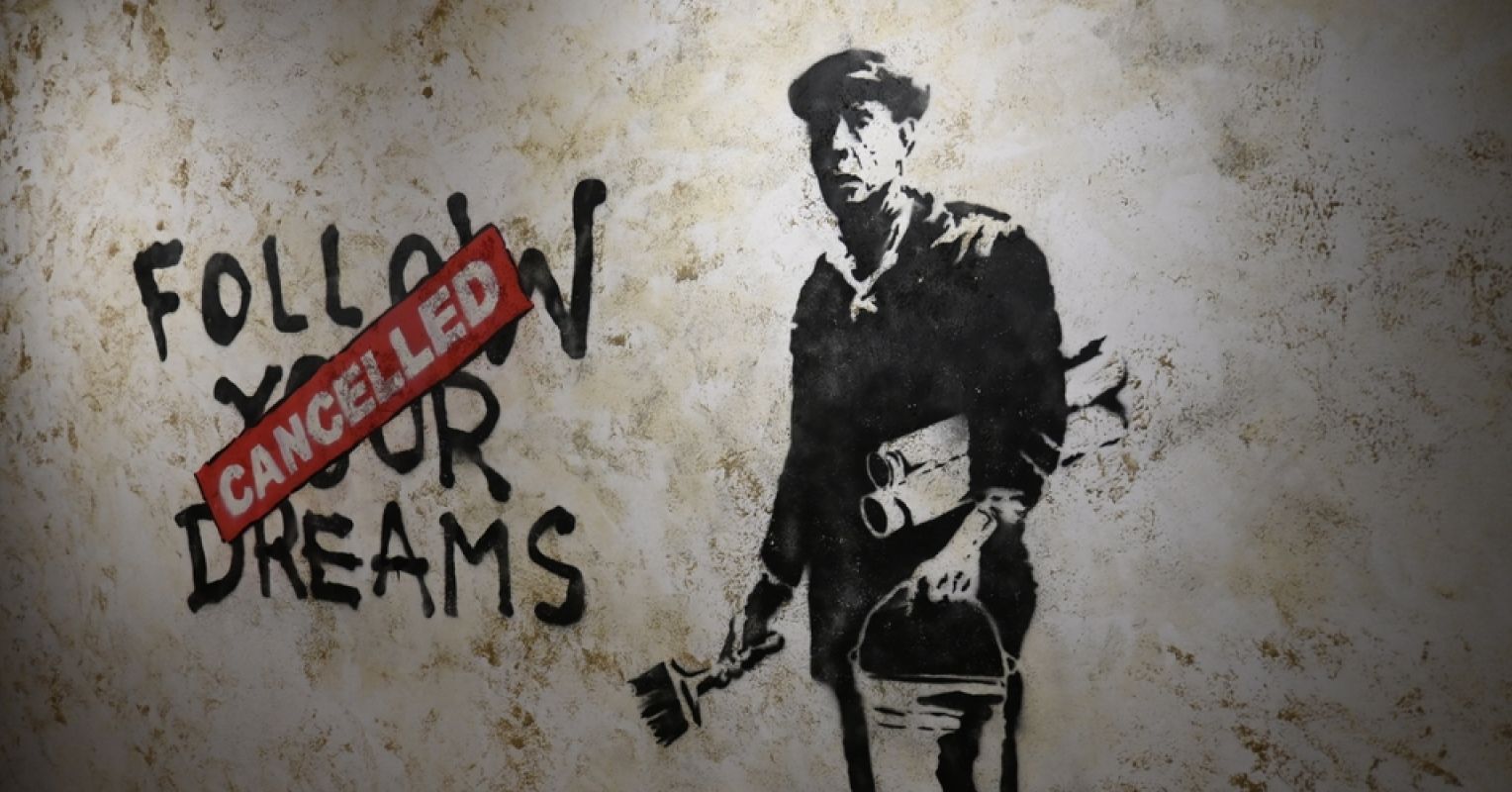
“Better the martyrdom of obscurity than the treachery of fame.” —Author Unknown
We live in an age of anonymity.
From the safety of their keyboards, wannabe social commenters and internet trolls scour the web for reasons to be outraged and conspiracies to promote. In the streets, masked protesters clash with masked government officials, each trying to be sure that no one’s identities are tied to their actions.
Pseudonymous authors conceal themselves behind works of fiction. Artists live as recluses and veil their intentions in obscurity. Teens and adults alike use the invisibility afforded by the internet to indulge in behaviors they’d rather not let anyone see. Public records are redacted and nondisclosure agreements have become ubiquitous.
And yet at the same time, we live in an age of exposure, where branding and self-promotion are valorized as goods in themselves. Along with the proliferation of cameras and screens has come the demand to always be on, always present oneself in the best possible light.
If T.S. Eliot’s The Love Song of J. Alfred Prufrock (1915) bemoaned the human tendency to “prepare a face to meet the faces that you meet,” it could not have foreseen a time when pictures of one’s own face needed to be meticulously photoshopped in order to be shared with an anonymous public hidden behind their screens. It could not have predicted the advent of AI generated headshots that appear to augment and perfect the blemishes nature has imparted in its blindness and haste. Nor could it have imagined a world in which even those who would prefer not to be are daily caught on camera, photographed and recorded by strangers and by devices affixed to the entryway of every neighborhood home.
Anonymity in Art: The Curious Case of Banksy
It is in this context that we ought to consider the recent work of investigative journalism published by Reuters that claims to have uncovered the identity of the street artist and political activist Banksy, who has fiercely guarded his anonymity for more than 30 years.
According to Reuters, its unmasking of an artist who has sought to keep his name private even as his art has garnered widespread notoriety and acclaim was motivated by a dedication to “transparency” and “accountability.” They write:
“[T]he public has a deep interest in understanding the identity and career of a figure with [Banksy’s] profound and enduring influence on culture, the art industry and international political discourse.”
Inquiring minds want to know, as the saying goes, and it is the job of the media to attempt to sate the public’s voyeuristic desires. Still, it is worth mediating on whether the revelation of such secrets actually satisfies our longings or whether some mysteries are best left unmolested.
The Promise and the Peril of Anonymity
To answer this, we ought, perhaps, to ponder why some artists would want to remain anonymous even when their works could bring them fame and adulation.
For a street artist like Banksy, there is the obvious motivation of avoiding the law. Vandalism is illegal and Banksy’s graffiti, though it may have artistic merit, could get him put behind bars. Indeed, a signed confession made after an arrest that took place back in 2000 plays a central role in Reuter’s investigation. Yet the backlash they might face if their identities were to be revealed is far from the only reason some artists prefer to remain nameless.
Sure, anonymity can act as a form of protection, granting one the license to speak freely and explore controversial or unpopular ideas. But so too does it give artists the ability to foreground their creations and allow their art to speak on its own terms without having to bear the weight that comes from being associated with the flawed human being who created it. How many artists adopt pseudonyms in order to let their works be judged on the merits and not the lives of their authors?
Beyond this, the anonymity of an artist can be read as an invitation, an offer for those who desire to know more to seek and see what they can find. By not making themselves the focus of their works—a novel idea in an age captivated by the cult of personality—anonymous artists remind their audiences that there is something mysterious about the nature of art, something that transcends the identity of a single person and resists easier articulation.
The desire for “transparency,” for complete knowledge at any cost, is an affront to this mystery. It assumes that art is meant to be understood rather than appreciated, comprehended rather than wondered at.
This, of course, is complicated by the fact that human beings are complicated creatures. What are we to make of the anonymous artists who, like Banksy, profit—sometimes to the tune of tens of millions of dollars—off their anonymity? What happens when anonymity looks more like a wall than a veil, more like an obstruction than an invitation?
The answer is perhaps as unsatisfying as it is to live with the uncertainty anonymous authorship provokes. The anonymity of others forces us to confront the limits of our knowledge, the constraints placed upon what we can access and what we get to control.
Anonymity can be used as a weapon; it can deceive and defraud. But so too can it be used to delight, as is the case when one does a good deed without seeking credit or wanting anything in return. How much more generous is the anonymous gift or donation? How much more meritorious is the work of art that is asked not to be a stand-in for its author but simply a beautiful work of art?