
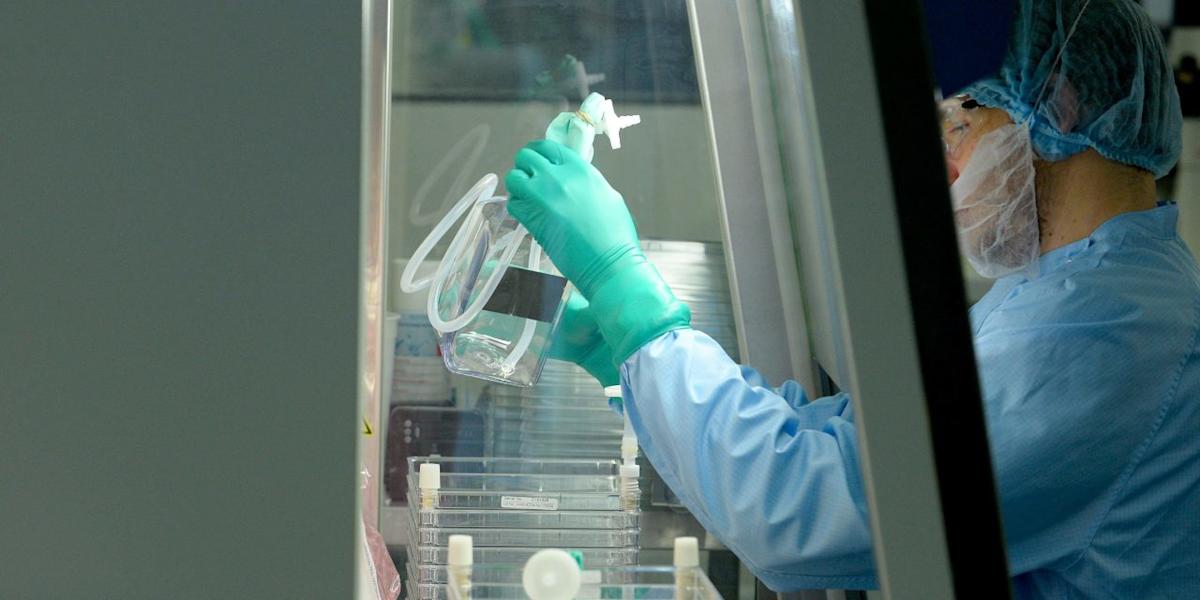
 The deal is the latest in a busy year for dealmaking in the biotech industry. – eric piermont/Agence France-Presse/Getty Images
Neurocrine Biosciences agreed to buy Soleno Therapeutics for $2.9 billion, giving it the first approved treatment for a rare genetic disorder that causes relentless, life-threatening hunger.
The acquisition centers on Soleno’s treatment for Prader-Willi syndrome, a rare genetic disorder that affects roughly 10,000 people in the U.S. People with the condition experience an unrelenting, compulsive hunger that can drive them to eat until they suffer obesity, diabetes or life-threatening consequences like stomach rupture.
Soleno’s treatment, called Vykat XR, won Food and Drug Administration approval in March 2025 as the first and only treatment for the condition. It generated $190 million in revenue in its first year on the market.
Neurocrine agreed to pay $53 a share in cash, a roughly 34% premium to Soleno’s closing share price on April 2. The transaction will be funded with cash on hand, but Neurocrine said it plans to take on some new debt. It is expected to close by early July.
Soleno shares rose 32% in morning trading. Neurocrine’s stock fell about 1.5%.
Neurocrine’s chief executive, Kyle Gano, said management will leverage “our experience and capabilities to expand VYKAT XR’s reach to benefit more patients.”
For Neurocrine, the deal adds a third marketed medicine to a portfolio anchored by Ingrezza, its treatment for involuntary muscle movements that generated $2.51 billion in revenue last year.
The San Diego-based company has been building out its rare-disease business since late 2024, when it won approval for Crenessity, a treatment for a hormone disorder affecting the adrenal glands that brought in $301 million last year.
Vykat XR’s patents are expected to keep competitors from selling a rival version until the mid-2040s, according to Neurocrine.
The deal is the latest in a busy year for dealmaking in the biotech industry. In the first quarter, biotechs and pharmaceutical companies inked $68.6 billion in deals, according to data provider LSEG.
Write to Nicholas G. Miller at nicholas.miller@wsj.com and Xavier Martinez at xavier.martinez@wsj.com