
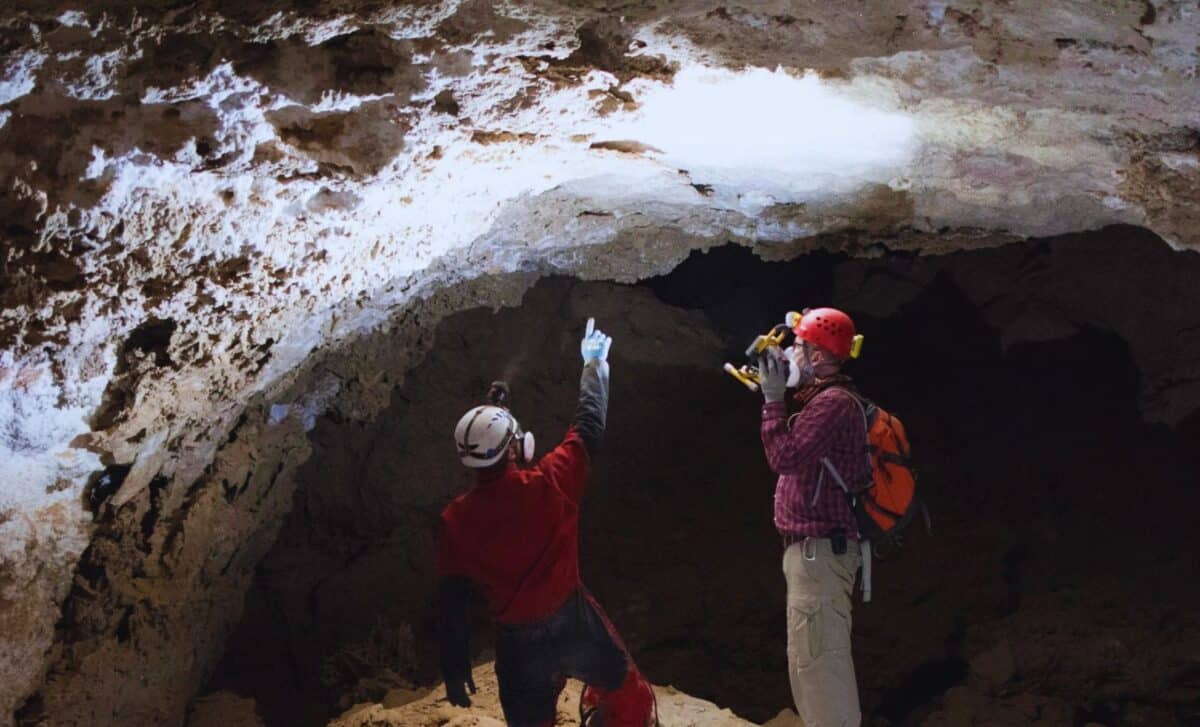
The Saharo-Arabian desert hasn’t always been the harsh, dry expanse we know today, as caves records reveal. New research shows it once turned green again and again, with rivers and lakes that allowed animals and early humans to move between Africa and Eurasia over the past 8 million years.
This changes how scientists see the region. Instead of a permanent barrier, Arabia looks more like a corridor that opened and closed depending on the climate. The study, published in Nature and backed by the Saudi Heritage Commission, combines fossil discoveries with climate data preserved in caves.
For years, the dominant idea was that this desert had stayed more or less the same for at least 11 million years. That picture no longer holds up, as new evidence points to repeated humid phases that temporarily transformed the region into something much greener and more connected.
Animals Once Roamed A Green Corridor
One of the strongest clues comes from fossils found across the region. Researchers identified remains of crocodiles, hippopotamids, equids, and proboscideans in areas that are now extremely dry. According to Michael Petraglia of Griffith University, these animals could not have survived without reliable water sources. That means rivers and lakes once existed where there is now desert.
As mentioned in the latest research, published in the journal Nature, these fossils date back to the Late Miocene and Pleistocene. During these periods, Arabia experienced phases of increased rainfall. Those wetter windows likely created natural routes that animals could follow between continents. As he explained in an university statement:
“These wetter conditions likely facilitated these mammalian dispersals between Africa and Eurasia, with Arabia acting as a key crossroads for continental-scale biogeographic exchanges.”
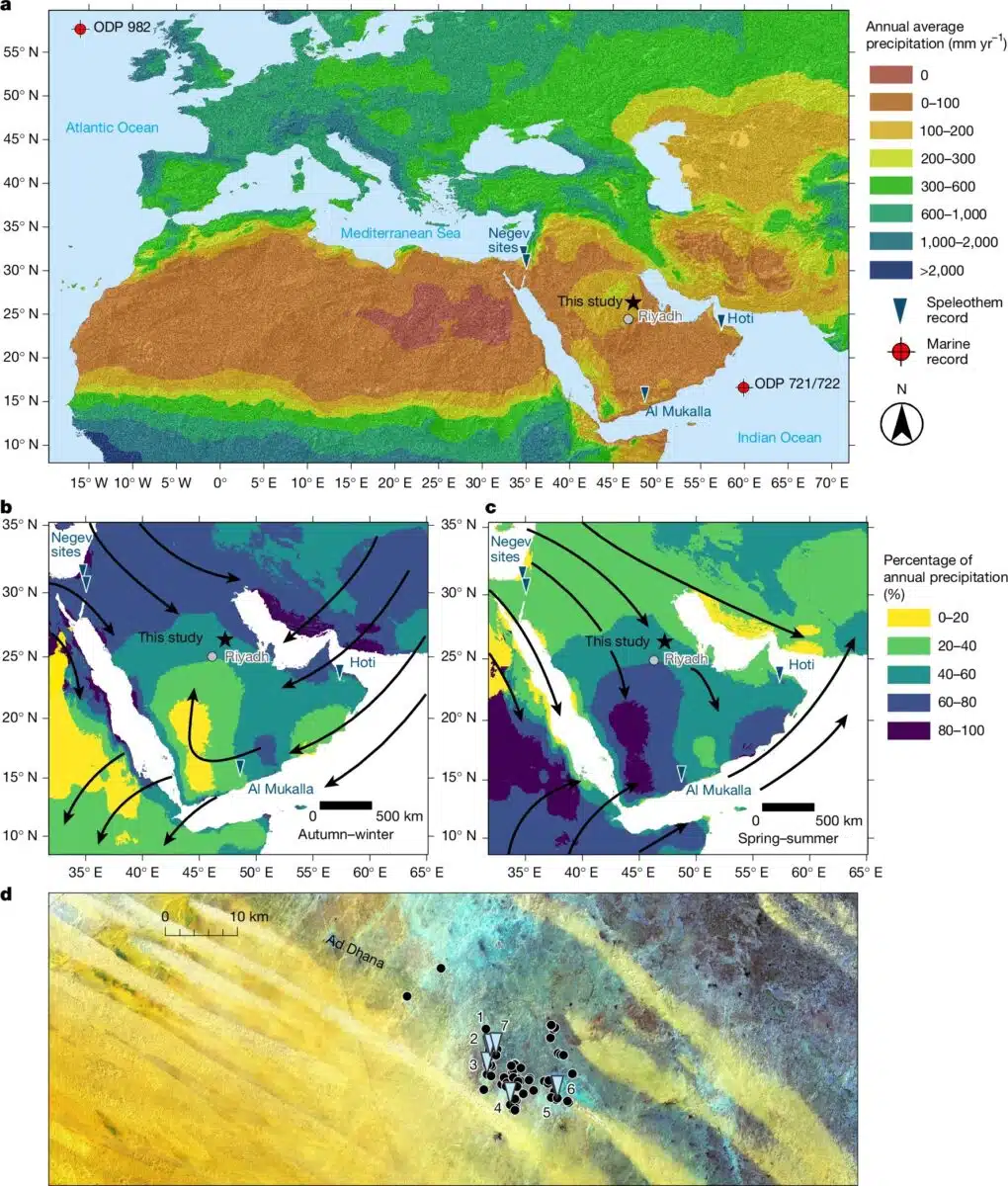 Maps show rainfall distribution, seasonal circulation, and key locations used to reconstruct Arabia’s humid phases over the past 8 million years. Credit: Nature
Caves Hold A Record Of Ancient Rainfall
Fossils are only part of the story. Scientists also studied speleothems, mineral formations like stalactites and stalagmites that grow in caves and record past climate conditions. Based on research by Monika Markowska from Northumbria University and Hubert Vonhof of the Max Planck Institute for Chemistry, these formations show that Arabia went through multiple humid phases over millions of years.
“Our findings highlighted that, as the monsoon’s influence weakened over time, precipitation during humid intervals decreased and became more variable,” she said “This coincided with enhanced polar ice cover over the Northern Hemisphere during the Pleistocene epoch. Our research is one of the longest terrestrial records ever published.”
The data found in the caves also reveal a trend. Rainfall became less stable over time as monsoon systems weakened. This shift happened alongside the growth of ice sheets in the Northern Hemisphere during the pleistocene, linking regional changes to global climate patterns.
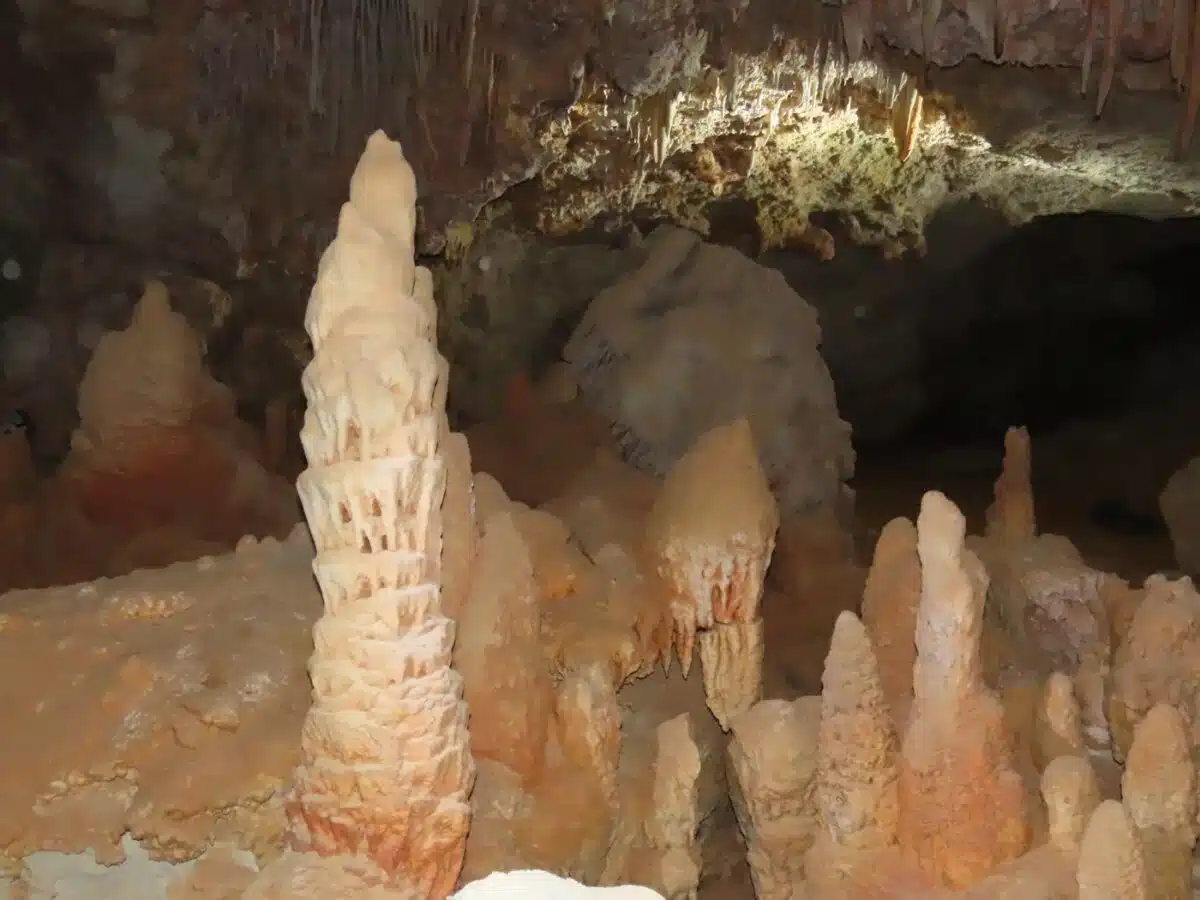 Speleothems record climate through chemical changes linked to conditions above the cave. Credit: Hubert Vonhof
A Passage For Humans And Wildlife
All of this points to a bigger idea. Arabia was not just a place to cross around, but a place to cross through. As reported by Faisal al-jibrin of the Saudi Heritage Commission, the region has often been overlooked in studies of migration. Yet it turns out this place was central to how animals and early humans moved between Africa and Eurasia.
“Arabia has traditionally been overlooked in Africa-Eurasia dispersals, but studies like ours increasingly reveal it central place in mammalian and hominin migrations,” he explained.
When the climate got dry again, those pathways would have vanished, leaving populations isolated once more. This kind of environmental flip-flop helps explain how species spread across continents, even though one of the largest deserts on Earth now stands in the way.
 A cross-section of a stalagmite collected from a cave on the Arabian Peninsula. Credit: Monika Markowska