
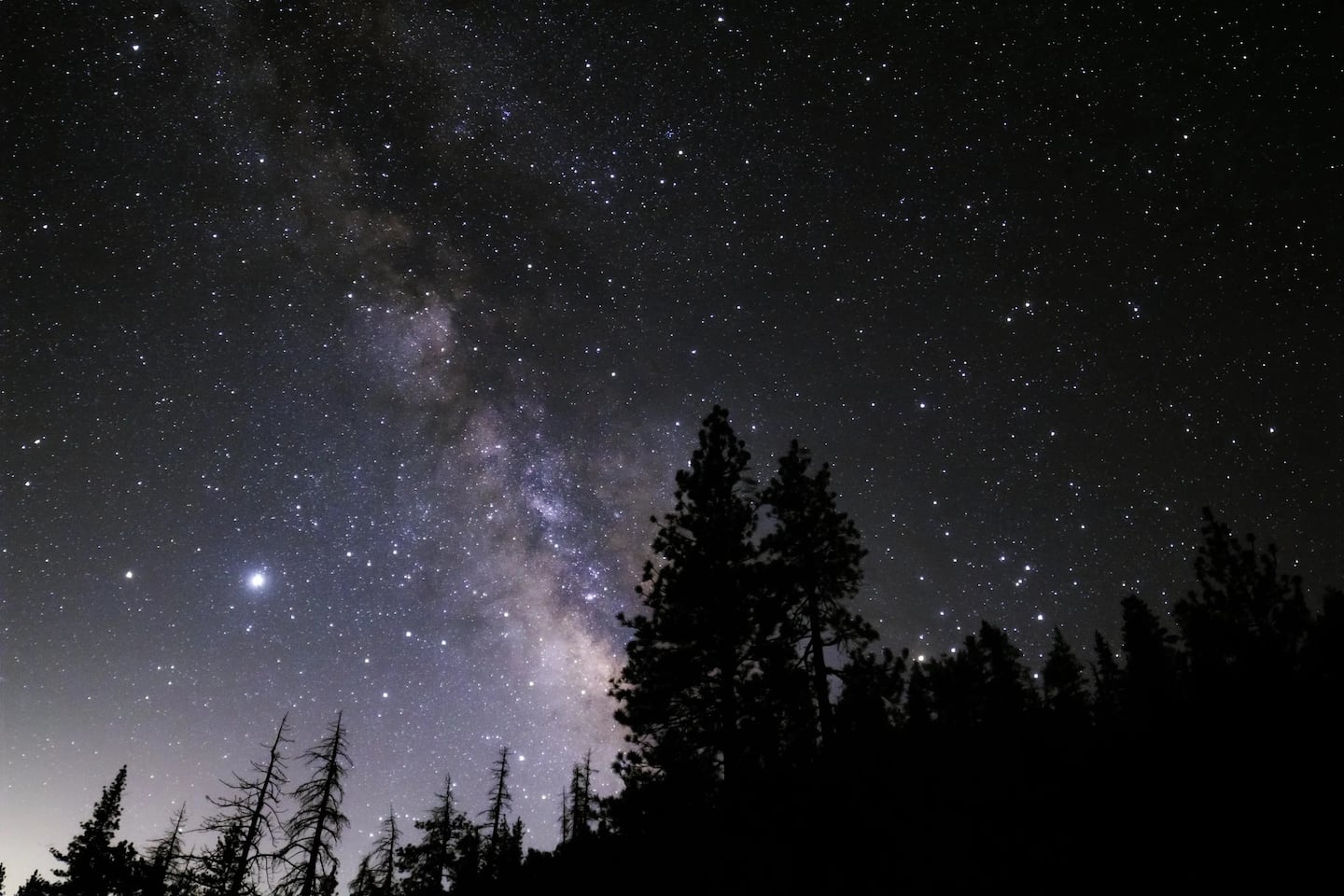
At the beginning of the month, Venus is setting about 90 minutes after sunset, but will be higher in the sky by the close of April, setting two hours after sunset. If you happen to notice a little cluster of stars to the upper right, that’s Pleiades (a prominent open cluster in the constellation Taurus), and to the upper left is an orange-tinted star called Aldebaran (the “eye of the bull,” a giant star in Taurus).
On April 19, there will be a conjunction of Venus and the moon, with the 2-day-old moon passing to the north, making for an interesting sight.
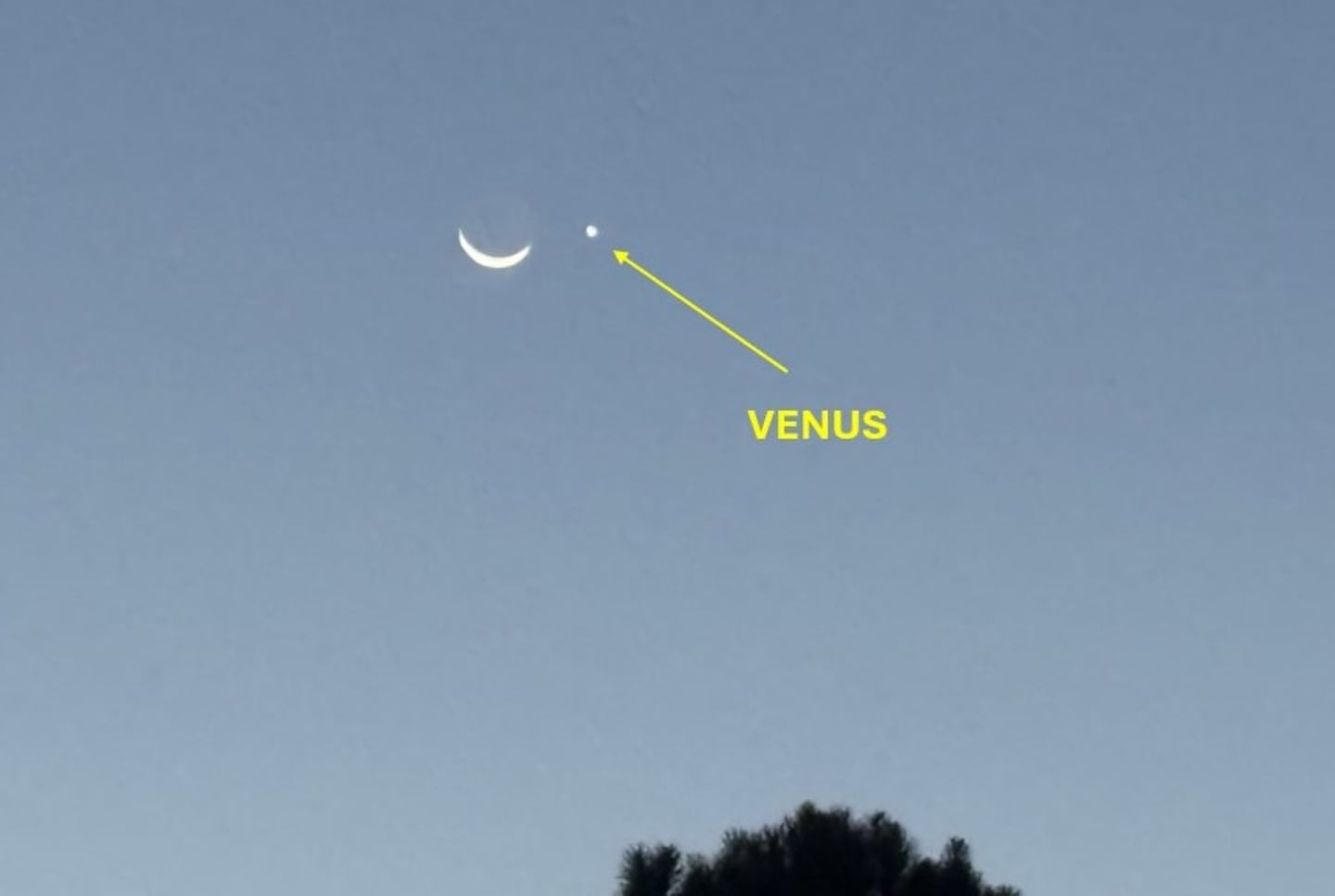 A conjunction of the moon and Venus in September 2025. A similar pairing is expected on April 19, 2026.NWS
A little higher up, you can spot Jupiter; it’s less dominant than Venus and won’t have that star twinkle. But grab a pair of binoculars, and you can even see the planet’s moons, and a telescope gives you the cloud bands. On the evening of April 22, a waxing crescent moon will appear just above Jupiter.
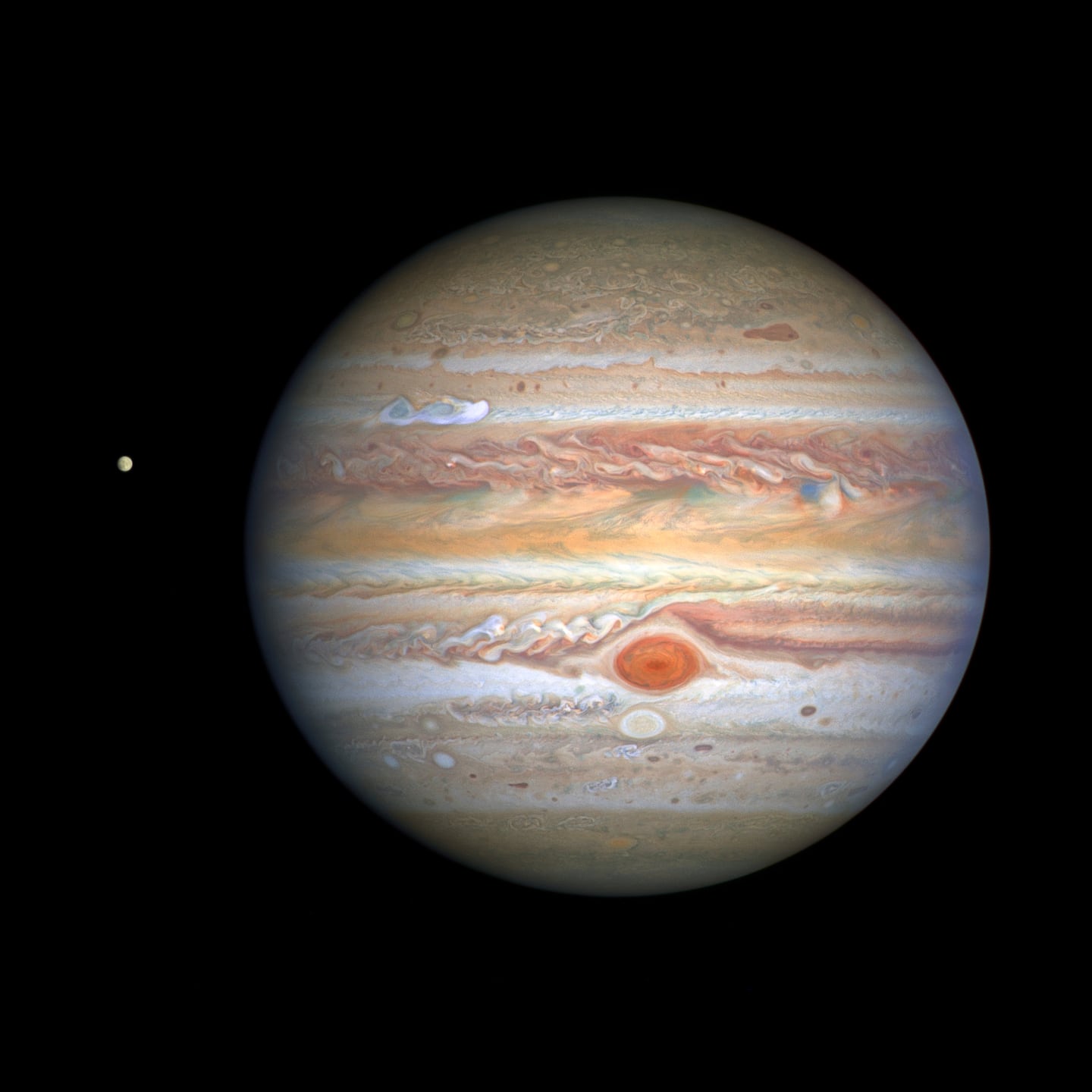 This Aug 25, 2020 image captured by NASA’s Hubble Space Telescope shows the planet Jupiter and one of its moons, Europa, at left, when the planet was 406 million miles from Earth. Space Telescope Science Institute Office of Public Outreach/Associated Press
The Lyrid meteor shower is one of the oldest recorded meteor showers, on record dating back over 2,600 years. It can occasionally produce bright fireballs, but more likely, we can expect to see 10 to 20 meteors per hour under a dark sky, and you might even get a few that break through the city lights of Boston. The meteor shower is active the last couple of weeks of the month, but will peak the night of April 21 into early April 22. You’ll want to catch them from midnight til dawn.
“Lyrids don’t tend to leave long, glowing dust trains behind them as they streak through the Earth’s atmosphere, but they can produce the occasional bright flash or fireball,” according to NASA.
The Lyrids originate from Comet Thatcher, which was discovered on April 5, 1861. The first recorded sighting of a Lyrid meteor shower goes back to 687 BC by the Chinese.
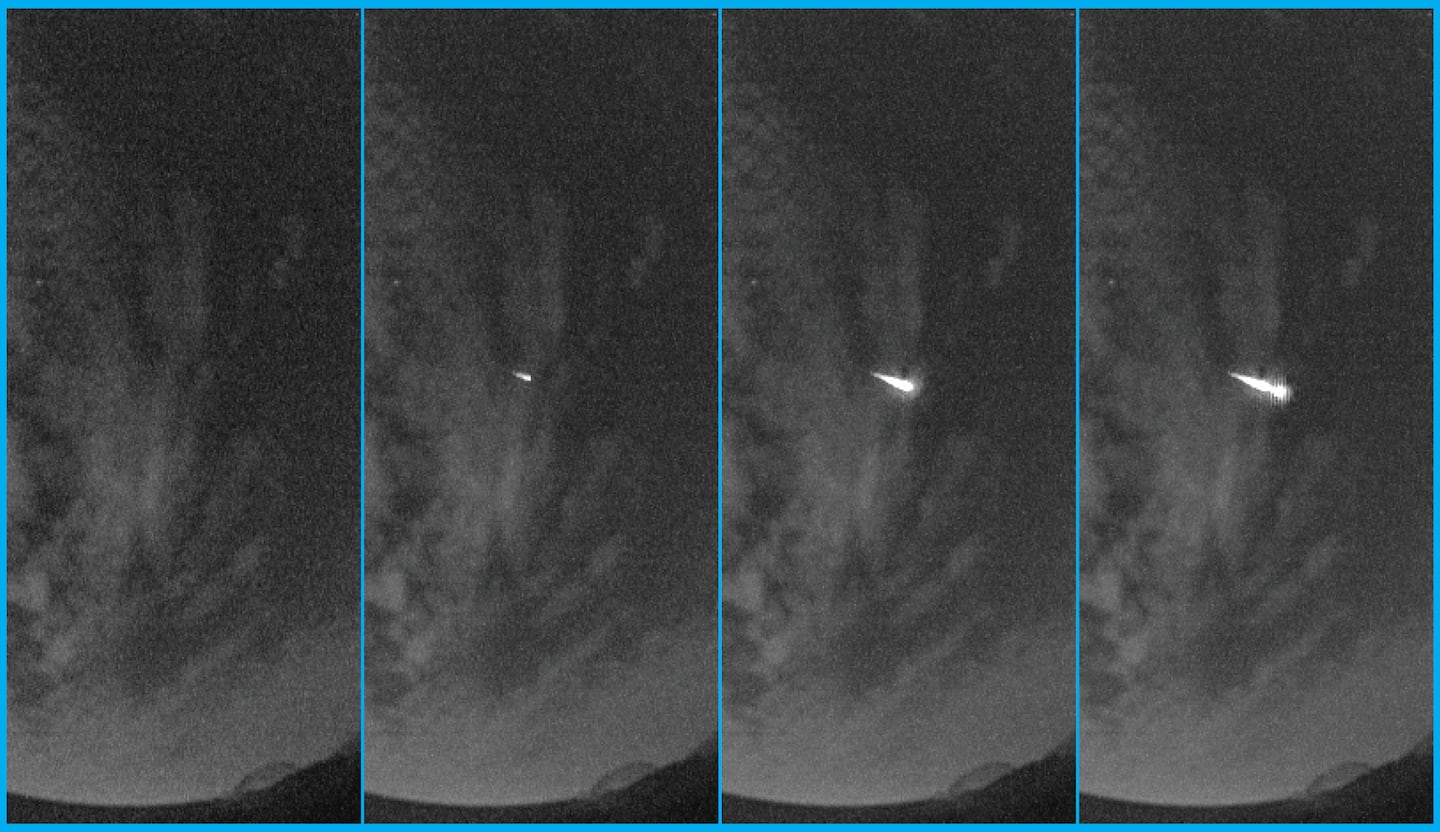 A meteor streaks through the sky during the Lyrid meteor shower.NASA (from NASA.gov)
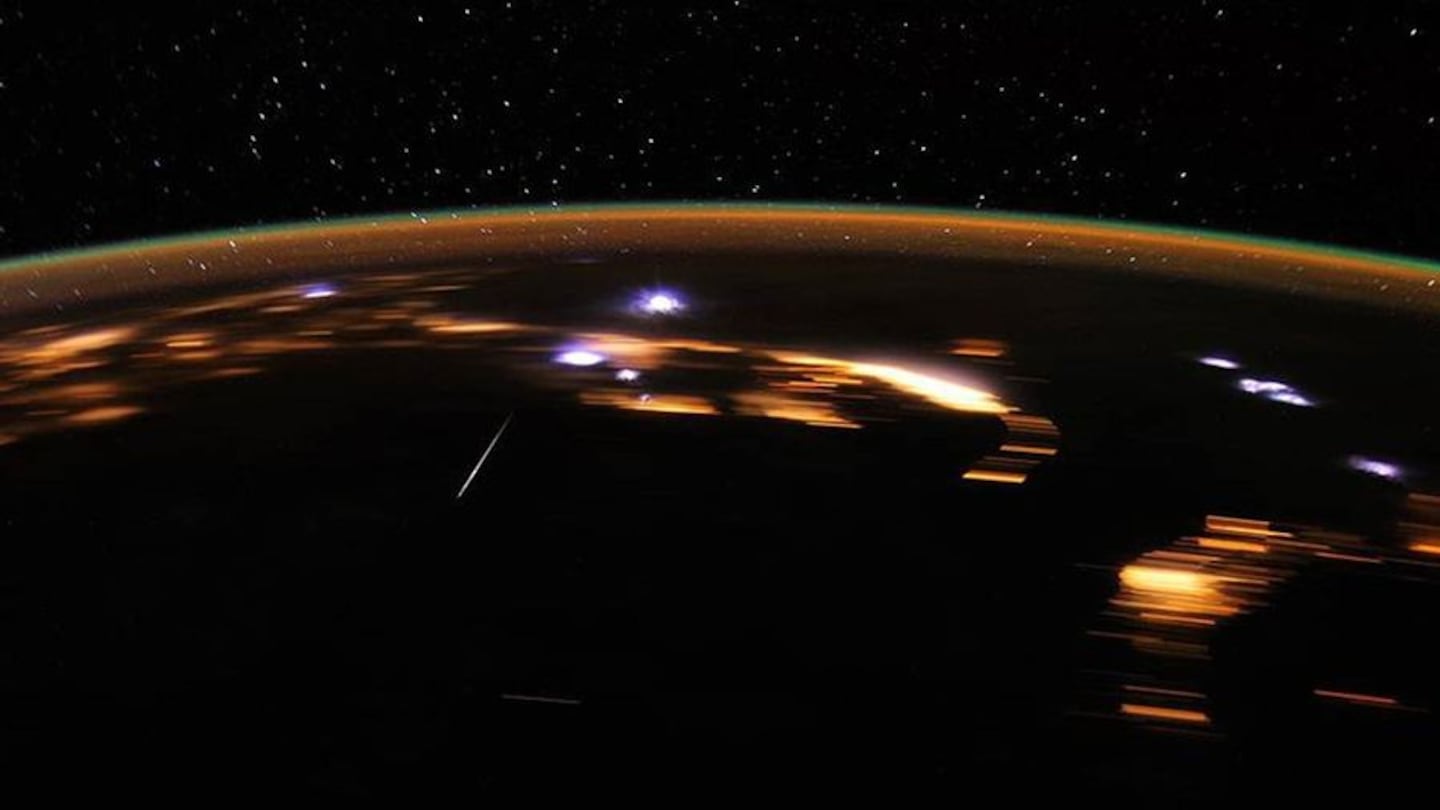 Footage taken from aboard the International Space Station during the peak of the 2012 Lyrid meteor shower, captured by astronaut Don Pettit.NASA/JSC/D. Pettit
• April 8-9 | The teapot and Capricornus: Good time to view the teapot or Sagittarius. This is because the moon is to the upper right on Wednesday and inside the teapot itself on the left side on Thursday. You’ll need to get darker than Boston, but it’s still visible. The best time to view this will be a few hours before dawn in the southeastern sky. The weather on Wednesday night should be partly to mostly clear, while Thursday is looking cloudy.
The constellation Capricornus is also visible, but for that one, you’ll need a darker sky. Central or Western Massachusetts would be better.
• April 11-12: The moon will be part of the constellation on the mornings of April 11 and 12 as you look to the southeast.
If you’re not sure exactly where west and east are, the sun is rising to the left of due east this time of the year and setting a little bit to the right of due west, which will at least give you an idea of where to look at night.
• April 19 | Moon, Venus Conjunction: The 2-day-old moon will pass just to the north of Venus.
• April 20-21 | Earthshine nights: The waxing and crescent moon phases in April and May are the best time to see Earthshine, when sunlight reflects off Earth back onto the moon, providing a stunning view of the faintly illuminated dark side of the moon. Earthshine is also known as “the Da Vinci glow.”
• April 22 | Jupiter, moon: A waxing crescent Moon and Jupiter will make a close approach.
• April 25 | Comet C/2025 R3 (PanSTARRS): This long-period comet, which will be closest to Earth on April 27, will swing through the inner solar system, appearing in the evening sky as a fuzzy glow that may show a faint tail under darker skies. You can view it with binoculars.
• May 1 | Flower Moon: You can catch a glimpse of this full moon as it rises over the southeastern horizon at sunset. The Flower Moon is so named because of the profusion of wildflowers that spring up this time of year. According to the Old Farmer’s Almanac, the name can be traced back hundreds of years to the Algonquin and Ojibwe peoples, who used moon names to track the seasons.
• May 5-6, Eta Aquarids meteor shower: The Eta Aquarids, an above-average shower capable of producing up to 30 meteors per hour in the Northern Hemisphere, peak during this time. The shower is produced by dust particles left behind by Comet Halley and is viewable during the pre-dawn hours.
• May 31 | Blue Moon: The second full moon in May and a micromoon, the smallest of the year, appearing about 5.5 percent smaller and 10 percent dimmer than an average full moon. A “blue moon” doesn’t refer to the color of the moon, but means it’s a full moon occurring for the second time in a calendar month. Like the saying “once in a blue moon” suggests, blue moons are pretty unusual, occurring every two to three years.
Much like spring days in April are a little more subtle than May, the night sky this month isn’t about blockbuster events but catching those quieter moments from Venus to a meteor shower you won’t need fancy equipment for, just a clear evening and a few minutes outside, and a desire to look up.