
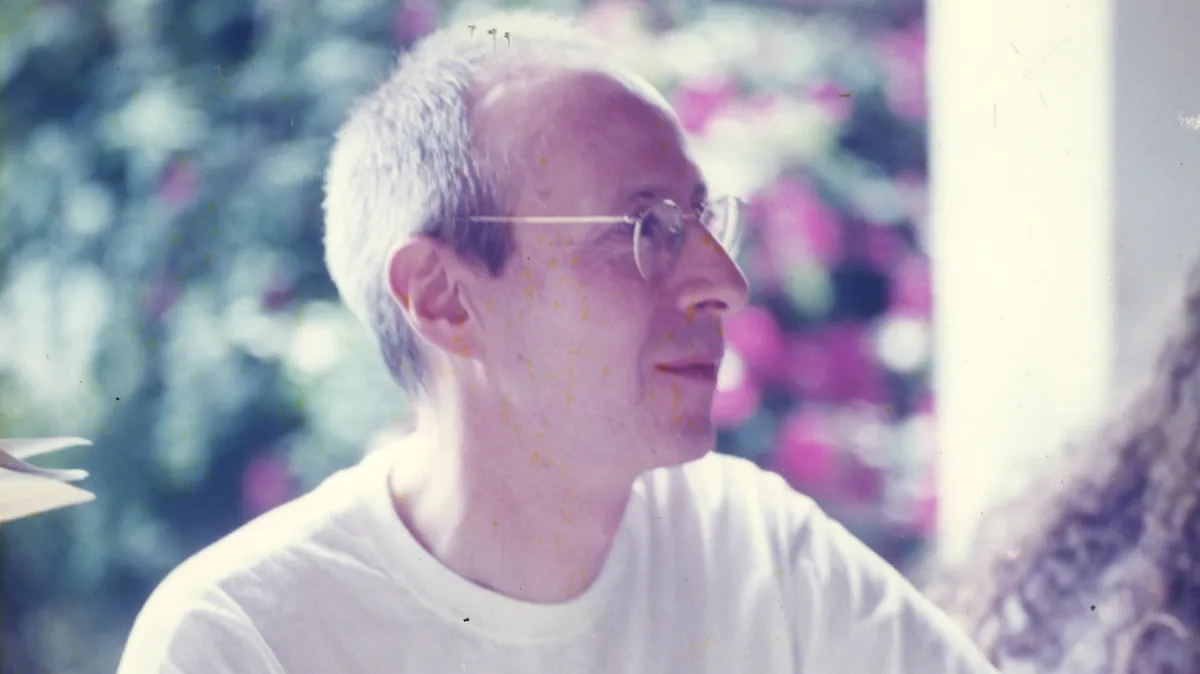
When Professor Robert Goodman, a rather shy and introverted child psychiatrist, gave his inaugural lecture at the Institute of Psychiatry at King’s College London, he surprised his audience by appearing in front of them with dyed hair: one half of his head was blue, the other pinkish red.
Goodman had recently been made a professor of brain and behavioural medicine, alongside working as a consultant psychiatrist at the Maudsley Hospital in London. In the lecture that marked his professorship, he chose to speak about “challenging authority”. His talk was entitled “Cultivating doubt (or how to lose friends and irritate people)”.
He believed that his unorthodox appearance would encourage listeners to question his own authority despite being one of the world’s leading psychiatrists. According to Professor Stephen Scott, a former colleague at the Maudsley who was at Goodman’s lecture and is now president of the Association for Child and Adolescent Mental Health: “During the lecture, he showed a photograph of a sign on a rented house in France, which said, ‘Look after your sceptic tank!’”
Indeed Goodman was a figure who continually challenged himself and questioned his own work.
When asked in 1995 to improve upon the “Rutter scales”, which were screening questionnaires for children written by Professor Sir Michael Rutter, the leading child psychiatrist, Goodman initially regarded the task as “unproductive” and was reluctant to take it on. But in a move that had profound implications for children across the world, he changed his mind.
He became absorbed by methods of assessing and measuring behaviour and developed a short questionnaire, contained in just one page, which is commonly known as the Strengths and Difficulties Questionnaire or SDQ. The questionnaire is a simple tool widely regarded as easy to use for both psychiatrist and patient, which sets out to identify a child’s difficulties and their impact at home and at school. It also looks for children’s strengths and the nature of their relationships.
Goodman followed up this work by creating an interview known as the Development and Well-Being Assessment, or Dawba, which enables psychiatrists to make accurate diagnoses of mental health disorders using a computer program.
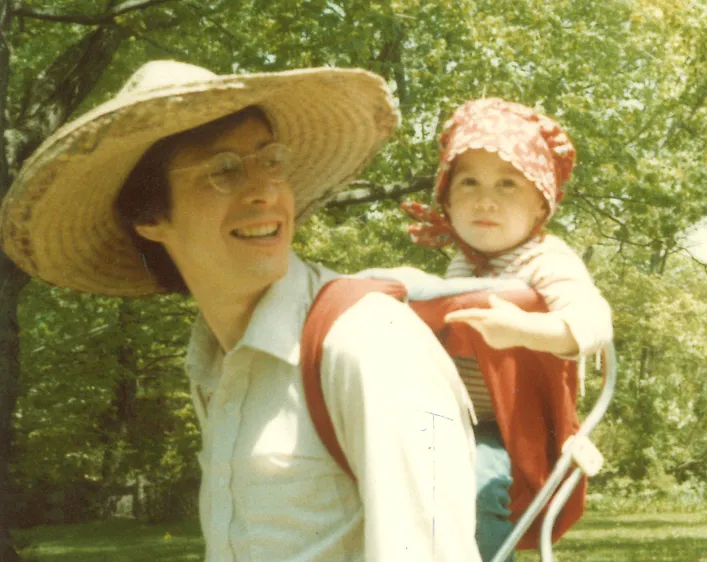 Goodman in 1981 with his daughter Anna
In a tribute to Goodman for the Association for Child and Adolescent Mental Health, Scott wrote: “Both measures became the cornerstone of a series of authoritative sequential epidemiological studies repeated over the years in the UK and have been widely used across the world.
“He went far beyond just looking at prevalence rates to use the data to explore questions such as the impact of social class on mental health, ethnic differences and time trends, examining for example the putative increase in anxiety and depression disorders at the present time … many others have written questionnaires, but the SDQ dwarfs them all.”
Goodman spoke 13 languages — he used translations of the Harry Potter books and tackled ancient Norse before learning Norwegian — and was fascinated by the linguistic nuances of various cultures and how to use different languages in psychiatry. The SDQ was translated into 89 languages.
He also invested £100,000 of his own money to set up youthinmind.com, which aims to “promote the psychological wellbeing of people everywhere through the provision of information, assessment, treatment and research”. Youthinmind created the first national directory of mental health services for the British public; it continues to provide information and services related to the SDQ and Dawba.
Goodman’s pioneering questionnaires were used by the Office for National Statistics, which asked him to lead their team of psychologists and statisticians in a study of the mental health of children and adolescents in Britain in 1999. The survey involved more than 10,000 young people, their parents and teachers and it was repeated in 2004. The results were shocking; 10 per cent of children aged five to 15 were found to be suffering from a mental disorder. “It’s a very serious problem,” said Goodman. “You can’t find physical disorders that are that common.”
The surveys encouraged governments in many other countries to undertake similar research, using Goodman’s tools.
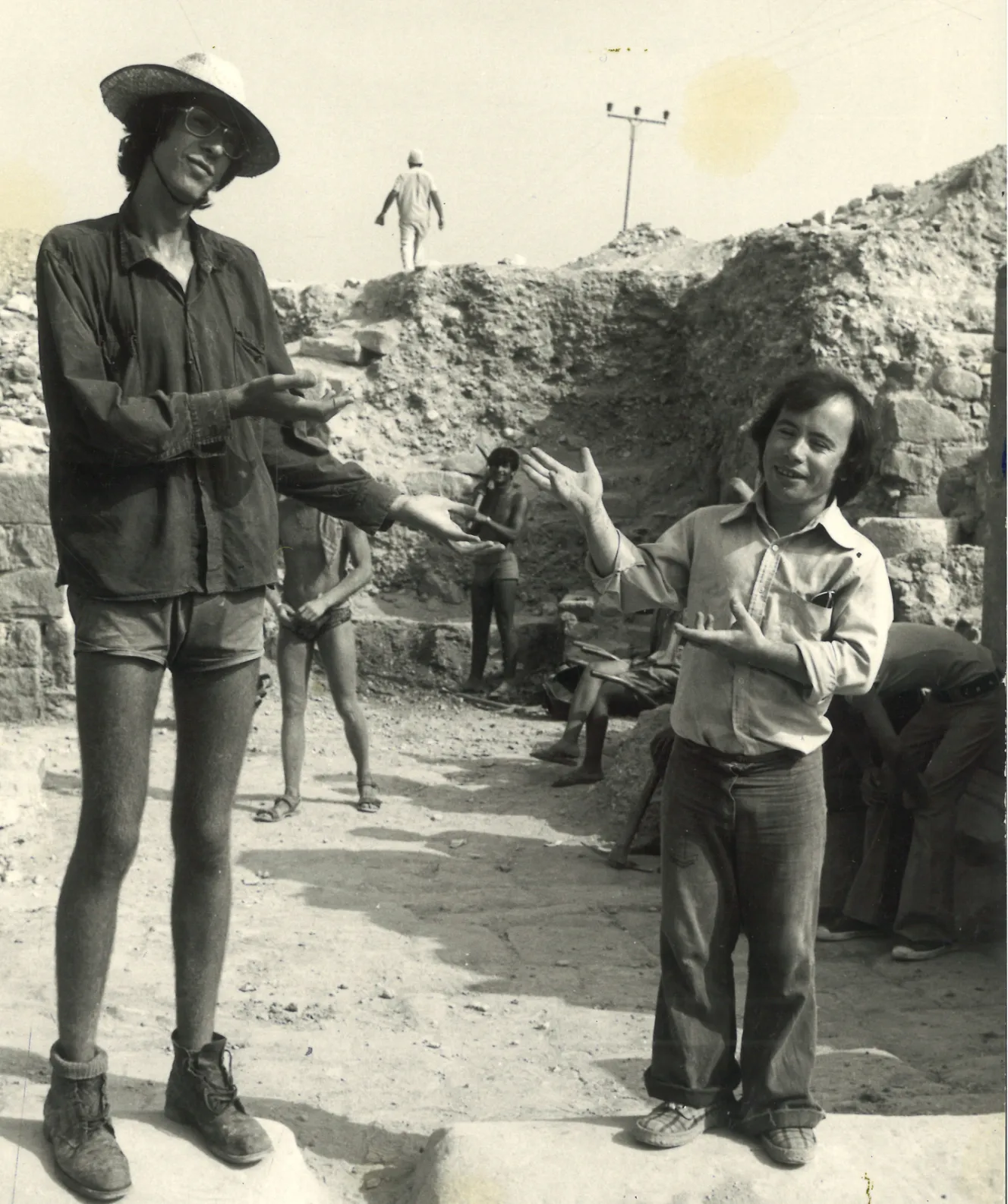 The 6ft 6in Goodman making light of his height on an archaeological dig in Israel in 1972
Unlike many people, Goodman was thrifty in his means and methods. He spent little if any time chasing grants and pursued much of his own research in spartan environments. On one occasion, he told his students that there were three categories of research: high quality and high cost; low quality and high cost; and high quality and low cost. He made it clear that too many people followed the second option.
In 1997, Goodman and Scott wrote a textbook entitled Child and Adolescent Psychiatry, which was widely acclaimed. Rutter described it as “a gem of a book, which provides much the best introduction to child psychiatry”. Goodman persuaded the publisher to allow the book to be downloaded free of charge around the world. He also published more than 140 medical papers. He was awarded the Michael Rutter Medal for Lifetime Achievement by the Association for Child and Adolescent Mental Health in 2022.
Robert Nicholas Goodman was born into a Jewish family in Edgware, north London, in 1953, the son of Jack Goodman, whose parents had emigrated from Odesa in what is now Ukraine, and his wife, Barbara (née Goldberg). They also had a daughter, Alison. Jack ran a successful clothing business, and in the 1950s the couple used their spare time to set up the Kendall Hall Country Club as a centre for the Jewish community.
While his parents were gregarious and outgoing, Robert was quiet and bookish. He was educated at Haberdashers’ Boys’ School in Elstree, Hertfordshire, where he developed an early interest in the environment and read The Ecologist magazine.
Professor David Holder, a consultant in biophysics and clinical neurophysiology at University College London, met Goodman when he was 11. They became friends at school and went to university together. “Robert was a tall, gawky figure and a hippy-dippy sort of person,” said Holder, “utterly kind and gentle, a late developer who was in a different league to everyone else in terms of intelligence by the time he reached the sixth form, but he would never show anyone up. It was a most extraordinary combination.”
Goodman won a scholarship to Gonville and Caius College, Cambridge, where he was awarded a starred first degree and came top in medicine. “In our first year at Cambridge, we were being taught by outstanding academics who had the misfortune to be lecturing Robert,” said Holder. “He’d just ask them a question, then another and within three questions they’d realise they didn’t quite have a full grasp of what they were teaching.”
Goodman undertook clinical training at the Radcliffe Hospital in Oxford and then returned to Cambridge on a bye-fellowship at Gonville and Caius. At about this time, he decided to pursue a career in children’s medicine. He worked in paediatrics, specialising in hemiplegia, which is a form of paralysis, and helped to found the charity HemiHelp. He later switched to psychiatry and worked at the Bethlem Royal Hospital in Beckenham, Kent, before moving to Great Ormond Street and then the Maudsley, where he spent the rest of his career.
In 1981 he married Susan Lightbody, a psychotherapist whom he had met in Oxford. The couple had three children: Anna, who is an epidemiologist at the London School of Hygiene and Tropical Medicine; James, who has pursued a career in business; and Rosa, who teaches art history at Westminster School in London. He is survived by his wife and children, four grandchildren, and his sister.
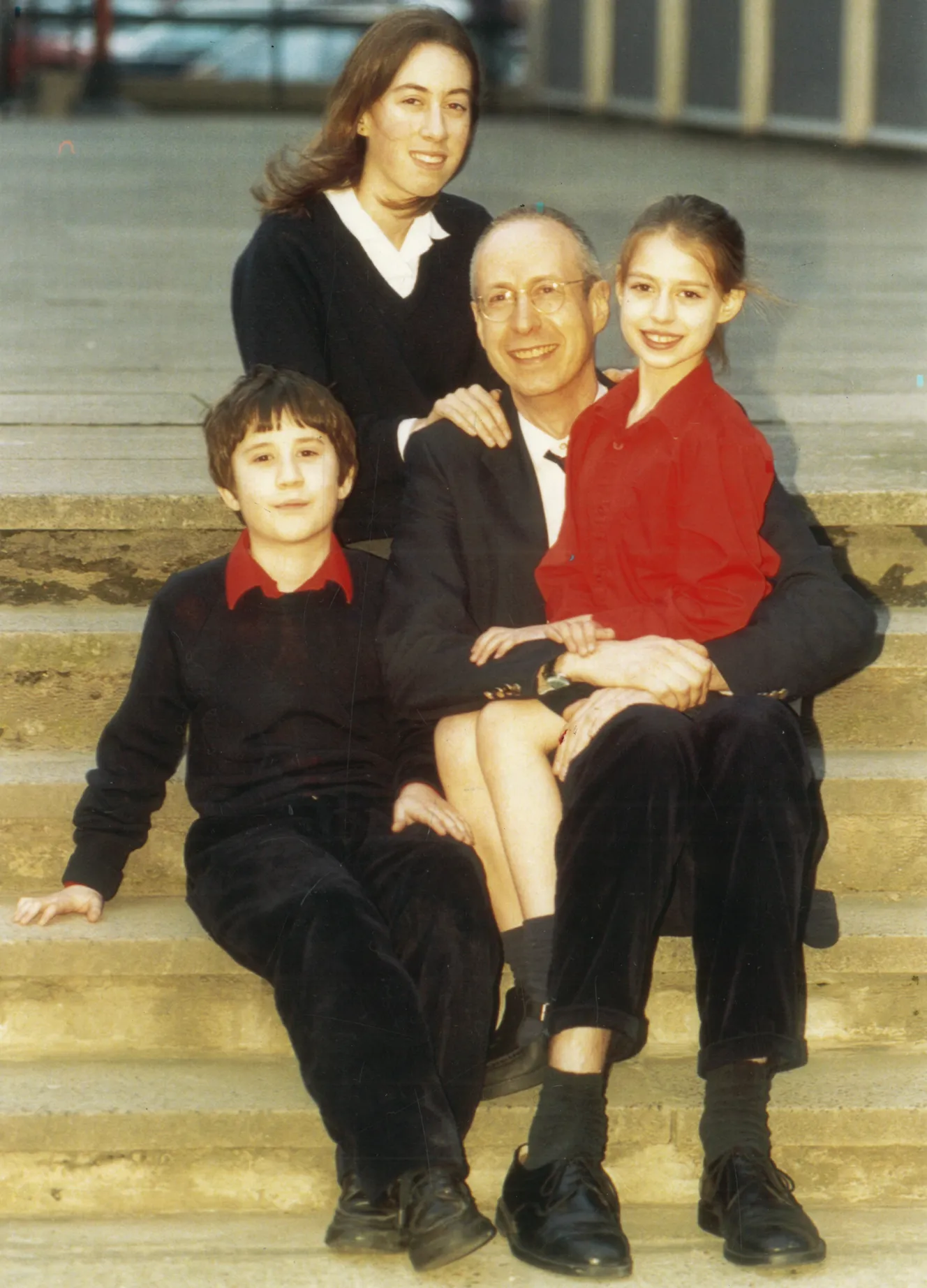 With his children in 1997
At 6ft 6in, Goodman cut a striking figure even without multi-coloured hair. He was regarded as charming, self-deprecating and funny, but he avoided large social events whenever possible. He could often be seen walking his children to school in Dulwich, south London, where the family lived. In later life, he wrote research papers with Anna on a range of topics relating to children’s mental health, and worked with both Anna and James as directors of youthinmind, the company he founded.
When Rosa was studying Italian at university, Goodman learnt the language too.
He was a lifelong member of the Green Party and, in 2014, stood as a Green candidate in local elections. He enjoyed classical music and was interested in Buddhism; he meditated every day and attended a Buddhist retreat in southern France every year.
“One might think that somebody who has achieved all this would become grandiose and pompous,” wrote Scott. “Not at all, Robert was modest and retiring: to use a biblical metaphor, no one hid his extraordinary light under so great a bushel.”
Professor Robert Goodman, child psychiatrist, was born on November 15, 1953. He died of complications from complex dementia on December 18, 2025, aged 72