
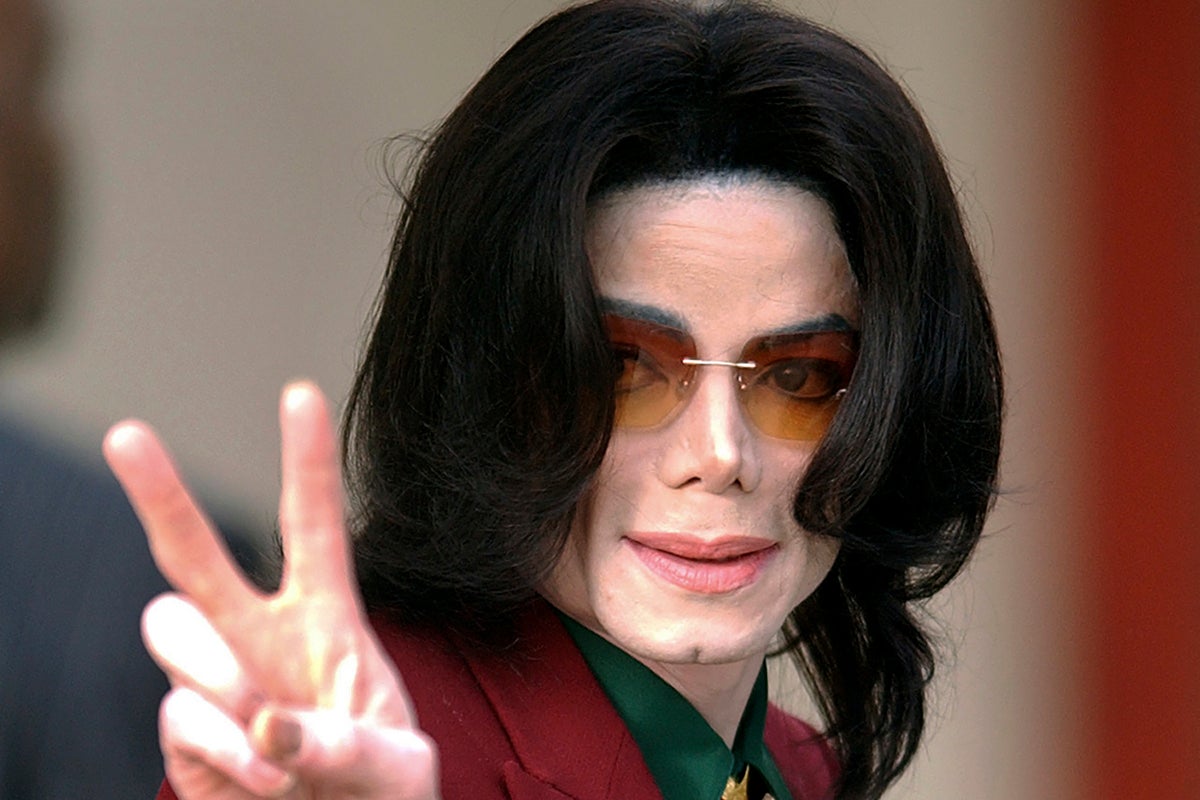
A wholly unremarkable period of 16 years and nine months has passed since Michael Jackson died. There’s no remotely significant MJ anniversary coming up. For a whole new generation, he’s now a performer your parents and grandparents liked.
So you would expect interest in Jackson to be fading by now. And, indeed, MJ The Musical, which – surprisingly I’ve always thought – was a tourist attraction in the West End for two years, has now closed, although it’s still running on Broadway.
You could be forgiven, then, for thinking the controversies about Jackson – was he or wasn’t he a paedophile? Should his oeuvre be shunned or not? – are becoming as irrelevant and passé now as Gary Glitter, Jimmy Savile or Rolf Harris.
Yet this year is seeing a huge revival of interest in and debate on Jackson.
A few weeks ago, Michael Jackson: The Trial contains most self-revealing recordings ever made of the singer, from his encounters with children to his father’s abuse”>Michael Jackson: The Trial was shown over three hours on Channel 4. Tonight, BBC2 is airing the first part of a thoughtful and scrupulously fair documentary series, Michael Jackson: An American Tragedy, from the same team that made the telling The Tony Blair Story, shown on Channel 4 in February.
Then, on 22 April (24 April in IMAX), the first official, Jackson family-endorsed MJ biopic, Michael, opens worldwide, starring Jackson’s nephew Jaafar, the 29-year-old son of Jermaine, who apparently makes an uncannily convincing Michael. The producer is Graham King, also behind Bohemian Rhapsody, the Oscar-winning Freddie Mercury film.
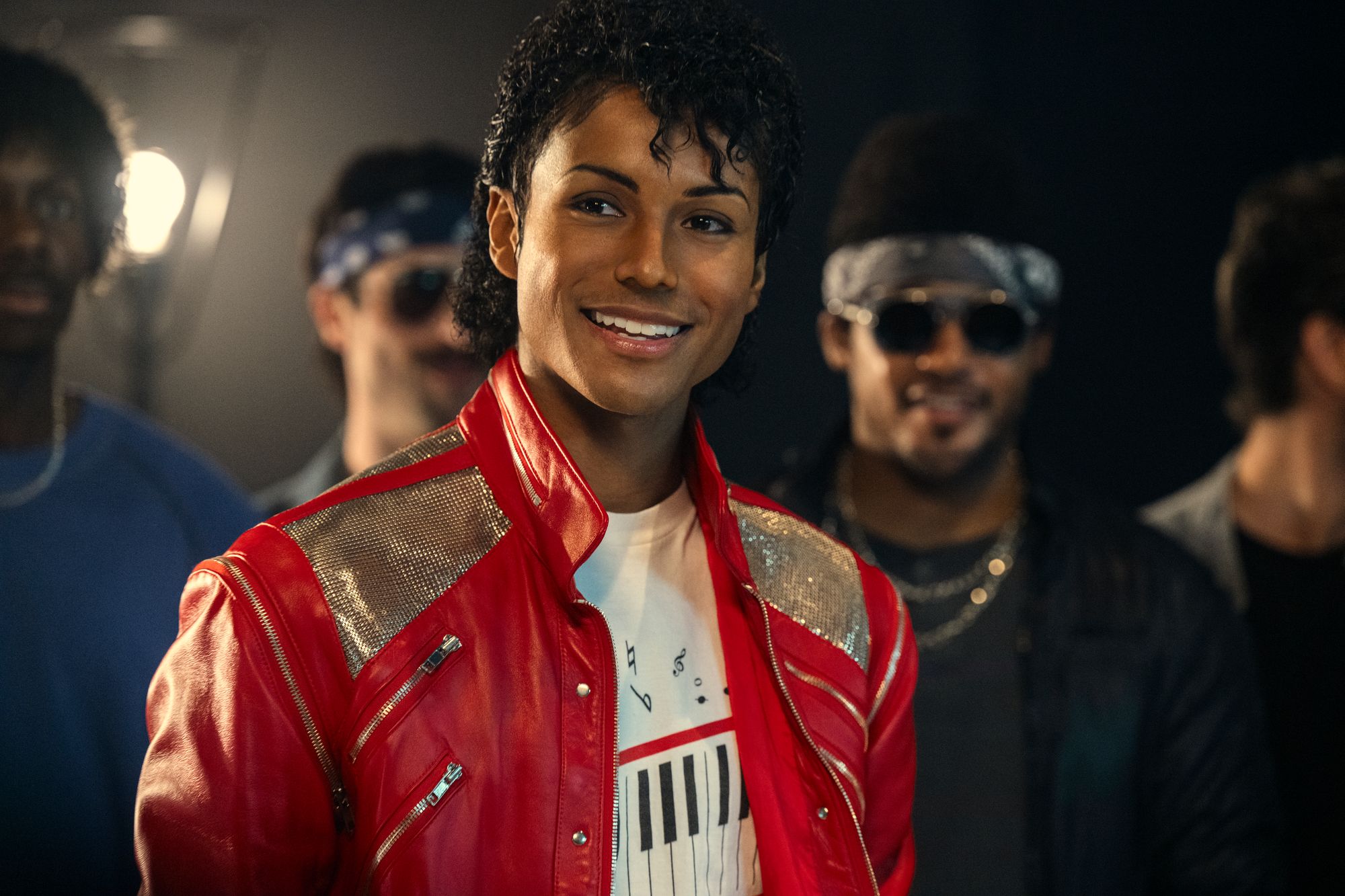 Jaafar Jackson, Michael’s own nephew, portrays him in the upcoming biopic ‘Michael’ (Lionsgate)
When the trailer for Michael was released last November, it was viewed 116.2 million times in 24 hours, breaking the record for any music biopic or concert film, surpassing even the current benchmark of these things, Taylor Swift: The Eras Tour. The Jackson film hasn’t yet received its age rating, and the director has said it doesn’t shrink from covering controversial areas. But, as an official Michael Jackson product, it’s hard not to imagine it pulling some relevant punches.
By any rational assessment, Michael Joe Jackson did enough dubious or downright bad stuff in his 50 years to be cancelled several times over.
By any reasonable account, the allegations against Jackson, which peaked in the 2019 documentary Leaving Neverland and are still being vigorously pursued in the US courts, are highly convincing.
Yet every time Michael Jackson’s reputation takes a battering, both when he was alive and now in death, it survives in a way nobody else’s ever has. The ghost of MJ isn’t just persisting, either. Without his extravagant spending, estimated at $30m a month, wrecking the finances, the estate is now said to be making a fortune.
His comeback concert series at London’s O2, for which he was rehearsing in Los Angeles when he died from overdosing on prescription drugs, would have earned him as much as $1bn – enough to pay off the $500m he owed and re-establish his solvency.
Yet now, pending damages his estate might yet have to pay to his alleged victims, his creditors are satisfied and the money continues to roll in. The Michael Jackson Estate is reported to have generated over $3.5bn since his death, through music rights, licensing, and documentaries.
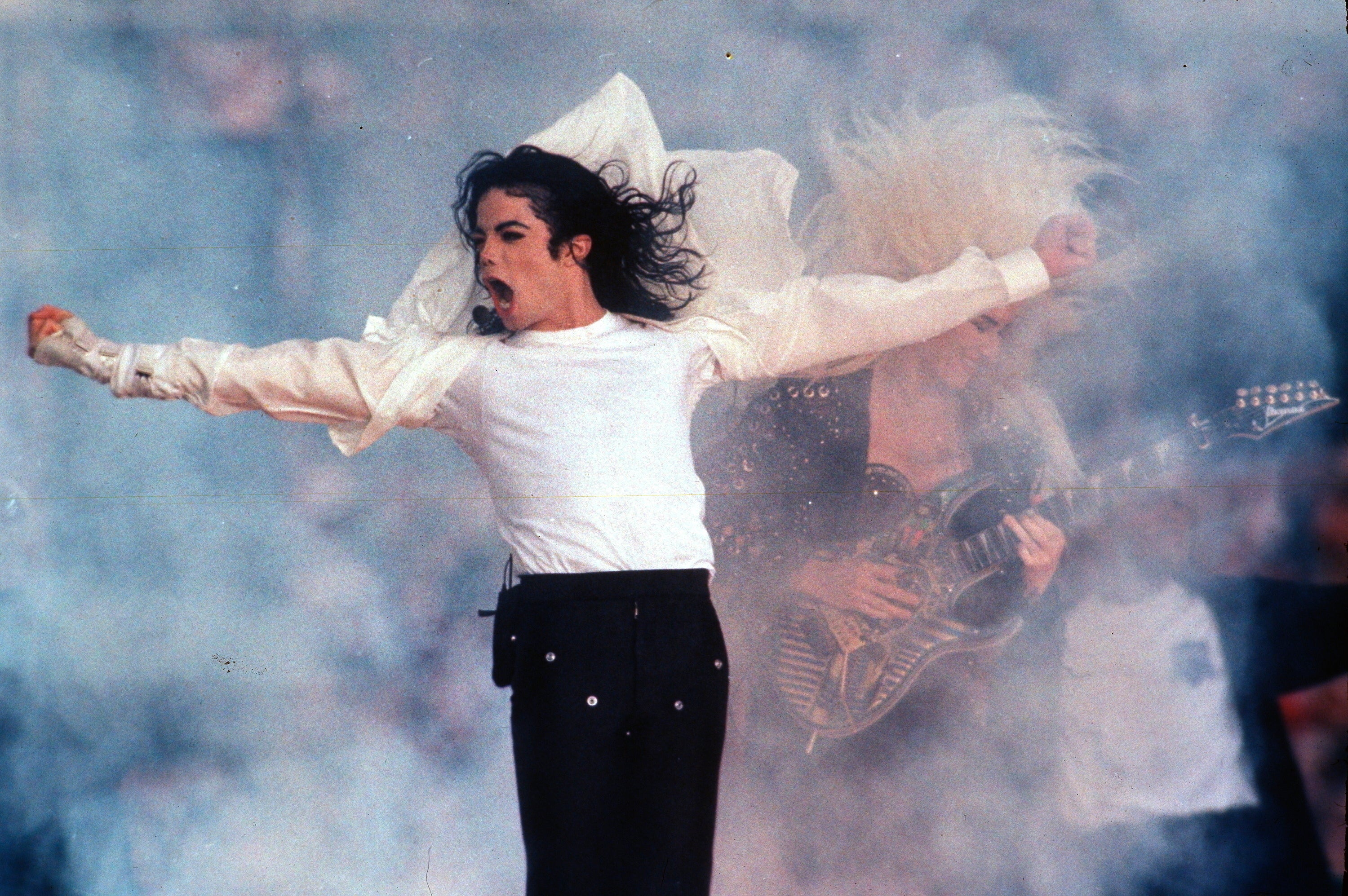 With upcoming documentaries and a biopic on the way, there’s a new surge of interest in the pop star (AP)
As for his reputation, it is in a curious and, I think, unique limbo. Many people just don’t quite know how to feel. The guy was as suspect as it’s possible to be without having been convicted of anything. But his music continues to be enjoyed, played even by cautious broadcasters like the BBC, and his legend celebrated, albeit with an ick factor far more pungent than that of any other celebrity artist facing such serious allegations.
His damaged, but still intact, status must be deeply upsetting to his many accusers. But what explains his reputational survival? How is it that hundreds of millions of fans, in the face of seeming evidence that would destroy anyone else, persist in regarding Michael Jackson as innocent?
Amazingly, the evidence of Jackson’s guilt to a large extent comes from the man himself. Martin Bashir, the TV journalist to whom Jackson confessed unequivocally that he had young boys in his bed – without specifying what he did with them in it – is castigated by Jackson loyalists.
Bashir’s reputation as a journalist is tarnished – not least over the dubious methods he used to secure an interview with Princess Diana – but he can’t be blamed for what people said to him on camera.
In light of the coming onslaught of Michael Jackson material, I’ve been asking two relevant sources about what, at this distance of time, their thoughts are on him.
The first source is the team that made the BBC series launching tomorrow, whose members spent years immersed in the material, and are serious and responsible, Emmy award-winning documentarians.
Michael Jackson: An American Tragedy does not take sides, as executive producer Rob Coldstream says.
“We haven’t approached it in the sense of passing judgement on him as filmmakers. We really wanted to just lay out all the facts as they are in a sober, completely factual way.
“So you hear from people who were close to him, especially his family. You hear from the detectives who are convinced of his guilt and the prosecutor who is also convinced of it. And then you just have to make up your mind.
“It’s pretty clear that he was obviously engaged in some very, very inappropriate relationships. That’s proven. But, you know, how far did that go? I think people have to make up their own minds.
“And that’s what I think is a really interesting layer of the film. You have this young kid who’s looking for love and he finds it in all the wrong places, in the sort of idol worship from fans and in hanging around with small children.
“So it’s about this very, very lonely guy who thinks celebrity is what he needs, but which enables the worst aspect of his personality to come to the fore, whether it’s drug addiction or people turning a blind eye to things he’s doing.”
One of the most poignant indicators in the BBC series for me was one which illustrated just how detached Jackson was from any kind of reality. In his final, self-detonated, near-impoverished days, we learn, he fetched up in Ireland – on a regular Aer Lingus flight, since he could no longer afford private jets.
Soon, he was knocking on the door of a cosmetic treatment clinic in a Dublin suburb, asking for some bleaching cream for his ankles. He became a regular and a friend of the owner, Patrick Treacy. But, as Mr Treacy relates, his credit cards were usually declined, and he would also surreptitiously help himself to bags full of expensive cosmetics, 20 or 30 bottles at a time, without paying.
Rob Coldstream makes the point that none of the production team ever met Jackson, which is not unreasonable since assessment of his career is now virtually pop archaeology.
The second source I conferred with, however, had spent some considerable time with Jackson. I know this source quite well because it’s, ahem… me.
When he went missing from Neverland a couple of years later, I received a call from his manager, with Tito Jackson alongside him, in the small hours to ask if Michael was in London with me
In the year leading up to 9/11, I spent many days with and around Michael Jackson and his children as a minor part of his retinue, working on a book he was writing with his spiritual adviser, Rabbi Shmuley Boteach, and on Michael’s speech to The Oxford Union.
For decades, people have been asking me what I thought of him and of the child abuse allegations against him. A father of young children at the time, I was never exactly a friend of Jackson’s, more a temporary colleague. But apparently, he liked me – even knowing I wasn’t a particular fan of his music.
When he went missing from Neverland a couple of years later, I received a call from his manager, with Tito Jackson alongside him, in the small hours to ask if Michael was in London with me. I imagined he’d forgotten my existence, but his team thought otherwise. I had to report, at 2am, that I had thoroughly searched our small flat and been unable to spot the king of pop.
My position has always been that I rather liked Jackson and am surprised and saddened by the allegations, as I thought he was, if anything, asexual – any adult side to him crushed by his celebrity from the age of five and his overbearing father. If what I witnessed was for real – a big if, I grant – his childlike persona, which is the basis of the case for his defence, could have been genuine.
Once I hit my head hard in his presence and yelped, “Shit”, Michael visibly blushed. “What did you say, Jonathan?” he said, giggling like a seven-year-old. “I said ‘s***’, Michael,” I replied. “You’re in the music business, you must have heard the word.”
Another time, he was telling me about the time he spent with Madonna – I was too polite to ask in what role; he said he “took her out’ for a while. What amused and slightly scandalised him, again like a seven-year-old, was what he called her collection of “spanky books”. “Why would I want to see that?” he asked.
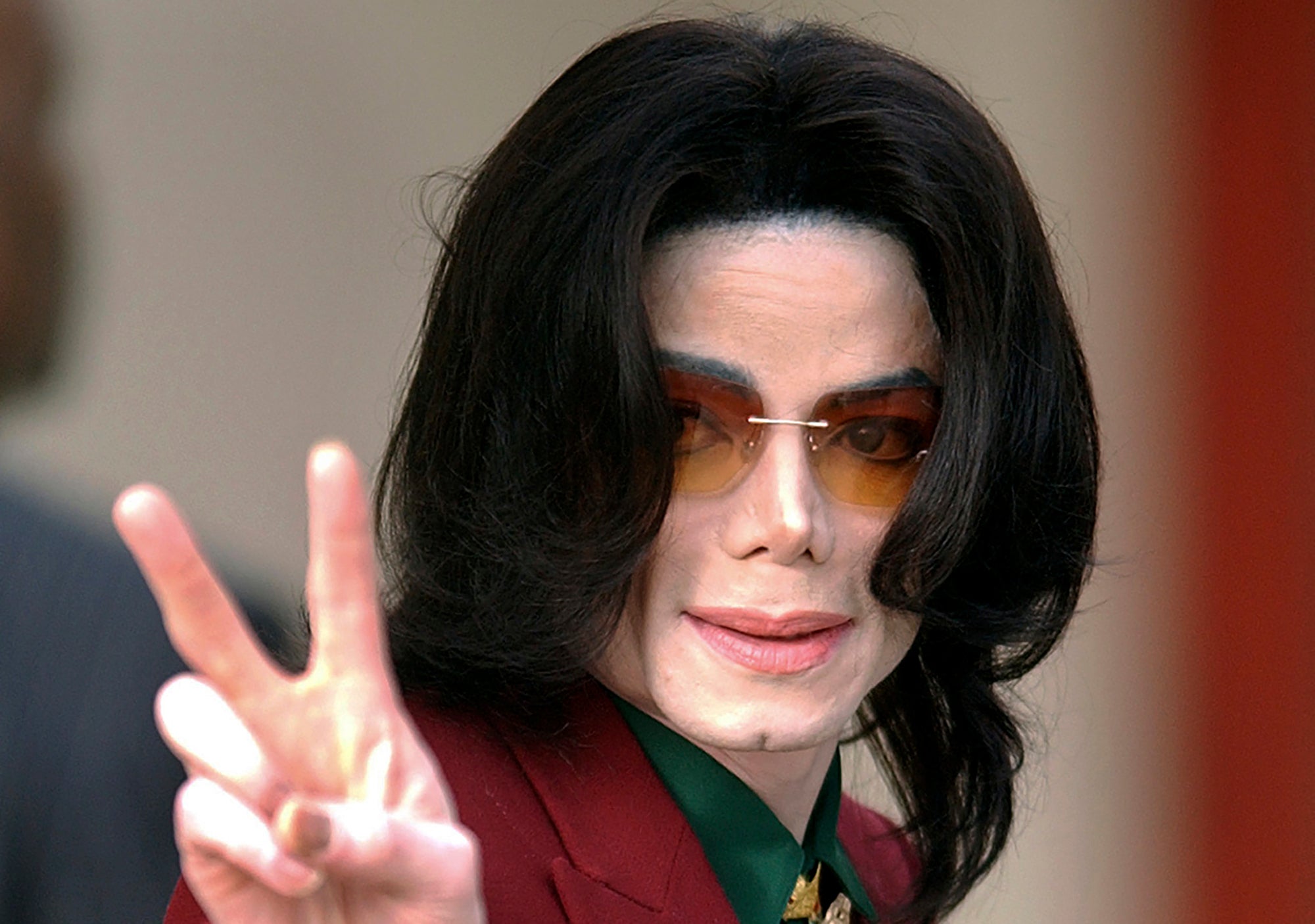 Despite a number of controversies Michael has faced, both when alive and after death, many still enjoy his music (AP)
Another time, sat next to him at a Thanksgiving dinner we got to talking about newspaper coverage of him. “What I always wanted to know,” he said, “is why do they call me Wacko Jacko? I just don’t get it.” That was a tricky one to answer. I swerved it, saying it’s down to page design; on a tabloid page in large type, I said, ‘wacko’ happens to be the same length as ‘Jacko’.
He warmed to me, I later learned, when we went shopping together in the then FAO Schwartz toy store in New York. He was taking a group of disabled children round for a treat and spent $70,000 on them at the till. I bought a present for my kids and on the quiet, paid for it separately. Apparently, he noticed this and talked about it a lot – the guy who didn’t sponge off him.
I saw his ruthlessness at play, too – at least ruthless perfectionism – when I was helping him rehearse his Oxford Union speech in his suite at the Lanesborough Hotel in London. It was about 40 minutes long, and at one point near the end, I had worked in a mention of EastEnders. Each time he came to this, he mispronounced it and I had to stop him and correct him. And each time, he would go right back to the start of the speech and do it all again.
On another occasion, he told me with glee about how angry Paul McCartney was when he took ownership of The Beatles’ song catalogue. He was financially super-aware.
Another incident occurred at the hotel, which may have displayed his innocence or lack of it. Late one night, there was a knock on the huge double doors. I answered it to see a young male Hollywood star half Michael’s age, then 42.
I felt I was now free to get the Tube home, so I left the two of them tucked up in the enormous bed, both studiously reading comics – and at least two metres horizontally apart.
I suspect the final verdict of history will be that Jackson was desperately troubled and, as a result, his behaviour was unacceptable and unchecked. But that, like a Gauguin or a Lewis Carroll, both suspected paedophiles, his artistic genius warrants continued appreciation despite his shortcomings and potentially criminal behaviour. The talents of a Rolf Harris, a Savile or a Glitter are so obviously ephemeral and unworthy of consideration that they are permanently binned. The continued interest in Jackson suggests a different legacy.