
Science continues as astronauts prepare for most dangerous part of the mission
The spacecraft has been pointed towards Earth, and the ship that will pick up the astronauts after they splash down in the ocean is on its way – but still the work to do science in space continues.
Today, for instance, they will be testing an “orthostatic intolerance garment”. That’s a special piece of clothing that is designed to help ensure astronauts keep their blood pressure and circulation as they come back into Earth’s gravity.
Andrew Griffin8 April 2026 09:49
Nasa says first return correction burn complete as Orion begins journey back to Earth
Nasa said the Orion spacecraft carried out its first thruster burn overnight to correct its path back to Earth.
“At 8.03pm EDT, the Orion spacecraft, named Integrity, ignited its thrusters for 15 seconds, producing a change in velocity of 1.6 feet-per-second and guiding the Artemis II crew toward Earth,” the agency said.
After the historic mission, the spacecraft is now returning to Earth and will make a splashdown in the Pacific on Friday.
Maroosha Muzaffar8 April 2026 08:40
Nasa explains why human observations are still needed in time of satellites and probes
The Artemis II crew observed 30 lunar targets during their flyby, including parts of the Moon never witnessed before by human eyes.
Nasa says “human eyes and brains are highly sensitive to subtle changes in colour, texture, and other surface characteristics”.
The agency added: “Having astronaut eyes observe the lunar surface directly, in combination with the context of all the advances that scientists have made about the Moon over the last several decades, may uncover new discoveries and a more nuanced appreciation for the features on the surface of the Moon.”
Details on the Moon observed by the crew include the massive 3.8-billion-year-old Orientale basin. Spanning nearly 600 miles, the crater – dubbed the “Grand Canyon” of the Moon – it was seen in full for the first time by astronauts.
Mission commander Reid Wiseman described its annular ring: “The annular ring, which I think everybody describes as a pair of lips or a kiss on the far side of the moon, from here is very circular in nature.”
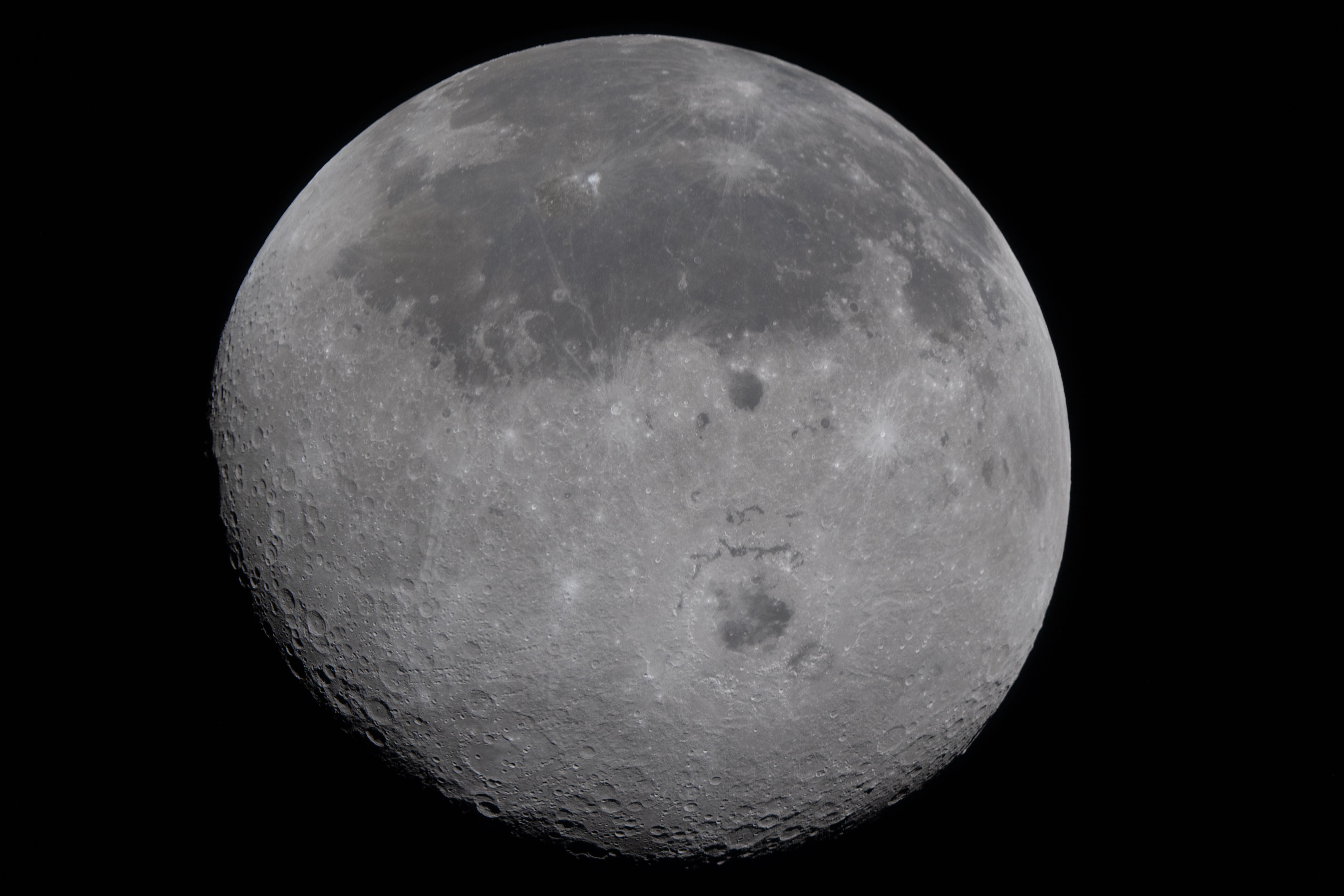 This image provided by Nasa on Monday, 6 April 2026, shows the Moon, the near side (the hemisphere we see from Earth) visible at the top half of the disk, identifiable by the dark splotches. At the lower centre is Orientale basin, a nearly 600-mile-wide crater that straddles the Moon’s near and far sides. Everything below the crater is the far side (AP)
He added: “The northern part of it is wider, darker. The southern part is much lighter. It is very neat-looking … far more circular than I remember it looking in our training.”
During their flyby, the astronauts also suggested names for two additional craters. They named one after their spacecraft, “Integrity”, and the second “Carroll”, in honour of Wiseman’s late wife, Carroll Taylor Wiseman.
Maroosha Muzaffar8 April 2026 08:00
Nutella goes viral after jar floats in zero gravity during Artemis II livestream
The beloved chocolate spread brand has gained immense attention not just on this planet but also in space after the tub casually came on the Artemis II’s livestream, making a star appearance.
The jar moved across the spacecraft’s kitchen during NASA’s historic lunar mission.
The video garnered a lot of attention, with viewers claiming no marketing team could ever replicate this kind of ad placement.
 Nutella goes viral after jar floats in zero gravity during Artemis II livestream
In a bizarre moment on the Artemis II livestream, a Nutella tub was seen floating in zero gravity across the cabin. The beloved chocolate spread brand has gained immense attention not just on this planet but also in space after the tub casually came on the Artemis II’s livestream, making a star appearance. The jar moved across the spacecraft’s kitchen during NASA’s historic lunar mission. The video garnered a lot of attention, with viewers claiming no marketing team could ever replicate this kind of ad placement.
Maroosha Muzaffar8 April 2026 07:20
When and where will the Orion spacecraft splash down?
Nasa’s Artemis II mission is scheduled to splash down off the coast of San Diego at approximately 8.07pm EDT (5.07pm PDT) on Friday (10 April).
“The location and time of our Artemis II splashdown will continue to shift as mission milestones are reached,” Nasa says.
“Following splashdown, recovery teams will retrieve the crew using helicopters and deliver them to the USS John P Murtha.
“Once aboard, the astronauts will undergo post-mission medical evaluations in the ship’s medical bay before travelling back to shore to meet with an aircraft bound for Nasa’s Johnson Space Center in Houston.”
Maroosha Muzaffar8 April 2026 06:40
Artemis II crew shares stunning image of Milky Way
Following a successful lunar flyby, the Artemis II crew shared an awe-inspiring image of the Milky Way galaxy.
Maroosha Muzaffar8 April 2026 06:00
Nasa share new stunning Moon crater and Earth eclipse photos from Artemis II
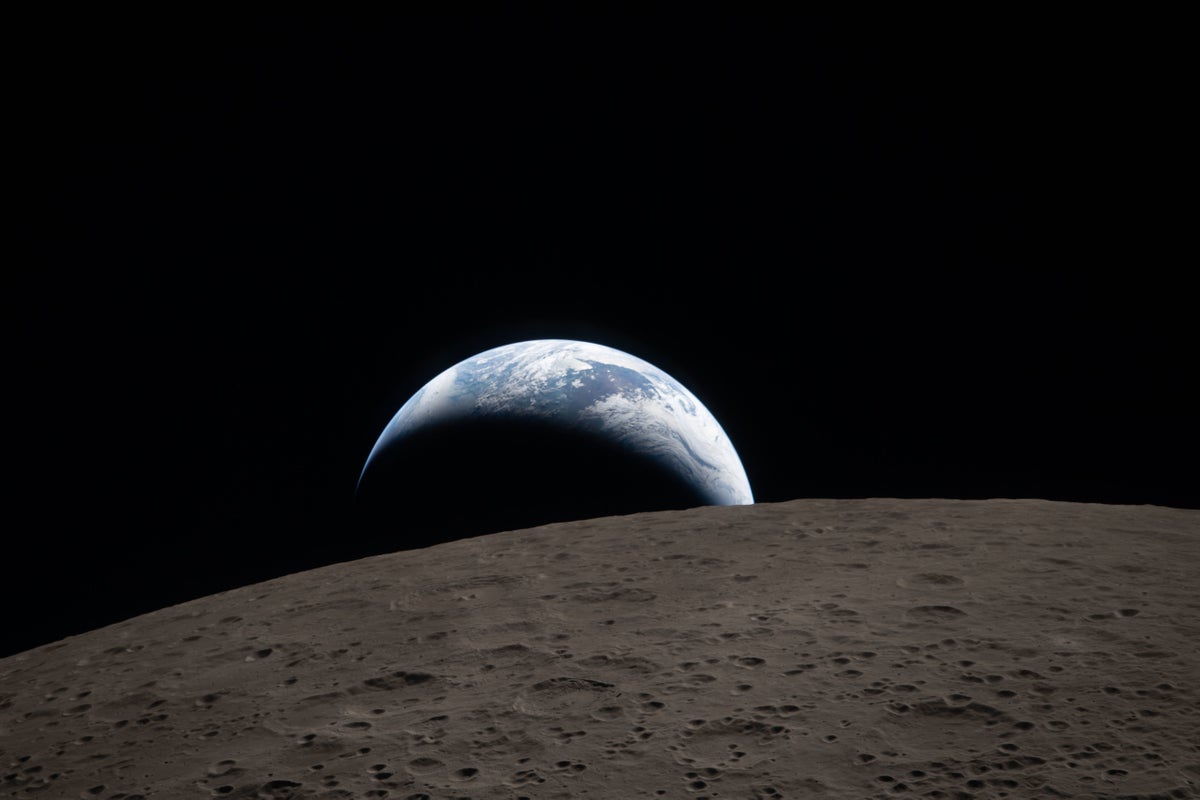
Nasa has released two new photos captured on flight day six during the Artemis II lunar flyby.
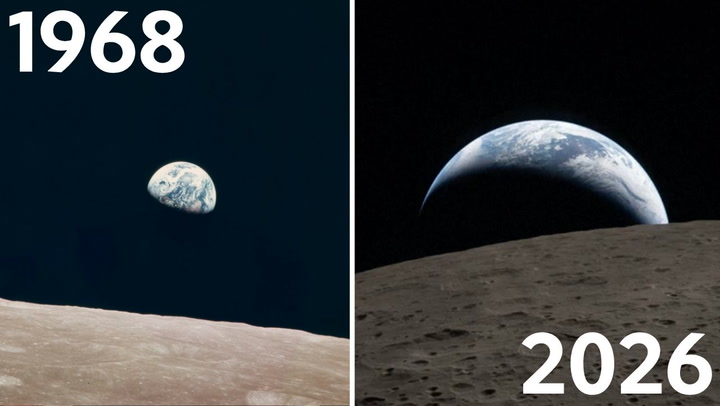
The first image shows the far side of the Moon’s surface, pockmarked with craters, with a half-shadowed Earth setting in the background.
This “Earthset” photo beautifully complements the iconic “Earthrise” image taken by Bill Anders during the Apollo 8 mission in 1968.
Nasa’s second snapshot shows the Moon fully eclipsing the Earth, “creating nearly 54 minutes of totality.”
The Artemis II astronauts are now over halfway through their mission. The crew is scheduled to splash down off the coast of San Diego at approximately 8:07 p.m. EDT on Friday, April 10.
 Nasa share new stunning moon crater and Earth eclipse photos from Artemis II
Nasa has released two new photos captured on flight day six during the Artemis II lunar flyby. The first image shows the far side of the Moon’s surface, pockmarked with craters, with a half-shadowed Earth setting in the background. This “Earthset” photo beautifully complements the iconic “Earthrise” image taken by Bill Anders during the Apollo 8 mission in 1968. Nasa’s second snapshot shows the Moon fully eclipsing the Earth, “creating nearly 54 minutes of totality.” The Artemis II astronauts are now over halfway through their mission. The crew is scheduled to splash down off the coast of San Diego at approximately 8:07 p.m. EDT on Friday, April 10.
Maroosha Muzaffar8 April 2026 05:20
Artemis II crew to test special garments for safe return to Earth
The Artemis II crew will test special garments designed to prevent dizziness and blood pressure issues when returning to Earth’s gravity, Nasa said yesterday.
“Nasa astronauts Reid Wiseman, Victor Glover, along with (Christina) Koch and (Jeremy) Hansen, are scheduled to test an orthostatic intolerance garment. During the test, the crew will evaluate the garments — specialised equipment designed to help astronauts maintain blood pressure and circulation during the transition back to Earth’s gravity,” the agency said.
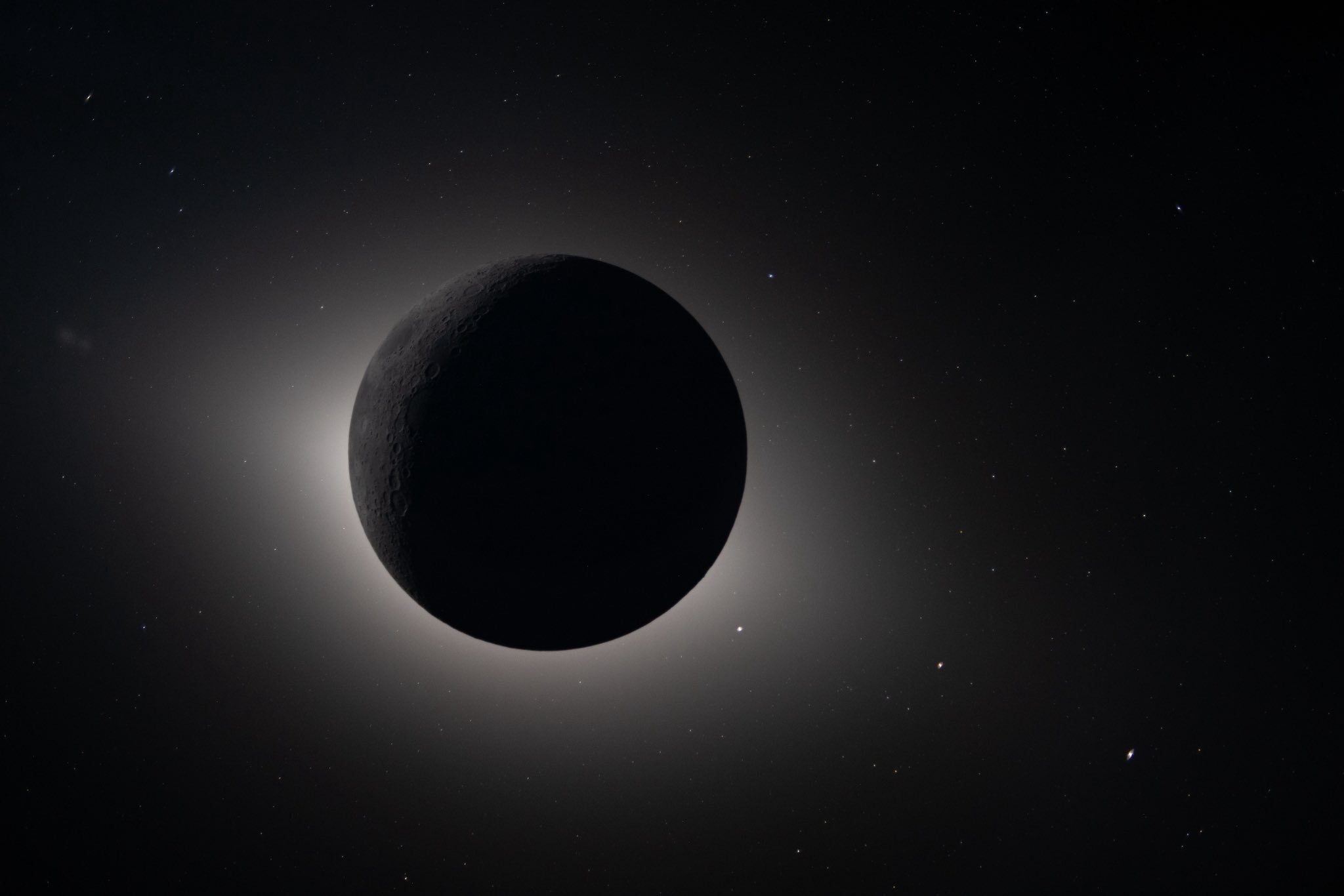 In this image provided by Nasa, the Artemis II crew captured from lunar orbit, the Moon eclipses the Sun on Monday, 6 April 2026
The Orion spacecraft (Integrity) is heading back toward Earth, and the crew is preparing for final tests and return-to-Earth operations on Wednesday.
Maroosha Muzaffar8 April 2026 04:40
Orion spacecraft begins journey back to Earth
The Orion spacecraft (Integrity) fired its thrusters briefly to adjust its path and head back toward Earth, Nasa said yesterday.
Astronauts Christina Koch and Jeremy Hansen monitored systems during the manoeuvre, and Nasa also released the first images from the lunar flyby and confirmed that the recovery ship is en route in the Pacific.
The crew will rest overnight, Nasa added, before preparing for final tests and return-to-Earth operations on Wednesday.
Maroosha Muzaffar8 April 2026 04:02
Nasa images shown in new video
And here, in video form, are those astonishing new images from the astronauts’ journey:
Nasa share new stunning moon crater and Earth eclipse photos from Artemis II
Nasa has released two new photos captured on flight day six during the Artemis II lunar flyby. The first image shows the far side of the Moon’s surface, pockmarked with craters, with a half-shadowed Earth setting in the background. This “Earthset” photo beautifully complements the iconic “Earthrise” image taken by Bill Anders during the Apollo 8 mission in 1968. Nasa’s second snapshot shows the Moon fully eclipsing the Earth, “creating nearly 54 minutes of totality.” The Artemis II astronauts are now over halfway through their mission. The crew is scheduled to splash down off the coast of San Diego at approximately 8:07 p.m. EDT on Friday, April 10.
Andrew Griffin7 April 2026 16:00