
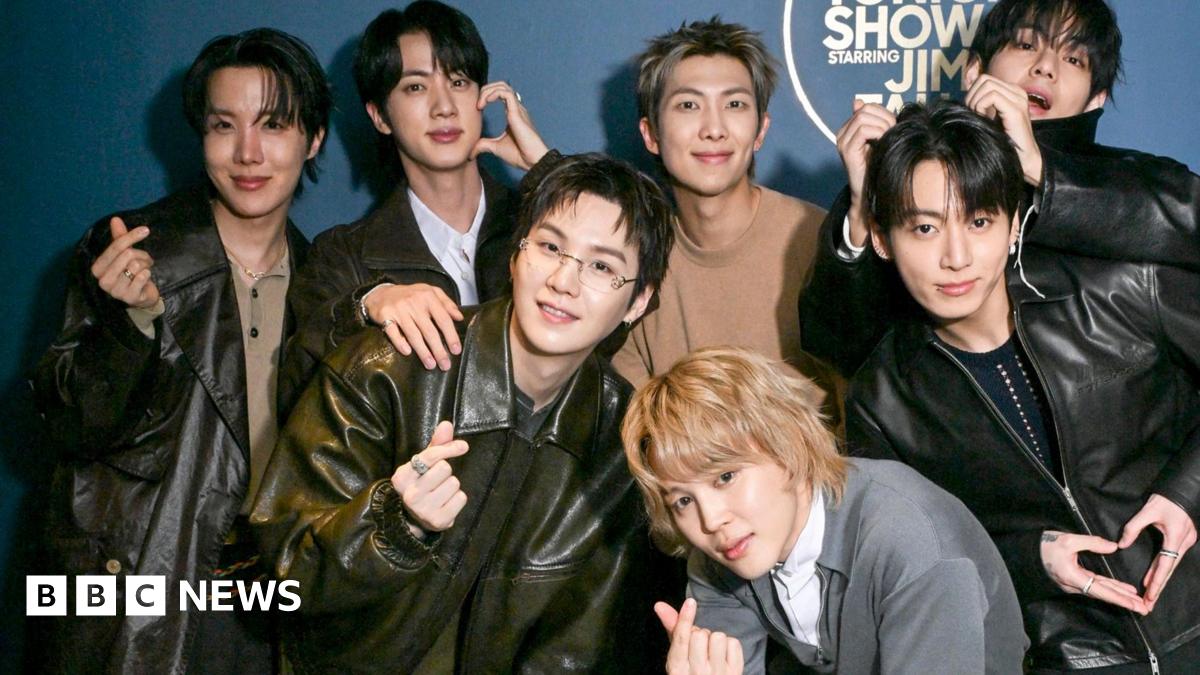
Sometimes that image frays under the unforgiving glare of South Korean celebrity life, where there is rarely room for vulnerability.
Earlier this year, Jung Kook, the youngest in the group, caused a stir with a frank, drunken livestream in which he swore. “I just want to live as I want,” he said. When concerned fans urged him to end the stream, he responded: “Please don’t tell me what to do.”
A few months before, RM apologised profusely after his own honest livestream about the anxiety of reuniting and returning to the stage.
“I wouldn’t say the BTS members lack freedom,” Park says. “But as a group, they’ve become something like a national brand. That inevitably places them under enormous pressure – and it may be why some feel they’ve lost a sense of identity.”
For loyal fans like Park Su-bin, the opportunity to watch them again is exciting enough. “Honestly, I wasn’t that into the title song, Swim. It’s good, but I was expecting stronger choreography and more Korean lyrics, something more like Idol,'” she says, referring to the high-energy hit from 2018 that blends South African rhythms with traditional Korean music.
“It’s been a while since I watched BTS perform. I’m excited to be going to a BTS concert, but it still seems a bit surreal.”
Another “light” fan says, “I don’t have many thoughts about it. I’m just excited for the concert”.
As BTS takes to the stage again, and returns to Weverse, their fandom and their powerhouse performances will determine the verdict on their comeback.
The one thing critics do agree on is that their legacy is assured. “I was covering K-pop before it was this gigantic world phenomenon,” Schwartz says. “And you know, at that time it was a question mark. Will K-pop become like a gigantic world phenomenon? Now there’s no question because of BTS.”
Rather, the question is how much further can they go?