
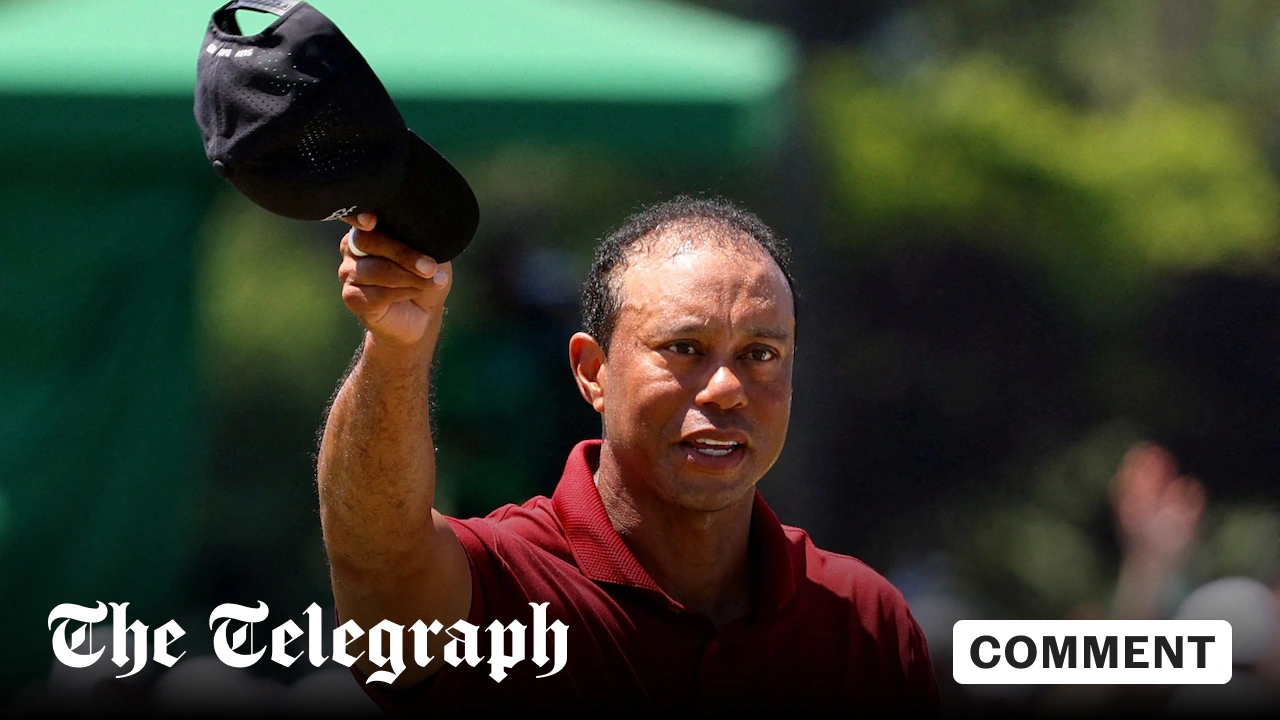
Ridley made no attempt to justify Augusta’s glaring inconsistency, giving only a pre-prepared reassurance that the club would “fully support Tiger’s decision to focus on his health and well-being”. There was a cold corporate logic at work here. Beyond Woods’s ability to send ratings through the roof even as a ceremonial golfer struggling to make the cut, he has a strong commercial connection to Augusta, now that his education foundation has joined forces with the Green Jackets to create a learning hub in the city. With that in mind, it is little wonder Ridley wants to “wish him the very best”.
It has all become difficult to stomach. When it comes to ideas about character and moral fibre, Augusta lays on the treacle with a trowel, accentuating the father-and-child schmaltz of the par-three contest to such a degree that the TV coverage should come with a sugar warning. But when Woods repeatedly drives while drugged, he receives a free pass to absolution, ready to be welcomed back into the fold as soon as he completes some expensive Swiss therapy.
The anomalies do not end there. Augusta strongly suggested to Phil Mickelson in 2022 that it would be better if he stayed away, for fear that his association with the Saudi-bankrolled LIV breakaway might cast a pall over the occasion. Last year, though, it made peace with inviting Angel Cabrera back, soon after his release from a 30-month prison sentence in Brazil and Argentina for domestic abuse. True, there was an argument that Cabrera, the winner in 2009, had served his time and earned a chance at rehabilitation. But a seat at the champions’ dinner, a gathering treated in this realm as akin to a papal conclave? That was granted purely at Augusta’s discretion, and it sat uncomfortably with Payne’s excoriation of Woods for disrespecting the institution of marriage.