
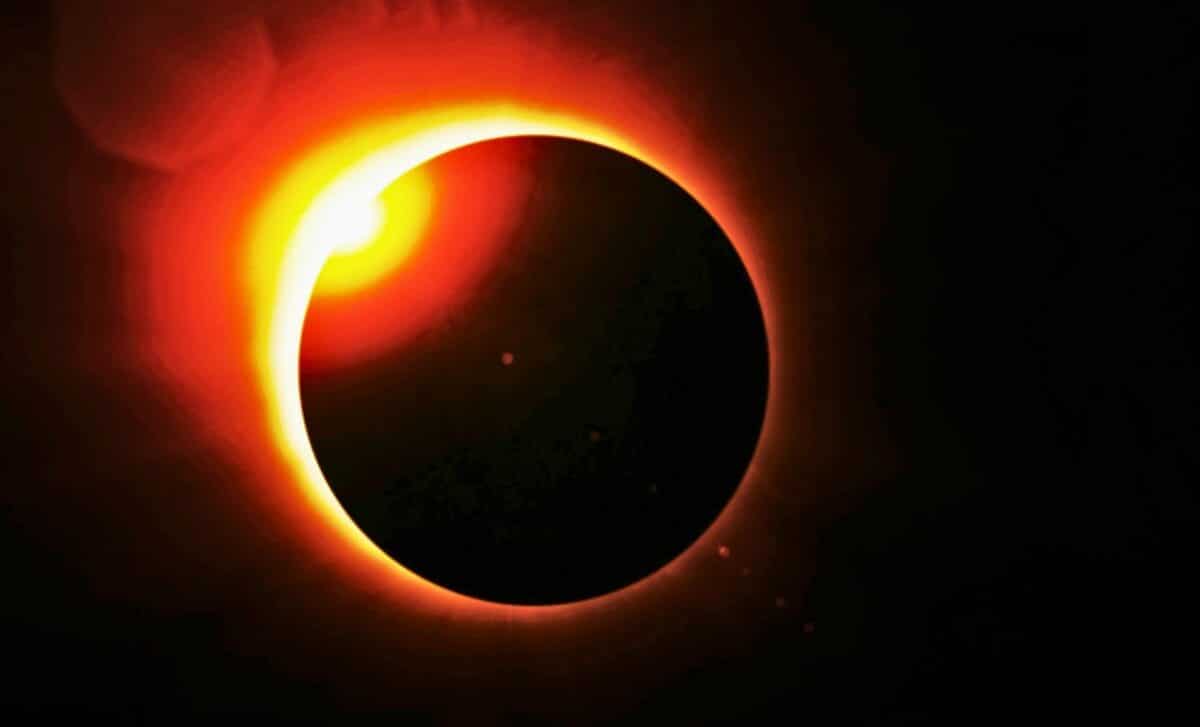
A total solar eclipse will cross the Arctic, Greenland, Iceland, and northern Spain on August 12, 2026. The Moon’s umbral shadow will make landfall in the Northern Hemisphere during the late afternoon and early evening hours in Europe, delivering a period of darkness for observers positioned within the narrow path of totality. According to data from NASA’s interactive eclipse maps, the maximum duration of totality for this specific event will reach 2 minutes and 18.2 seconds at the point of greatest duration, located in the North Atlantic Ocean.
The event is part of Saros series 126, a predictable cycle of eclipses that repeats approximately every 18 years and 11 days. Within this specific series, the August 2026 eclipse represents the peak duration of totality; no other eclipse in Saros 126 will maintain a longer phase of complete solar coverage. This mathematical distinction within a single series is the source of the “157-year” framing that has appeared in some media coverage, though it does not indicate a record length compared to all possible solar eclipses, which can last longer than 7 minutes under optimal orbital conditions.
For the general public in Europe, this will be the most accessible total solar eclipse since March 2015. In northern Spain, the eclipse marks the first time the umbral shadow has touched the Iberian Peninsula since 1912. A second total eclipse will arrive over southern Spain just one year later, in August 2027, offering a rare back-to-back sequence, as detailed in NASA’s official future eclipses catalog.
Where Totality Will Be Visible
The path of totality begins in the extreme northern latitudes of Russia, specifically the Taymyr Peninsula and remote Siberia, before moving across the Arctic Ocean. The shadow then sweeps across the ice sheet of Greenland, passes over the western coast of Iceland including Reykjavík, and continues southeast across the North Atlantic toward Europe.
According to the interactive interface maintained by eclipse expert Fred Espenak on Eclipsewise.com, the central line of the umbral shadow makes its final continental landfall in northern Spain, crossing Cantabria, Basque Country, Castile and León, La Rioja, Aragon, and Valencia before departing near the Balearic Islands at sunset.
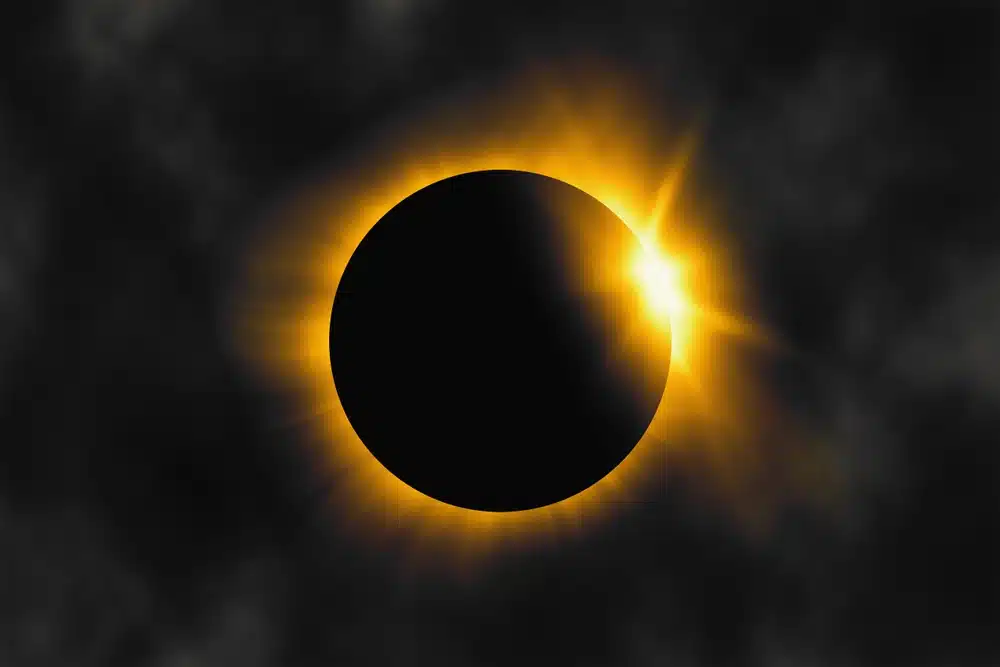 The path spans from Siberia across Greenland and Iceland before reaching northern Spain, where cities like Bilbao and Valencia lie within totality. Image credit: Shutterstock
In Spain, cities including Bilbao, Santander, Burgos, Valladolid, Zaragoza, and Valencia lie directly within the path of totality. The eclipse will occur very low on the western horizon, with the Sun at an altitude of only a few degrees for most Spanish observers. This creates distinct logistical considerations for viewing and photography. A tiny fraction of northeastern Portugal, near the towns of Guadramil and Rio de Onor, will experience a few seconds of totality.
Outside the narrow band of totality, a partial solar eclipse will be visible across a much larger footprint. The penumbral shadow will cover nearly all of Europe, most of Africa north of the equator, the northeastern corner of North America including parts of Atlantic Canada and Maine, and vast stretches of the Atlantic and Arctic oceans.
Observers in London, Paris, Berlin, and Rome will see a significant but incomplete portion of the Sun’s disk obscured. The timing of the eclipse during late afternoon adds a distinctive visual quality, combining the natural dimming of sunset with the artificial darkness of the eclipse.
Understanding the “Longest” Claim
Eclipses follow the Saros cycle, a period of exactly 223 synodic months (approximately 18 years, 11 days, and 8 hours) after which the Sun, Moon, and Earth return to nearly the same relative geometry. The Saros 126 series has produced eclipses in 1990, 1972, 1954, and backward in 18-year increments. Each successive eclipse shifts slightly in duration and geographic position.
 The 157-year framing applies only to Saros series 126, not to all eclipses, which can exceed 7 minutes of totality under ideal conditions. Image credit: Shutterstock
According to the data tables on Eclipsewise.com, the August 12, 2026, event is the “Greatest Duration” eclipse within the entire lifespan of Saros series 126. This means that within this specific family of eclipses, no other occurrence will produce a longer total phase than the 2 minutes and 18.2 seconds calculated for the point of greatest duration. This is a notable but narrow distinction that applies only to one Saros series, not to the global record of eclipses.
When outlets describe the event as not repeating “for 157 years,” they reference the time it will take for Saros series 126 to again produce an eclipse of comparable duration at a similar stage of the cycle’s evolution. The longest possible totality on Earth can exceed 7 minutes, as observed during the eclipse of June 20, 1955. The August 2026 eclipse, while significant for European observers, remains a standard duration event in broader context.
Safe Viewing and What Comes Next
Viewing a solar eclipse requires strict adherence to eye safety protocols. During partial phases, observers must use specialized solar filters that comply with the ISO 12312-2 international safety standard. Regular sunglasses do not provide adequate protection against ultraviolet and infrared radiation that can cause permanent retinal damage. Cameras, telescopes, and binoculars must be equipped with solar filters mounted on the front aperture.
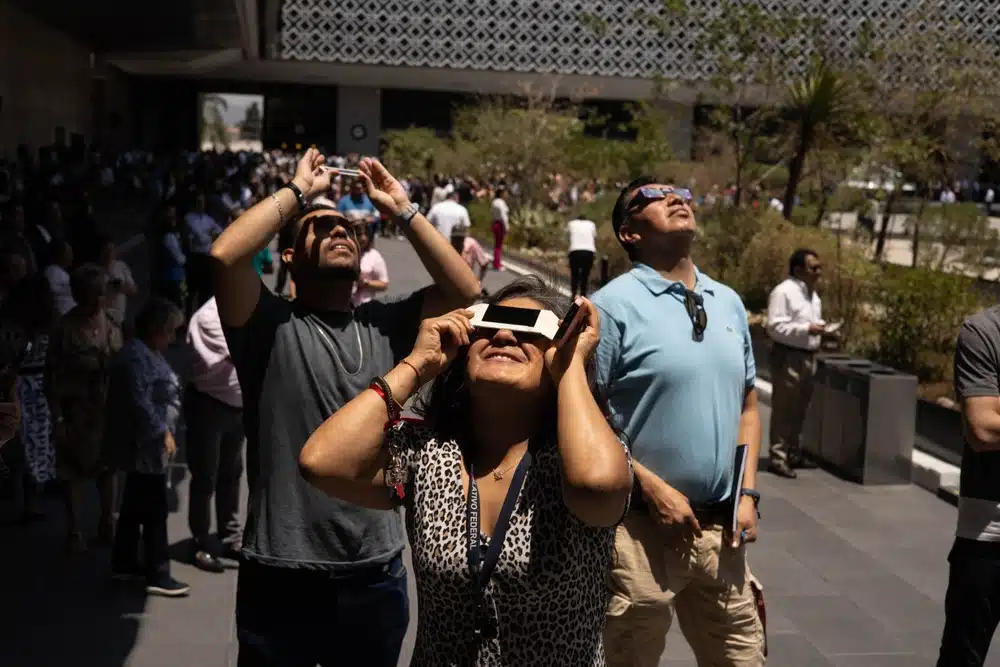 Use ISO-certified solar filters except during totality. Image credit: Shutterstock
The only safe period for direct viewing occurs during the brief minutes of totality, when the Moon completely obscures the Sun’s bright photosphere. For observers in Iceland and Spain, this window will last between roughly one and two minutes. The moment sunlight reappears, observers must immediately resume protective eyewear. NASA and ophthalmological associations warn that failure to do so can result in solar retinopathy, a condition with no treatment.
Looking beyond August 2026, the next major events are confirmed. On February 6, 2027, an annular solar eclipse will sweep across southern South America and western Africa, visible from parts of Chile, Argentina, Uruguay, and Brazil. On August 2, 2027, a total solar eclipse will cross southern Spain, North Africa, and the Arabian Peninsula. That event will place Spain in the path of totality for the second consecutive year, drawing substantial attention to the Iberian Peninsula.