
The construction analyst’s High Rise Construction Market Report 2026-2030 identifies 26 buildings over 100m tall in Manchester – either built or in the pipeline – potentially putting the city above Paris and Frankfurt.
The table is topped by Moscow, followed by Istanbul and then London, which accounts for 57 per cent of all tall buildings in the UK.
Manchester is currently ranked seventh in the European league table, but a surge of approved and planned schemes could lift the northern powerhouse into fourth place. If all the schemes are delivered, the city would boast more than 200 towers over 50m tall and 10 that are over 150m.
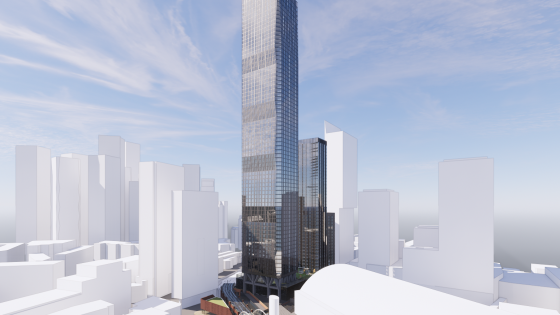
Among this new wave of tall towers is SimpsonHaugh’s £600 million Viadux Phase 2 – a 76-storey tower, housing 915 flats, which is due to start on site next month.
Barbour ABI’s research shows that Manchester and other regional cities are driving a ‘vertical boom in Britain’, with almost 1,000 high-rise projects now in the pipeline outside London.
The report shows that the regional high-rise pipeline has quadrupled in five years to 911 schemes and is valued at £51 billion. This marks an almost tenfold increase on 2021 levels.
Of these 911 projects, 587 are 15 storeys or more, and around four in five have passed through outline planning stages.
Barbour ABI said that the nationwide boom came as the pace of development in the capital had ‘slowed as various regulatory hurdles have taken a toll’.
Separate data released last month by Turner & Townsend showed construction costs for tall towers in London increased by 40 per cent in the five years to March 2026.
Together, Manchester, Salford, Liverpool and Birmingham have a pipeline of 121 tower projects. The remaining 85 per cent of new high-rise schemes are spread across other cities, including Leeds, Glasgow, Bristol and Cardiff.
Barbour ABI head of business and client analytics Ed Griffiths said: ‘While London still anchors the tall-building scene by height, it is no longer the whole story.
‘The pipeline shows regional city centres are scaling up fast. This is not a single-city phenomenon; it’s spread across 45 cities and large towns, and the majority of projects are already moving through planning.’
Residential work represents 86 per cent of the total value of the towers proposed across the nation.
This percentage drops to 74 per cent when London projects are included in the analysis.
According to Barbour ABI, ‘this suggests a skew in London towards office or hotel-led projects, and a level of prestigious high-end residential proposals now evident within the regional projects’.