
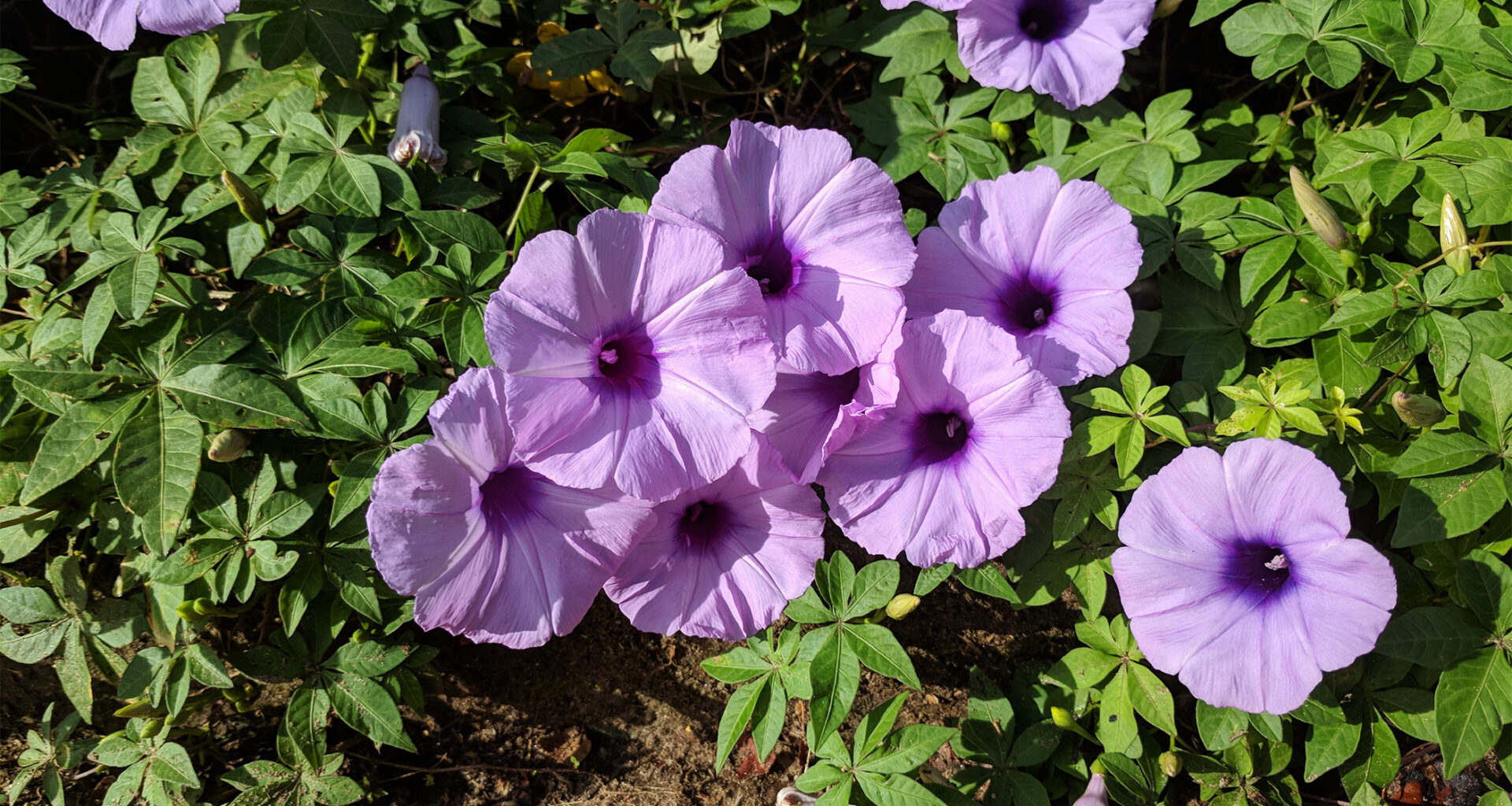
The beach morning glory (Ipomoea pes-caprae) vine is widely used as a traditional medicine in the north of Indonesia’s Sulawesi Island, and in many tropical coastal communities, to treat common complaints, and by fishers to treat stings from venomous fish.In addition to its medicinal use, the plant, also known as bayhops, reinforces beaches by binding sand dunes, increasing the resilience of global coastlines to risks of abrasion and erosion.Beach morning glory is a ubiquitous crawling vine, but some communities in Sulawesi’s Gorontalo province say the medicinal plant has disappeared locally due to industrial development and infrastructure construction.
See All Key Ideas
SUMALATA, Indonesia — Following encounters while diving, Gusnar Ismail has long turned to the morning glory plants growing on sandbanks here on the north of Indonesia’s Sulawesi Island.
“When I get stung or stabbed by an animal in the sea, I’ll go straight away to look for batata to use as medicine,” Gusnar told Mongabay Indonesia on March 14.
Around the world, coastal communities have long self-medicated with what Gusnar calls batata to treat common ailments. The fast-growing batata vine (Ipomoea pes-caprae), commonly known as beach morning glory or bayhops, scrambles across beach dunes, unfurling fuchsia flowers throughout the tropics.
Aboriginal societies have gathered the shoots and leaves to treat stings in waters off what is now Australia. In India, the plant is a ceremonial ingredient in countering evil spirits.
Researchers from South Korea in a study published in 2022 in the journal Marine Drugs found an array of applications from beach morning glory around the world’s tropical and subtropical coastlines.
“The dried leaves of the plant are used to treat arthritis in Nigeria, while the young leaves are boiled in coconut oil to treat sores in Indonesia,” the researchers noted.
Beach morning glory is an abundant and resilient vine that carpets tropical beaches around the world. But where coastlines are upended by plantations, sand mining, infrastructure or heavy erosion, the green shoots and purple flowers can disappear from shorelines.
“I’ve been observing the disappearance of coastal batata for a long time,” Gusnar told Mongabay Indonesia.
Here on the northern coast of Sulawesi, an island besieged by the global rush for nickel, some residents see the medicinal plant’s loss as a signal of wider ecological ill health.
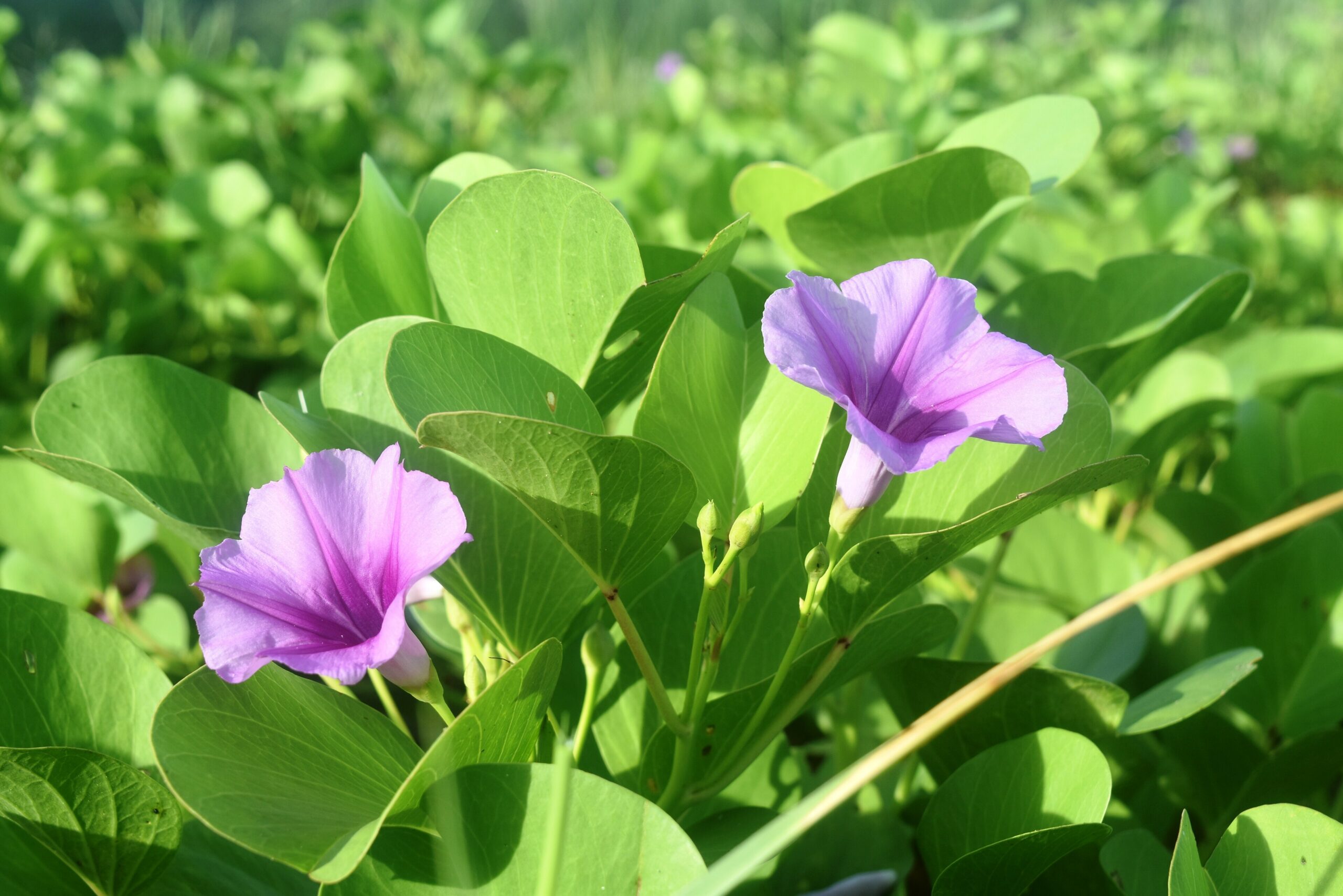 The beach morning glory — also known as katang-katang — is a plant commonly seen along coastal shores. Image by MarvinBikolano via Wikimedia Commons (CC BY-SA 4.0).
Brought to heal
The broad field of traditional medicine occupies an uneasy place in global public health, spanning practices dismissed as superstition to remedies with proven or potential medical value.
That may be beginning to change as international health workers build an arena for practitioners to share knowledge and raise the profile of proven remedies, like the batata Gusnar uses to alleviate the effects of mild venom.
In December, traditional practitioners and more than 800 delegates from around the world convened in the Indian capital, New Delhi, for the World Health Organisation’s second Global Summit on Traditional Medicine.
“[Traditional medicine’s] rapid growth has not always been matched by strong evidence standards, regulatory frameworks or sustainable governance,” WHO chief scientist Dr. Sylvie Briand said in a statement.
Briand said a new Strategic and Technical Advisory Group on Traditional, Complementary and Integrative Medicine, which was launched at the Delhi summit, would help “close this gap.”
“Traditional medicine can help to address many of the threats to health of our modern world: the growing burden of noncommunicable diseases; inequitable access to health services; and climate change,” said Tedros Adhanom Ghebreyesus, the WHO director-general.
Beach morning glory is a well-known plant with medicinal properties demonstrated in laboratory studies, but not yet by the double-blind placebo trials necessary to prove effectiveness and safety in humans.
In 2024, researchers in the semiautonomous Indonesian province of Aceh, the westernmost point of the country, recorded antimicrobial properties in a lab study designed to find treatments for the bacteria Staphylococcus aureus, which can lead to fatal infections like pneumonia and sepsis.
“Previous phytochemical analyses of the plant have revealed pharmacologically active components, such as alkaloids, glycosides, steroids, terpenoids, and flavonoids,” the South Korean study published in Marine Drugs noted.
Traditional medicine attributes a wide array of uses to the plant, from treating joint pain to gastroenteritis, and credits beach morning glory with antimicrobial and antihistamine properties.
“These phytoconstituents are responsible for the wide range of biological activities possessed by I. pes-caprae plant parts and extracts,” the researchers concluded.
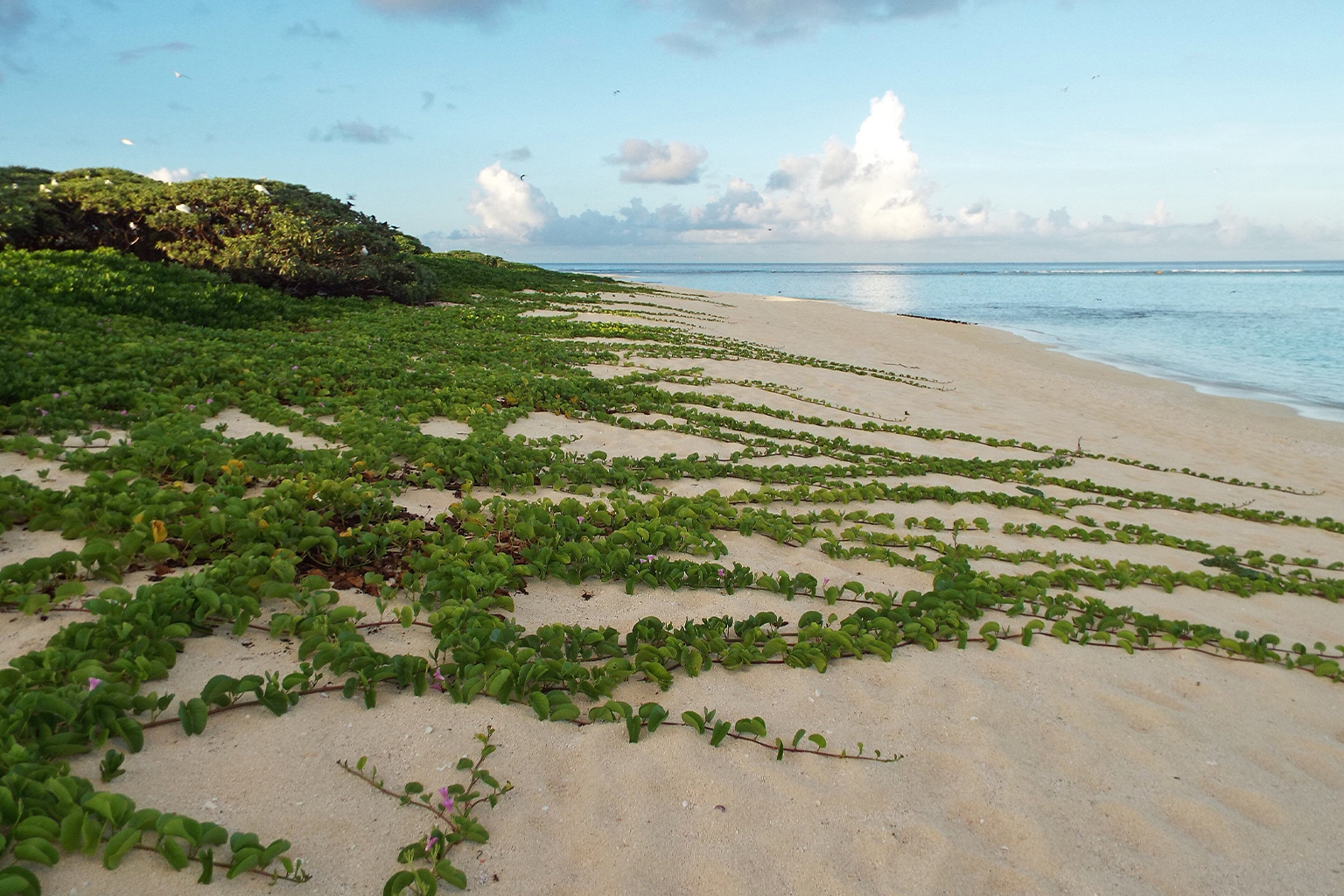 Around the world, coastal communities have long self-medicated with batata to treat common ailments. Image by Forest and Kim Starr via Wikimedia Commons (CC BY 3.0 US).
Stem discipline
Gusnar splits a young leaf stem of beach morning glory and rubs the translucent sap into his skin.
If a fisher is stung by a jellyfish or steps on a stonefish, a potentially fatal event, they’ll do this as a simple analgesic, he explained.
“Or if they’re needled by the spines of a catfish, which in the Gorontalo language is called tola lo huwa, they’ll immediately look for this plant,” Gusnar said.
But here in Gorontalo, the vine supports not just human health, but the health of the coast itself.
Beach morning glory is a pioneer species that helps stabilize coastlines by binding sand. Much as the root network of trees anchors soil and protect communities from landslides, the vine helps hold sandy shores together against abrasion.
And that role is becoming increasingly significant as climate change and human development increase risks to coasts around the world.
A 2018 study in Scientific Reports estimated coastal abrasion had already erased around 28,000 square kilometers (11,000 square miles) of land worldwide — an area around 10 times the size of Hong Kong. A 2020 study warned coastal flooding could “radically redefine the coastline of the 21st century.”
Globally, the coastal population has swelled from 1.6 billion to 2.5 billion people in just three decades, according to the United Nations Environment Programme. More than three-quarters of that number live in low- and middle-income countries like Indonesia.
“If the coastal batata disappears, abrasion will occur on the coast and also along the estuary,” Gusnar said.
The experience in Gorontalo aligns with what’s happening in other parts of the world. In Mauritius, in the southwest Indian Ocean, the Liane Batatran project, initiated by Coral Garden Conservation, has planted 19,000 propagated Ipomoea pes-caprae plants on critical beaches to prevent erosion “while supporting the natural dynamic of coastal ecosystems.”
The project managers report a survival rate of 81%, and say they expect the initiative to support the retention of 826 metric tons of beach sand.
“By integrating ecological restoration with community participation, [Coral Garden Conservation] has successfully developed a sustainable model for shoreline protection,” the nonprofit said in its summary of the project.
In Gorontalo, Gusnar points to a hamlet in Sumalata subdistrict that has already been claimed by the sea through coastal abrasion. Other settlements are on the same path. Homes and the ground people once lived on are slowly slipping into the water, he said.
“This plant is often overlooked,” Gusnar said. “It’s not just a weed — for us it’s a lifeguard and a life saver.”
Banner image: This plant is classified as a halophyte, or capable of surviving in high-salinity environments. Image by Vengolis via Wikimedia Commons (CC BY-SA 4.0).
This story was first published here in Indonesian on March 17, 2026.
Bangladesh witnesses coastal erosion, salinization as tourism crushes a flowering creeper
Citations:
Akinniyi, G., Lee, J., Kim, H., Lee, J., & Yang, I. (2022). A medicinal halophyte Ipomoea pes-caprae (Linn.) R. Br.: A review of its botany, traditional uses, phytochemistry, and bioactivity. Marine Drugs, 20(5), 329. doi:10.3390/md20050329
Gazali, M., Umar, W., Nufus, H., Fadly, S. A., Syafitri, R., & Zuriat. (2024). The investigation of the Ipomea pes-caprae leaf extract as antimicrobial of Staphylococcus aureus. IOP Conference Series: Earth and Environmental Science, 1410(1), 012011. doi:10.1088/1755-1315/1410/1/012011
Mentaschi, L., Vousdoukas, M. I., Pekel, J.-F., Voukouvalas, E., & Feyen, L. (2018). Global long-term observations of coastal erosion and accretion. Scientific Reports, 8(1), 12876. doi:10.1038/s41598-018-30904-w
Taherkhani, M., Vitousek, S., Barnard, P. L., Frazer, N., Anderson, T. R., & Fletcher, C. H. (2020). Sea-level rise exponentially increases coastal flood frequency. Scientific Reports, 10(1), 6466. doi:10.1038/s41598-020-62188-4
