
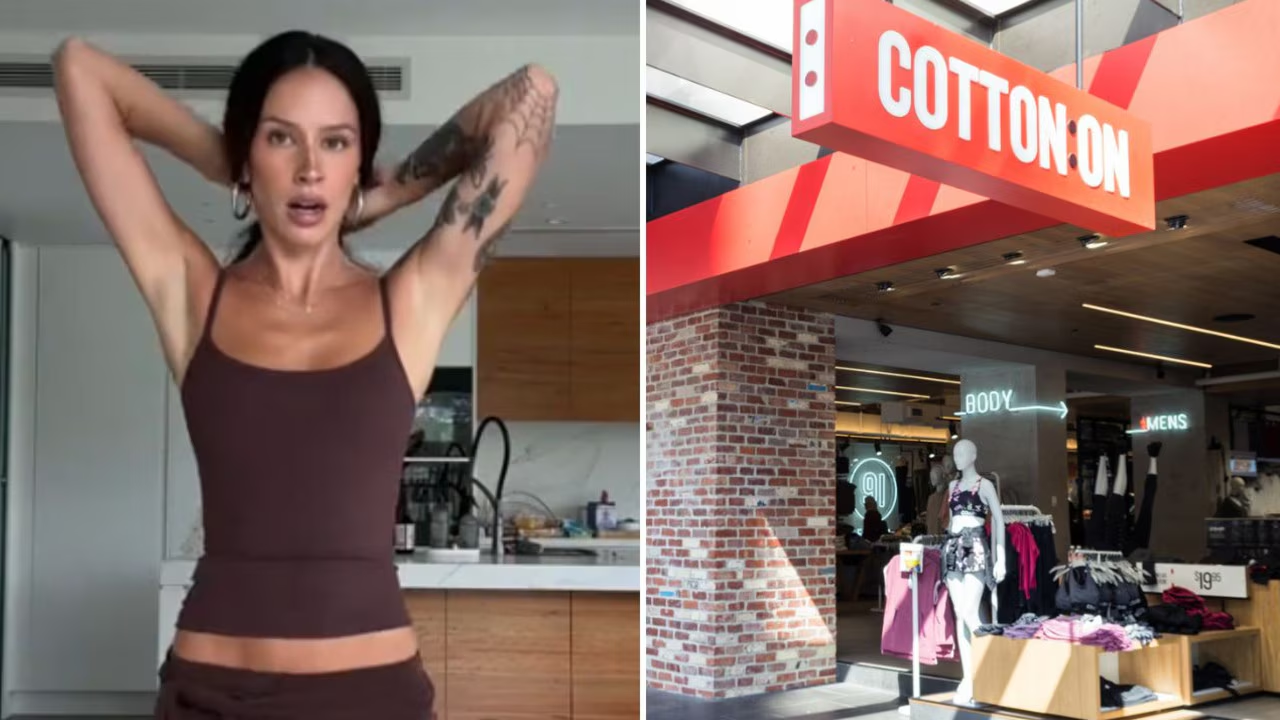
A young shopper has sparked a fierce online debate after calling out “insane” price hikes at a major Aussie retailer.
Cotton On has long been a go-to staple for affordable and trendy pieces, but fed-up customers have claimed they are “walking out” because they can no longer justify the current prices.
The viral TikTok, viewed over 350,000 times, highlights the growing frustration at the fashion industry’s seemingly rising price tags which simply aren’t matching the quality of the garments on racks.
“I walked into Cotton On just now because I thought, ‘Oh, these pants are really cute’,” the young woman shared in the video.

MORE:Aus fashion capital’s sad fight for survival
“But it was $50 for the pants and then $30 for the top, and I thought, who is paying $80 for the full set?
“I watched several groups of girls walking in, looking at the prices of everything, and then literally walking straight out again,” she said.
News.com.au has contacted Cotton On for comment.
MORE: 650 stores shut: Big Aus brand collapses
The woman claims that while the brand is still nailing the trends, the price points just aren’t justified anymore.
“We’re not interested in spending nearly $100 on an outfit,” she vented.
“[Cotton On] is literally losing people from their business because it’s just so expensive and no one can afford that anymore.”
And experts say we’re not imagining it.
Behavioural economist, Evan Lucas, told news.com.au that this disconnect between price and fabric actually has a name.
“‘Skimpflation’ is the new version of ‘shrinkflation’, which means you’re basically getting lower quality for higher prices,” Mr Lucas explained.
“If these fast fashion brands are charging $100 for garments with synthetic fabrics, shoppers will begin wondering if it’s worth paying say $150 for quality that will actually last for several seasons rather than one,” he said.

‘Boomer pricing’: Consumers weigh in
The customer’s viral video struck a nerve with hundreds of cash-strapped young Aussies who flocked to the comment section to share their similar frustrations.
“$45 for a kids ‘knit’ cardigan [that’s] 100 per cent polyester,” one frustrated user shared.
“When Cotton On first opened, it was so much cheaper. I went in recently and the quality was the same but they’ve jacked the prices up,” a second commented.
“It’s meant to be for younger folks, but it’s now boomer pricing,” they continued.
A third added: “Haven’t shopped at Cotton On for a couple years now. I don’t want to spend $90 for jeans which will ruin after a few washes!”
But Cotton On wasn’t the only retailer in the firing line, with many commenters also calling out other fast fashion outlets for the same issue.
A few shoppers jumped to the brand’s defence, arguing that certain items were still a bargain.
“I love Cotton On activewear though. It’s half the price and better quality than some brands out there,” one person noted.
The real reason you’re paying more
So why are shoppers suddenly paying premium prices for “cheap” fabrics?
Mr Lucas explained that physical retailers are facing the “perfect storm” of behind-the-scenes financial pressures.
“If you look at the overheads on physical outlets, the rents since the end of Covid to now have increased by between 25 and 50 per cent,” he said.
“With insurance and labour costs also skyrocketing, brands are being forced to make up the difference by making clothes cheaper to produce.”
He also warned that the ongoing conflict in the Middle East is triggering a massive supply chain crisis for the fashion industry.
Because synthetic fabrics like polyester rely heavily on materials from the region, war-related shipping disruptions are causing major material shortages in Asian factories.
With brands now fighting over these limited materials, Mr Lucas said shoppers should brace for “another level of inflation” at the checkout.
Despite this, he notes that other ‘fast fashion’ brands like Zara and Uniqlo are actually managing to keep their quality relatively fair.
According to Mr Lucas, it all comes down to their massive global footprint, which means they can absorb these financial hits much easier than local brands.
A move away from physical stores
Because Aussie brands simply can’t compete with these global giants, the high prices are forcing young consumers to look elsewhere.
Instead of going to the mall, Gen Z shoppers are hunting for cheaper deals online.
This is causing a massive drop in foot traffic for physical stores.
Mr Lucas warned the shift toward online shopping is “only going one way and that is up,” while traditional shopping strips are “only going one way, and that is down”.
He pointed to famous retail strips like Melbourne’s Chapel Street, describing it as a “tumbleweed ghost town” because fashion labels can no longer afford the rent.
For Aussies fed up with the fast-fashion squeeze, Mr Lucas says the power remains in the hands of the buyer.
He urged frustrated shoppers to vote with their wallets.
“These brands will have to change their behaviour if you walk,” he said.