
Want LBC stories before everyone else? Set us as your Preferred Source on Google
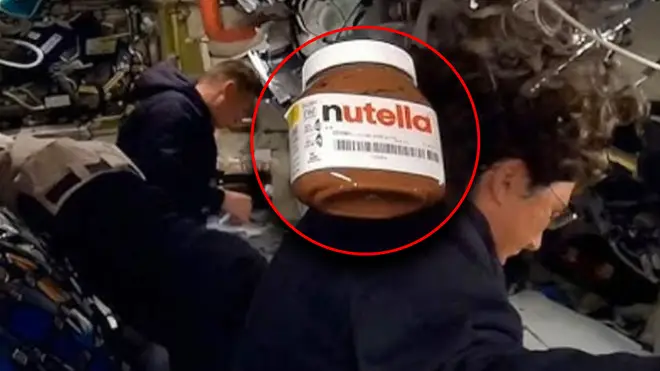
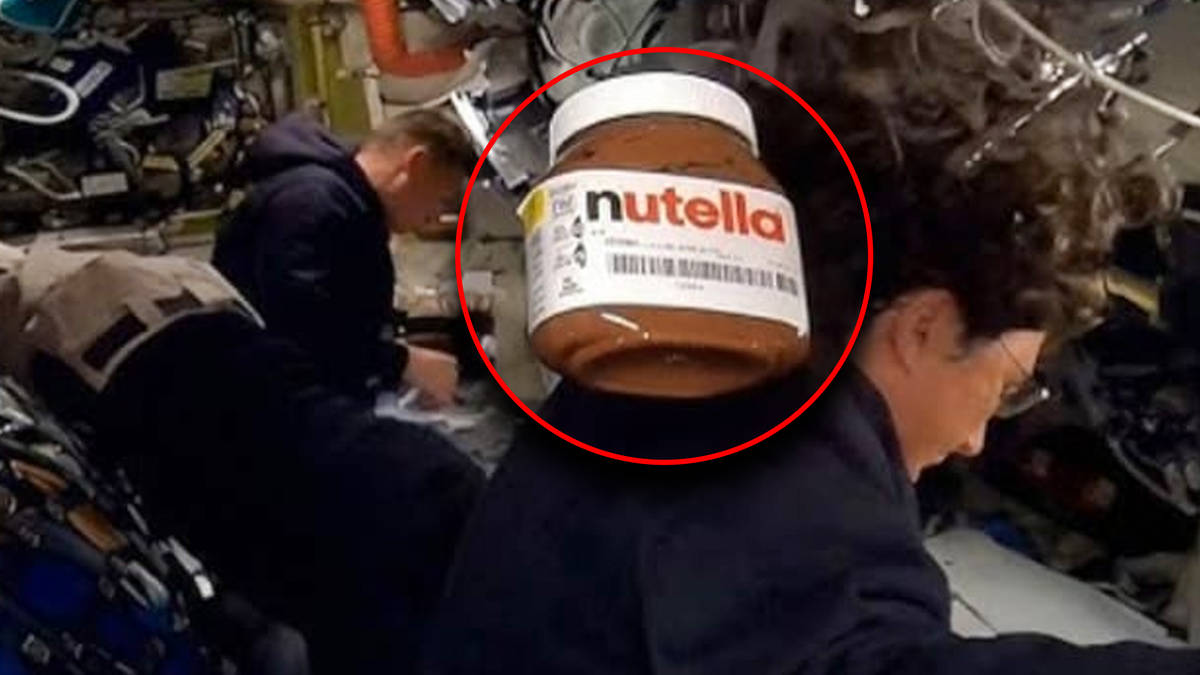
A jar of Nutella has become an unlikely talking point on Nasa’s Artemis II mission.
Picture:
NASA
A jar of Nutella has become an unlikely talking point on Nasa’s Artemis II mission after it was seen floating inside the Orion spacecraft shortly before the crew broke the record for the furthest distance humans have travelled from Earth.
The 10-day lunar mission has been tightly planned, with strict limits on the weight of everything carried on board.
Alongside essential equipment including life-support systems and spacesuits for the four astronauts, Nasa packed a pantry containing 189 food items.
Among them was what appeared to be a 500g jar of Nutella.
A 2021 Nasa audit estimated Artemis II would cost about $4.1 billion (£3.1 billion).
With the Orion spacecraft carrying a weight of around 27,000kg once in orbit, that works out at roughly $151,852 (£113,321) per kilogram. On that basis, a 500g jar of Nutella would cost about $75,926 (£56,944) to take into space.
Nasa is also reported to have sent 58 tortillas, five bottles of hot sauce and 43 cups of coffee with the Artemis II crew.
Read more: Nasa team focused on getting Artemis II astronauts back to Earth safely
Read more: First photo from far side of the moon released – as Artemis II heads home
Experts say foods chosen for space missions need to meet strict requirements, but Nutella is thought to fit the brief because it can be stored securely, stays together in zero gravity and can be eaten directly or spread on food such as tortillas.
Jennifer Fogarty, chief scientist at the University of Central Florida and a former chief scientist for Nasa’s Human Research Program, said familiar foods can also provide comfort and help with morale during long missions.
The moment quickly went viral online, with some users suggesting the floating jar looked like product placement as its label was clearly visible while spinning in zero gravity.
Nutella’s parent brand were quick to join in, joking on X it was “honoured to have travelled further than any spread in history”.
But Nasa has rejected any suggestion of a commercial tie-in, with press secretary Bethany Stevens saying the agency does not choose crew meals as part of brand partnerships.
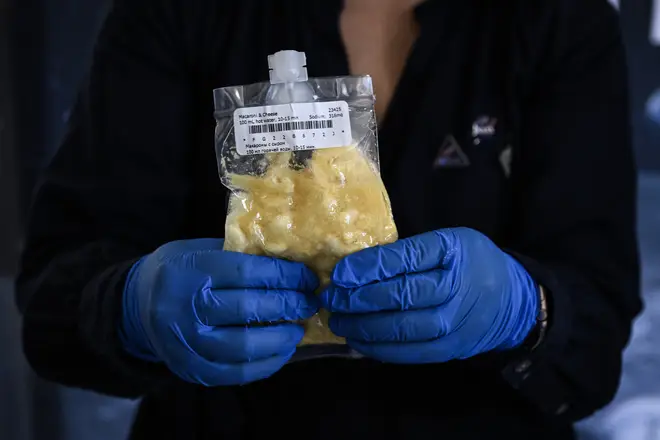
NASA space food scientist Xulei Wu holds a package of macaroni and cheese, part of the Artemis II crew’s in-flight meals.
Picture:
Getty
On Thursday, the crew of Nasa’s Artemis II mission officially started the journey home after creating history on their pass behind the Moon.
The Artemis II crew, who successfully completed a test flight around the Moon, are due to splashdown off the coast of San Diego in California on Friday.
Using the Moon’s gravity for a “free” return journey, it will take the crew four days to get back, with a splashdown in the Pacific on Friday.
A news conference heard scientists were continuing to learn from the epic voyage that would inform future missions.
This included monitoring the impact of the deep space environment on the three Americans and Canadian aboard the Orion module.
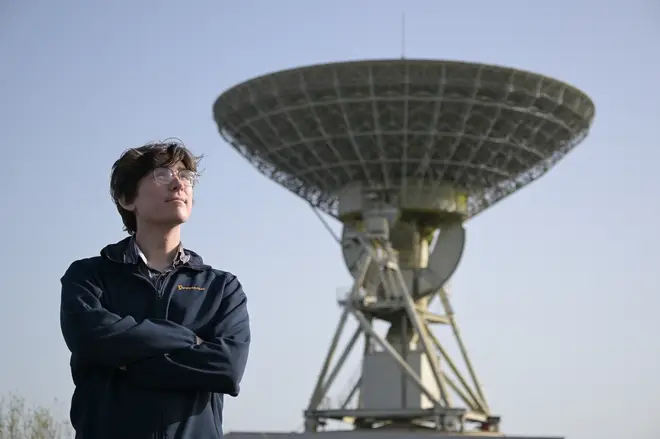
Goonhilly Earth Station is supporting NASA tracking of Artemis II.
Picture:
Getty
The four astronauts on the first manned Moon mission in more than 50 years reached 252,756 miles (406,771 kilometres) from Earth.
The record was achieved during a seven-hour lunar flyby which included a 40-minute communication blackout as they passed around the far side of the Moon from Earth.
During the blackout, the crew reached their closest point to the Moon at 4,067 miles (6,545 kilometres).
The astronauts asked Nasa if they could name two newly observed lunar craters Integrity, after the capsule of their Orion spacecraft, and Carroll in honour of the late wife of Commander Reid Wiseman. She died of cancer in 2020.
The Goonhilly Earth Station, near Helston, in Cornwall, has been helping track the first Moon mission in more than 50 years.