

The San Francisco Bay is part of one of California’s biggest metropolitan areas. Every day its waters teem with high-speed ferries, container ships, recreational boaters and water sports enthusiasts. But a growing danger has emerged — one that threatens more than just people on the water.
Whales are increasingly entering the bay, leading to a rise in vessel collisions, and some are washing up dead.
A fifth grey whale has died in the bay in just two and a half weeks. One of the deaths has already been confirmed as the result of a boat strike.
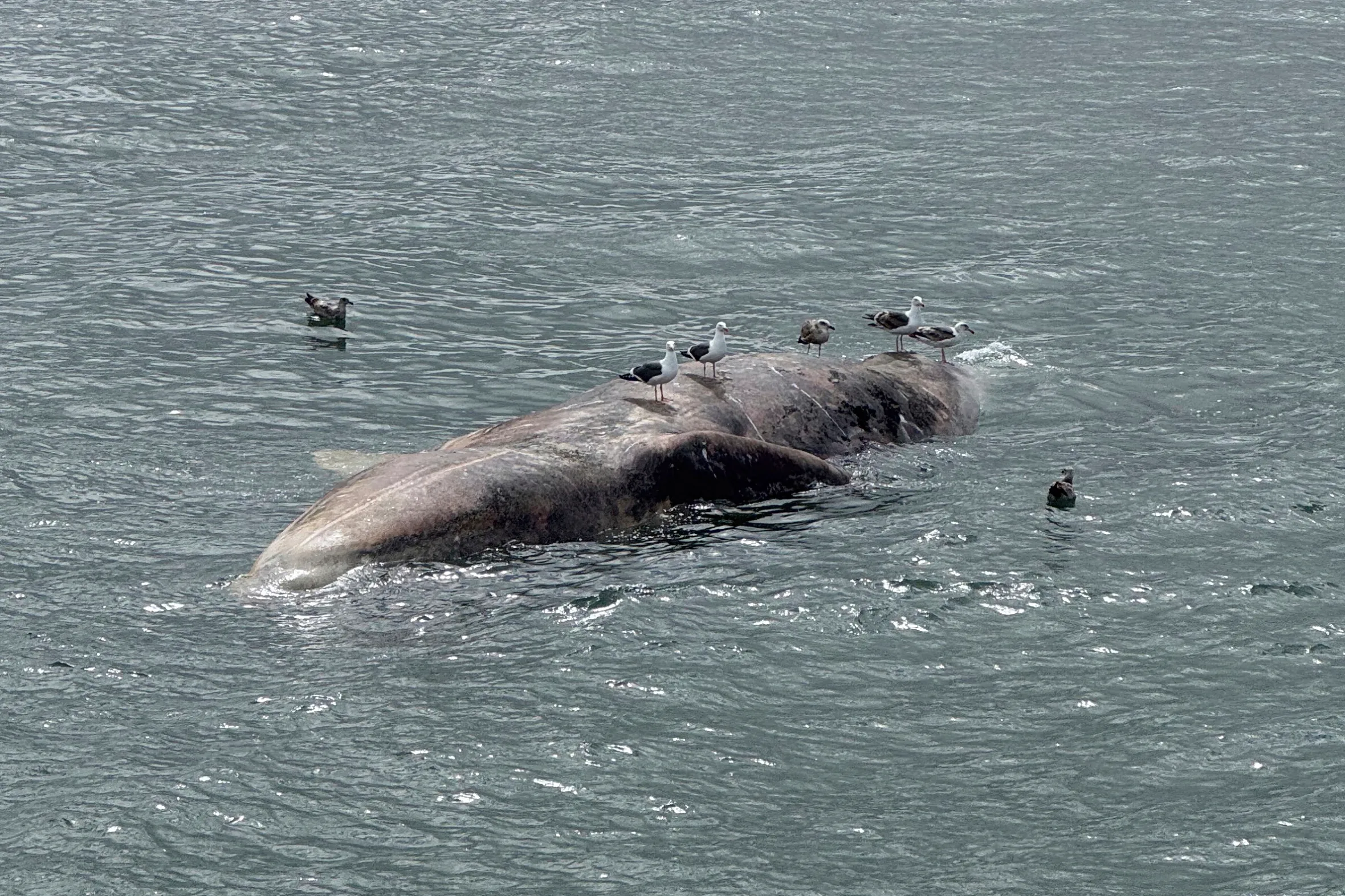 A dead whale floats in the San Francisco Bayjelena wong/AP
US newsletter
A balanced, fair and fact-checked take on global news and culture for our US readers.
Sign up with one click
A windsurfer was filmed crashing into a whale on the California coast before being thrown off his board and plunged into the water.
As for the other dead whales, investigations are continuing. Some are undergoing autopsies while in other cases, the cause of death cannot be determined due to inaccessible locations, advanced decomposition or both. One whale, for example, is still stuck and lodged under pilings by an oil refinery in the North Bay.
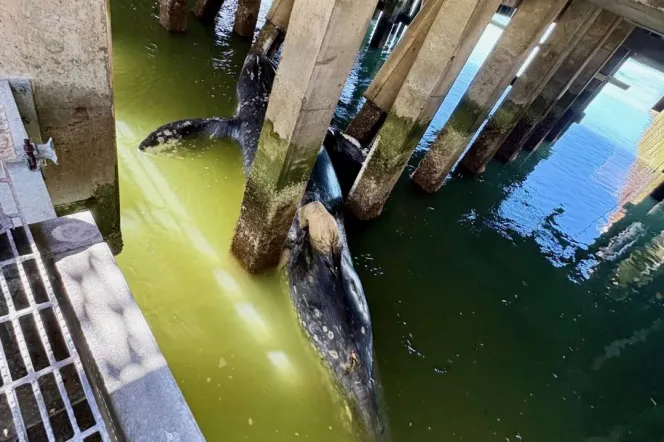 A dead male grey whale stuck under an oil refinery in Rodeo, California
Vessel strikes pose a safety risk not only to whales, but to humans. Most at risk are the passenger ferry lines, according to Scott Humphrey, chairman of the harbour safety committee of the San Francisco Bay. A collision “would be as devastating for the ferry as for the whale”, Humphrey said.
However, Paolo Cosulich-Schwartz, director of public affairs for the Golden Gate ferry, disagreed. Even in the event of a collision, he said, passengers’ safety would not be at risk. “We adjust our route if there are sightings,” he said.
“Our vessel captains are instructed to reduce speed to 10 knots or less. For some of our passengers it’s the cheapest whale watching they can do.”
The Eastern North Pacific grey whale has one of the longest migrations of any animal, according to Susan Hopp, board member of the San Francisco Chapter of the American Cetacean Society. They feed in the Arctic then travel to Mexico to breed and give birth, a 10,000-mile round trip journey. Typically they do not forage for food on the trip; they survive off energy stores built up in their Arctic feeding grounds.
But experts believe those food sources have begun to dwindle due to climate change. As a result, grey whales have been embarking on their long passage to the south and back with inadequate fuel reserves.
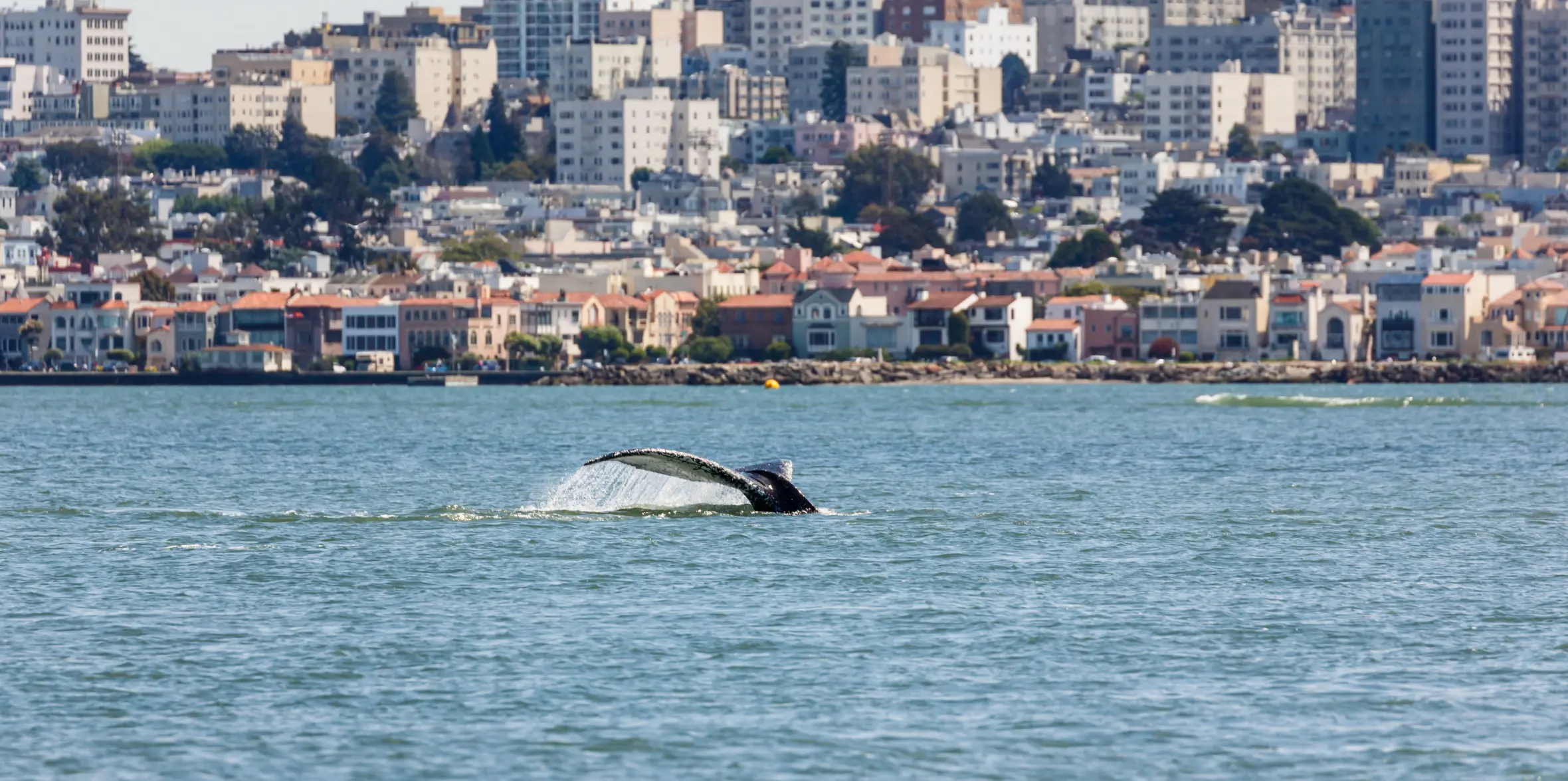 A humpback whale spotted in the bayAlamy
An unusual number of those whales have been entering the San Francisco Bay, possibly either to rest or to replenish their depleted energy reserves by foraging. Some of them have been found emaciated.
Environment newsletter
The latest climate, energy and nature news and analysis, plus reasons to be hopeful.
Sign up with one click
“The fact they are coming into San Francisco Bay in increasing numbers is relatively new and is likely an indicator that their normal feeding behaviour in the rich, cold waters of the Arctic is not supplying them with enough nutrients,” Hopp wrote.
“What we were seeing last year were whales staying longer in the bay, some staying for months,” said Giancarlo Rulli from the Marine Mammal Centre.
The population of the Eastern North Pacific grey whale has declined by more than half since 2016, from 27,000 to 12,900. Beginning at the end of 2018, it underwent what the National Oceanographic and Atmospheric Administration termed an “unusual mortality event” along the Pacific Coast of North America.
The organisation declared that event over in 2023. Then, last year, the death count began to tick up again. Thirty-six grey whales entered the San Francisco Bay last year, a record. Twenty-one of them died, nine of them probably from vessel strikes, Rulli said. The pattern is continuing this year.
Rulli passed along this practical advice to boaters: “If you see a blow, go slow.” All recreational boaters, he said, should keep a football field’s distance from a grey whale.
“It’s a really resilient species under a lot of stress,” he said. “Whether it can bounce back again is an open question.”