
Created: Apr 10, 2026 07:55 AM (Updated: Apr 10, 2026 08:04 AM)
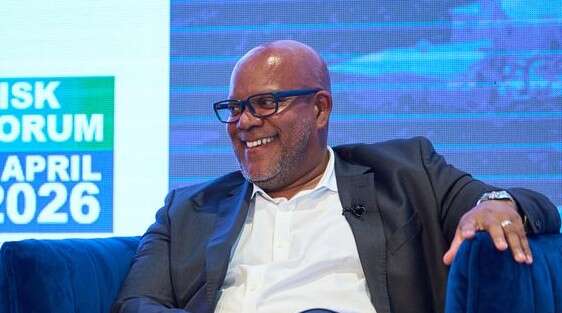
Competitive environment: Paul Simons, CEO of Convex Re Bermuda (Photograph supplied)
Nurturing the entrepreneurial culture that has driven the development of the Bermuda re/insurance market among upcoming leaders is a key challenge for the island in the era of artificial intelligence.
That is the view of Paul Simons, chief executive officer of Convex Re Bermuda, who was speaking on a panel at the Association of Bermuda Insurers and Reinsurers Risk Forum.
Speaking on the topic of how the Bermuda market could look in five years, Mr Simons said: “The success of this marketplace has been driven by the quality of talents, innovation and being entrepreneurial — I think those things are really key.
“As someone getting closer to the twilight of my career, when I think about the culture of innovation, I worry a little bit about that, although we have fantastic young people coming through this business.
“We are seeing structural change with AI and everything that is going to be embedded in businesses. How do we bring that cohort along to continue the innovation and entrepreneurship?”
Mr Simons added that the Bermuda Monetary Authority, the island’s financial regulator, had supported innovation by finding “a unique balance between appropriate regulatory oversight and allowing us to be entrepreneurial and run our businesses right”.
Ensuring that regulatory “friction” was minimised, where appropriate, was key for the island’s continuing success, he added.
“These are the things that, you know, we can’t get wrong, because there are other jurisdictions out there that would love to have what we have, and it’s a competitive environment,” Mr Simons added.
In an era of rapid change, the insurance industry, which uses many backward-facing models, should focus improving responsiveness to client needs, Mr Simons said.
“We need to be a bit more forward looking. Our customers’ operating models are evolving rapidly, and we have to keep up. It’s really that simple.
“We have to listen to the needs of our customers — our industry has done OK with that, but I think we could do a lot better. It’s very simplistic, but I think it all starts from there.”
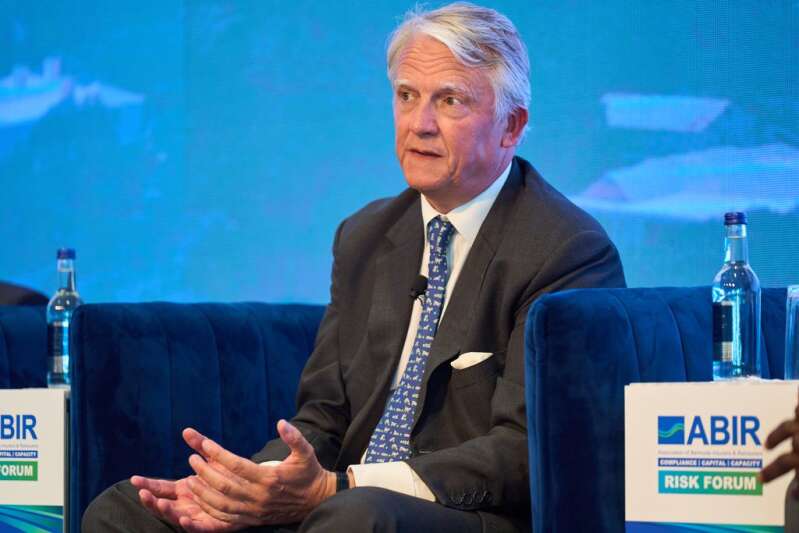
Structural change: Mark Wheeler, co-CEO of Mosiac Insurance (Photograph supplied)
Co-panellist Mark Wheeler, co-CEO of Mosaic Insurance, also weighed on the topic of creating new products to meet customers’ evolving needs of customers. He said collaboration between insurers and reinsurers — which was “more pronounced in Bermuda than anywhere else in the world” — had been instrumental in Mosaic’s new product creation.
“Creating new products is part of Mosaic’s DNA,” Mr Wheeler said. “In five years, we’ve built new products in areas including blue bond credit, green bond arbitration, default, carbon sequestration and methane mitigation.
“More recently, probably our most exciting new product has been around AI performance guarantees, and that’s particularly relevant in the context of this, because we were only able to do that because of support from the reinsurance market.”
Mr Wheeler described the geopolitical turbulence being seen today as part of a “structural change”. He referred to the cyclical nature of human history, going from periods of peace and prosperity, to excess and inequality, followed by trade conflict and war, and then reset and reconstruction. He said there were signs we are going into the third cycle — conflict.
“For us as a market, what does this mean?” Mr Wheeler said. “Pricing discipline is a key consideration. We must move away from this pricing by recent past experience, and think about where we are in the future outlook.
“Also important is aggregation monitoring. Particularly with systemic risk, we don’t need to look any farther than the Middle East today to see the threats presented there.
“And then, it’s a question of capital allocation, and we’re so blessed today to have the data and analytics that we have to think about how we allocate capacity with conviction, be that territorially or product wise.”
He added: “We’re in the midst of a big upheaval, and we need to take it very seriously for the resilience of the industry.”