
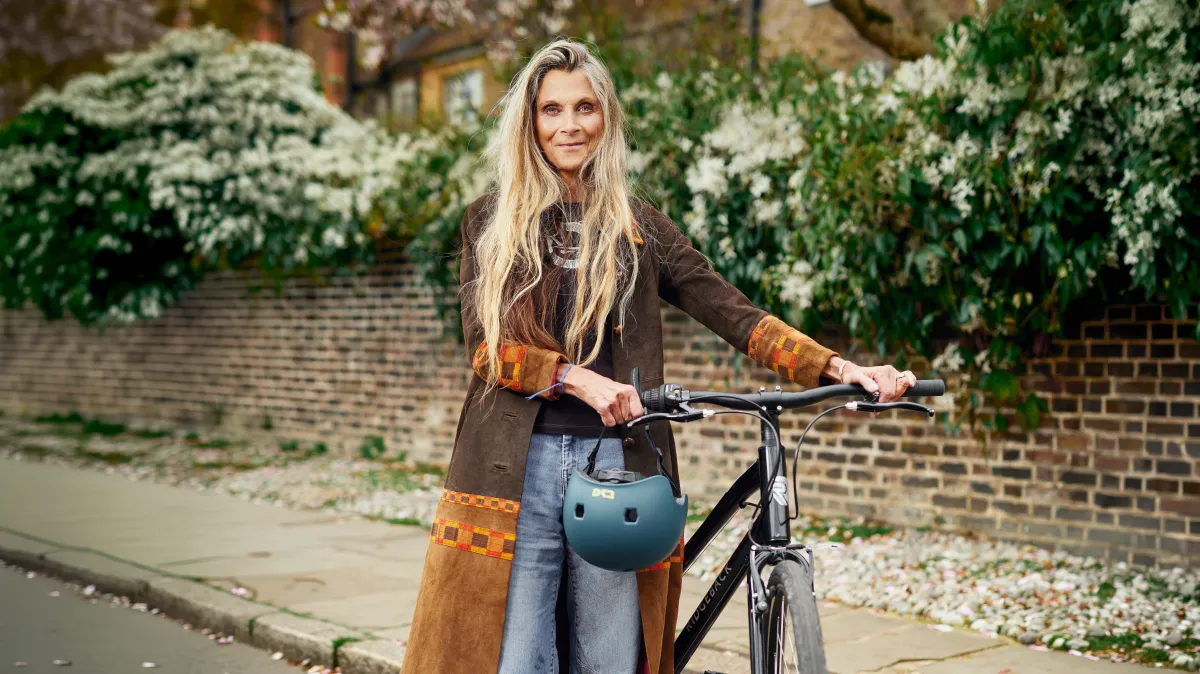
It’s an embarrassing thing to admit as a grown-up, but here goes anyway: I can’t ride a bike. Laugh away but there you go; it’s just one of those skills, like front crawl, that I never learnt as a kid, or rather, was never taught by my parents. Not because they couldn’t be bothered of course but because… well, maybe that was the reason why. But I don’t hold it against them. As a family we weren’t the outdoors type. Bike riding, like, say, camping or skiing, just wasn’t what we did, and now I’m in my sixties it feels a little foolish — not to say foolhardy — to learn how.
Let me qualify this. I can just about ride a bike as long as there are no cars, people, dogs or other bikes around and I’m pedalling in a straight line — any hint of a corner and… don’t even. I can blame this only partially on dyspraxia. More likely is that I am extremely left-handed, which means things like laying a table correctly and having to give directions in a cab without using my hands (and, for some reason, visualising a piano) can completely throw me. Pathetic, I know.
Isn’t that precisely why I should be forcing myself to learn? Any expert would tell you that crosswords are all very well, but a new sport that connects mind and body is a far superior way to stave off dementia. It would surely save time. Our newish riverside flat is ages away from the Tube — the Tube which always has rows and rows of brand new, available Forest bikes balefully lined up right outside. Imagine! Not having to pay nearly £100 in taxi fares to go out before one has even paid for dinner! Or picking up a Starbucks in less than ten minutes and have it still be hot when I get home! Sigh. I can just imagine myself on one of those vastly expensive Pashley bikes with a coffee and a bunch of hyacinths in the basket and my dog obediently trotting on the pavement alongside me.
Meanwhile, how liberating it would feel, on a crisp winter’s day, with the wind at my back, ears and hair flapping, taking that hairpin bend on the underpass at the end of the road, using just the one hand. I’m getting ahead of myself here obviously, but the scenarios suddenly presenting themselves are endless…
So it was I channelled my inner adventuress, swallowed my pride — because that’s mostly what this is about, isn’t it? — and booked a crash course of five lessons. The company I chose is called Pedal Project and was recommended by a friend who used it for her eight-year-old daughter. I am its first grown-up pupil. (By the time you read this Pedal Project will be offering regular classes to adults.)
Naturally I wake up that morning with a heavy heart. In truth, I’d only feel properly secure if I knew there’d be stabilisers (and astronaut-style helmets). Somehow, though, I make it there — an empty recreational space next to a playground on the edge of a housing estate in Twickenham. The founder, Ed, a smiley Cambridge maths grad and former Deloitte consultant, is reassuring. He says he’s sure I’m more co-ordinated than I think I am and adds that learning to ride a bike has actually proved very beneficial for dyspraxic kids, when it comes to stuff like tying shoelaces and which order to put one’s pants and trousers on and so forth.
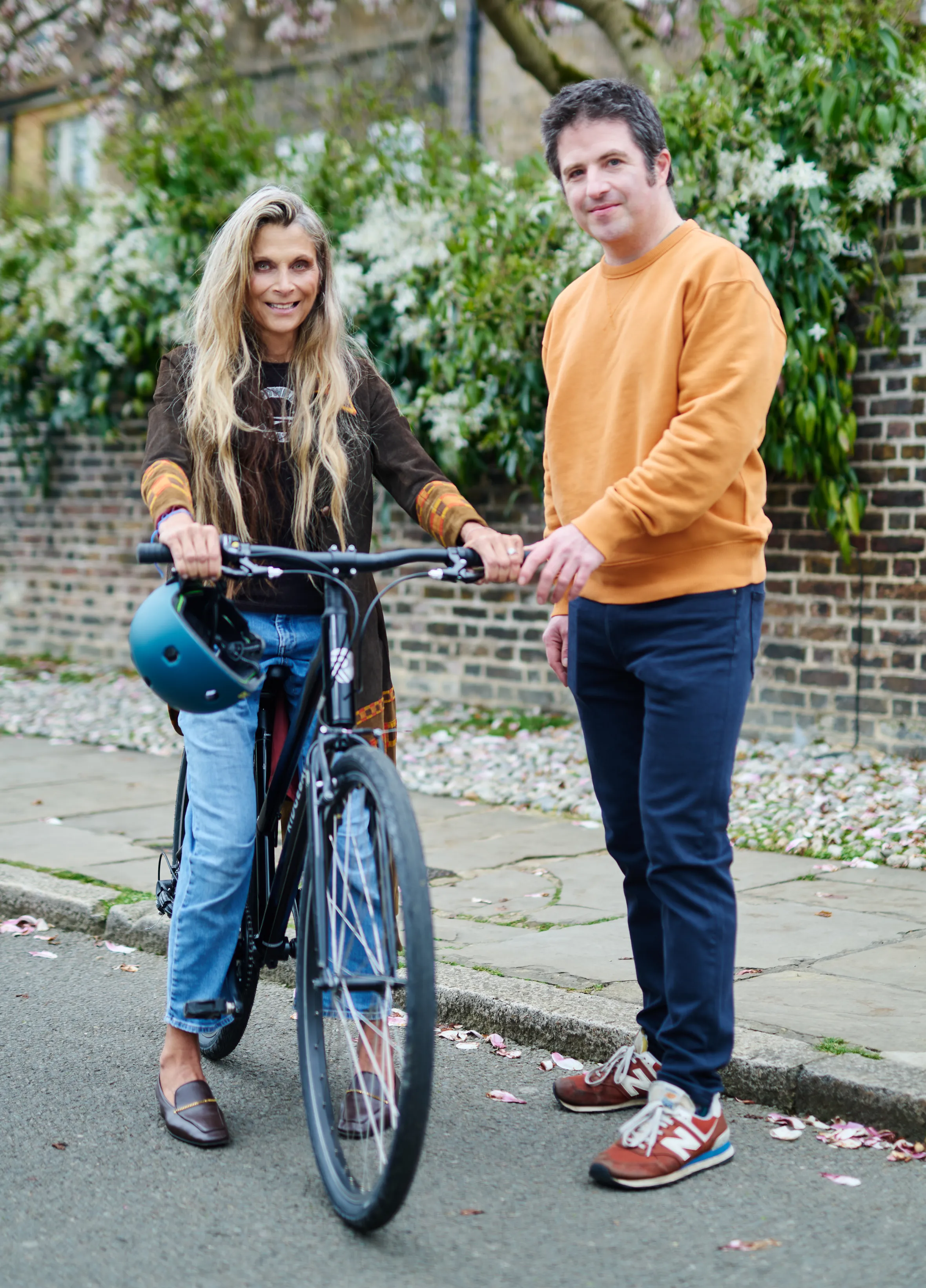 D’Souza with her teacher, EdKi Price FOR THE TIMES
We start off in the scuffed Dettol-smelling “drome” with no pedals at all which, while cleverly boosting my confidence (because nobody falls off doing this), makes me feel about four. Progressing to pedals after 20 minutes or so, I begin trundling round the edges, and… wheee! Readers, I am actually riding a bike! I’m also learning some interesting lingo. Ever heard of something called a “Dutch reach”*?
But, of course, this is still inside, with only Ed watching me. It’s a slightly different story on our next session after we go out first round the playground, and then, gulp, into the road. It’s not busy on the estate but there are a lot of people in their front gardens. Proportionately more white vans too.
As we approach a bollard I find myself ineluctably driving into rather than around it. Ditto any car, person or dog coming towards us. Looking beyond the obstacle rather than at it is something that is obviously going to take me a while to master. As is changing gears while moving and not always thinking it is never my right of way. But though I’m still wobbling like a Weeble I’m not actually falling off. Not once. And that’s not nothing.
For our third lesson Ed insists he comes to me, because, as he rightly points out, this is where I’ll be doing the bulk of my riding. To be honest, I don’t think I’m nearly ready — what if I’m spotted by someone I know? But I suppose as with giving birth, once you’ve done it the first time, does it really matter?
By the fifth lesson, I’m quantitatively less frightened of bollards and corners and cobblestones than I used to be. A month on, spring has riz, and I’m seriously thinking of asking for a bike of my own for my 66th birthday.
But if I’m honest, those hairpin underpass turns… I might never master them. Electric bikes still scare the hell out of me the way they accelerate so fast and weigh five times as much as I do. I know my other half, who hates me driving his wretchedly chatty Tesla, would love it if I used his Brompton bike which is gathering dust in our hallway, but I have a feeling this would require a whole new set of skills. Besides, I have grown quite fond of my large kid’s bike with its oversize pedals and seat. I’ve also grown quite attached to young Ed. He’s such a very comforting presence. This might work only if he temporarily moves in. I will keep you posted.
* The Dutch reach method is a safety technique where drivers and passengers use their far hand —rather than the hand closest to the door — to open car doors. This action forces the occupant to swivel their body, enabling a direct view of the side mirror and blind spots to prevent hitting cyclists or pedestrians, also known as “car dooring”.