
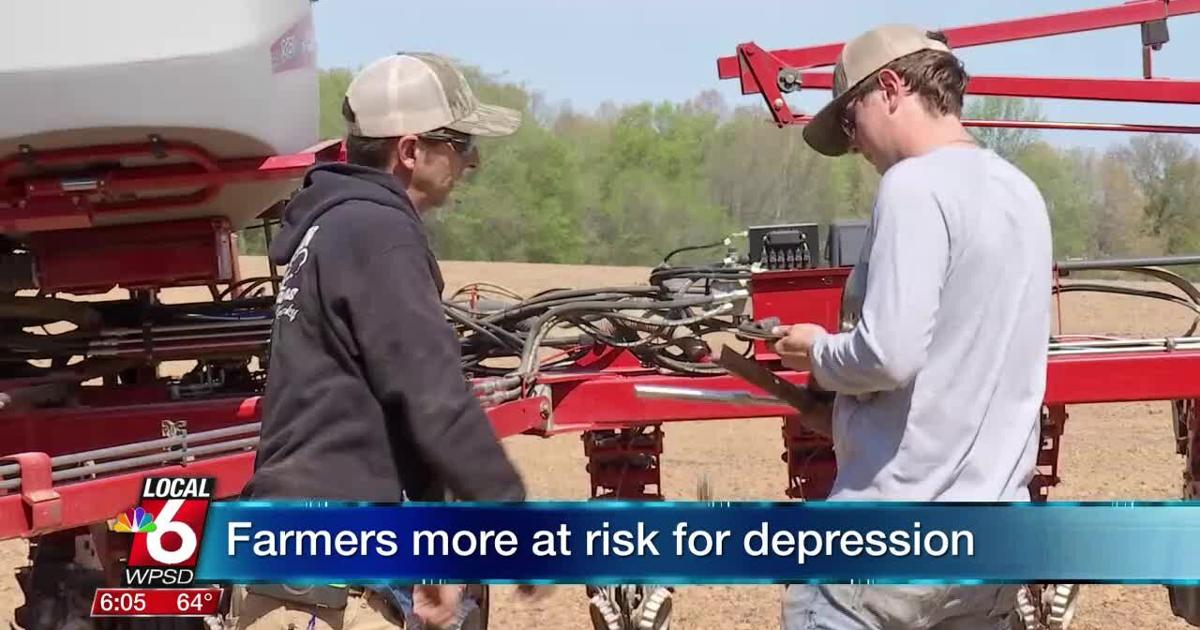
BOAZ, Ky. — In the midst of planting season, farmers across the region are preparing for the summer harvest. The season isn’t just accompanied by hours of work, but also stress among farmers. A state program through the Kentucky Department of Agriculture is seeking to raise awareness around the physical and mental health risks of farming.
Some farmers are having a difficult time addressing their own mental health, which can worsen symptoms of stress.
“Growing up on a farm and stuff, we were kind of taught to pull yourself up by the boots if you’re stressed and go on,” Joshua Goodwin, a Graves County farmer, said.

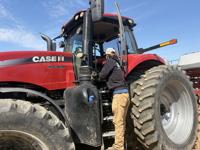
Goodwin climbing into his tractor, ready to plant corn.
Mackenzie Lionberger
Goodwin has spent his whole life working on a farm and is now teaching his children the tools of the trade. The major difference between what Goodwin learned and what he’s teaching is the importance of addressing mental health.
“I ain’t ashamed to say I go see a counselor and talk to them and that helps me, and just talking with my family,” Goodwin said.
He ensures his children understand the stress of the job, and feel comfortable discussing it. He noted that he knows many farmers who struggle with anxiety or depression but don’t seek counseling or resources.
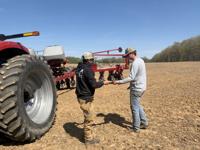
Goodwin handing off tools to his son, who helps out on the farm.
Mackenzie Lionberger
Goodwin said the financial stress of producing crops and providing for your family can take a toll on a person.
“We lie our heads down with millions of dollars in investments not knowing that we’re going to get it back,” he said. “Some things need to change, or there’s not going to be anybody to farm.”
Suicide rate amongst farmers is 3.5 times the national average. To meet farmers where they are, the Raising Hope program in Kentucky aims to help farmers address their health, including mental health.
Dale Dobson, director of Kentucky Department of Agriculture Safety, said it’s a difficult time to be in this industry, which leads some to take their lives.
“They’re going broke, they don’t have money, they’re losing their livelihood, and sometimes they can’t see any other way out,” Dobson said.
Dobson related past traits he learned from men in his family to address his own mental health. However, he has personally seen many farmers worn down by the weight of their own anxiety or depression.
“Somewhere down the line, that cycle needs to break,” Dobson said. He said the Raising Hope program helps farmers feel comfortable and validated in their emotions, helping them to find the best treatment.
The stigma around mental health is present, but the new generation of farmers are working to end this stigma. Brandon Morehead, a physician assistant at Lumera Healthcare, said he’s seeing more farmers seek help than ever before.
“I am seeing a younger generation of farmers that are breaking that stigma and reaching out to get the help,” Morehead said. “Depression can cause decreased brain functioning over the long-term effects that can lead to cognitive issues.”
He said it’s important not to ignore symptoms, just as they wouldn’t ignore a physical condition. If left untreated, it can affect someone mentally as well as physically.