
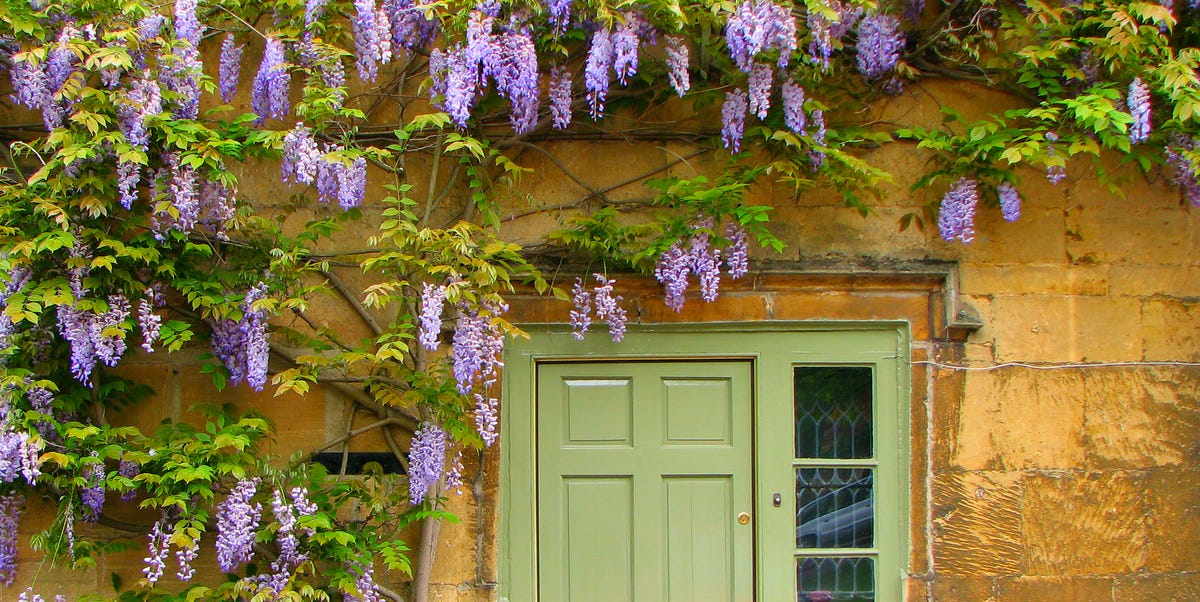
Daffodils open the spring season, followed by tulips rearing their colourful heads and blossom cascading off branches – before wisteria steals the show with its short-but-sweet dramatic finale.
For a fleeting few weeks, cascades of lilac, violet and cream take over terraces and townhouses, drawing crowds and cameras in equal measure.
The only frustration is how quickly it’s over, a brief peak before it fades almost as fast as it arrives.
When does wisteria peak in the UK?
Across most of the UK, wisteria blooms between late April and early June, with peak flowering typically falling between late April and mid-May, depending on region and weather.
South of England (London, South East): Late April to early May Midlands: Early to mid-May North of England & Scotland: Mid to late May, sometimes into early June
If you’re planning to see it, you’re usually working within a tight two-week window in your region.
How to choose where to visit
Wisteria timing isn’t uniform. Some spots peak fast and fade, others stretch the season. If your dates are fixed, pick accordingly or go somewhere that lasts longer.
If your timing’s flexible, go for gardens with staggered plantings or head north, where blooms arrive later and last longer. London brings short, high-impact drama; gardens offer a more reliable spread; Oxford and northern spots buy you time; and the Cotswolds trades precision for a better backdrop.
The best places to see wisteria in the UK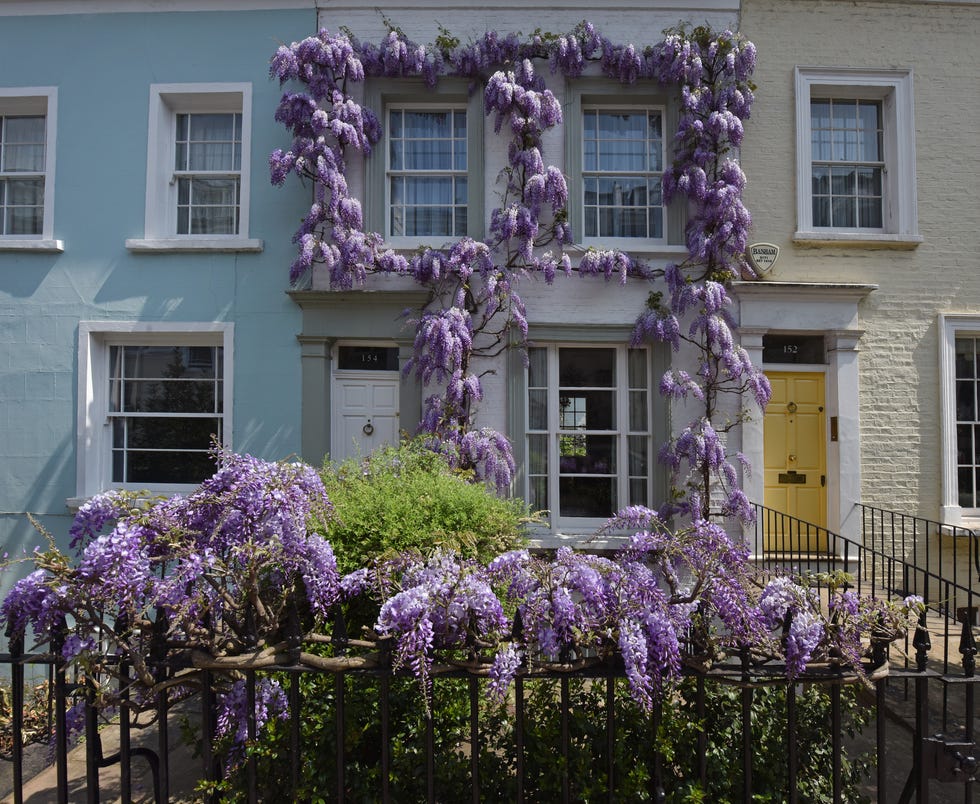

oversnap//Getty Images
1. London street displays
Some of London’s best wisteria isn’t actually in gardens, it’s on the streets, climbing across entire terraces and completely free. In Chelsea and Kensington, Cheyne Walk is the most reliable, with wisteria-covered façades along the Thames. Kynance Mews goes full spectacle, forming a tunnel of blooms, while Bedford Gardens is quieter, with well-established plants spilling across its stucco fronts.
In Westminster, Lord North Street’s elegant terraces tend to flower slightly earlier than most. The key thing to know: London’s street displays peak within a narrow window (late April to early May) and fade quickly, so if you’re visiting with fixed dates, timing is critical.
2. Gardens with curated displays
If you want something more forgiving, head to a garden. Places like RHS Garden Wisley in Surrey are far more reliable, thanks to staggered plantings that stretch the season. Its 75-metre Wisteria Walk is your safest bet if your timing isn’t spot on.
Kew Gardens features pergolas and varied plantings across its grounds and tends to be less crowded than street locations; its mixed approach means a longer overall season.
Hampton Court Palace features wisteria in its formal gardens, which typically blooms a little later than most London streets (early to mid-May), extending the season further south. Hidcote Manor Garden in Gloucestershire offers a more architectural approach, with wisteria woven into its celebrated landscape.

Craig Fordham//Getty Images
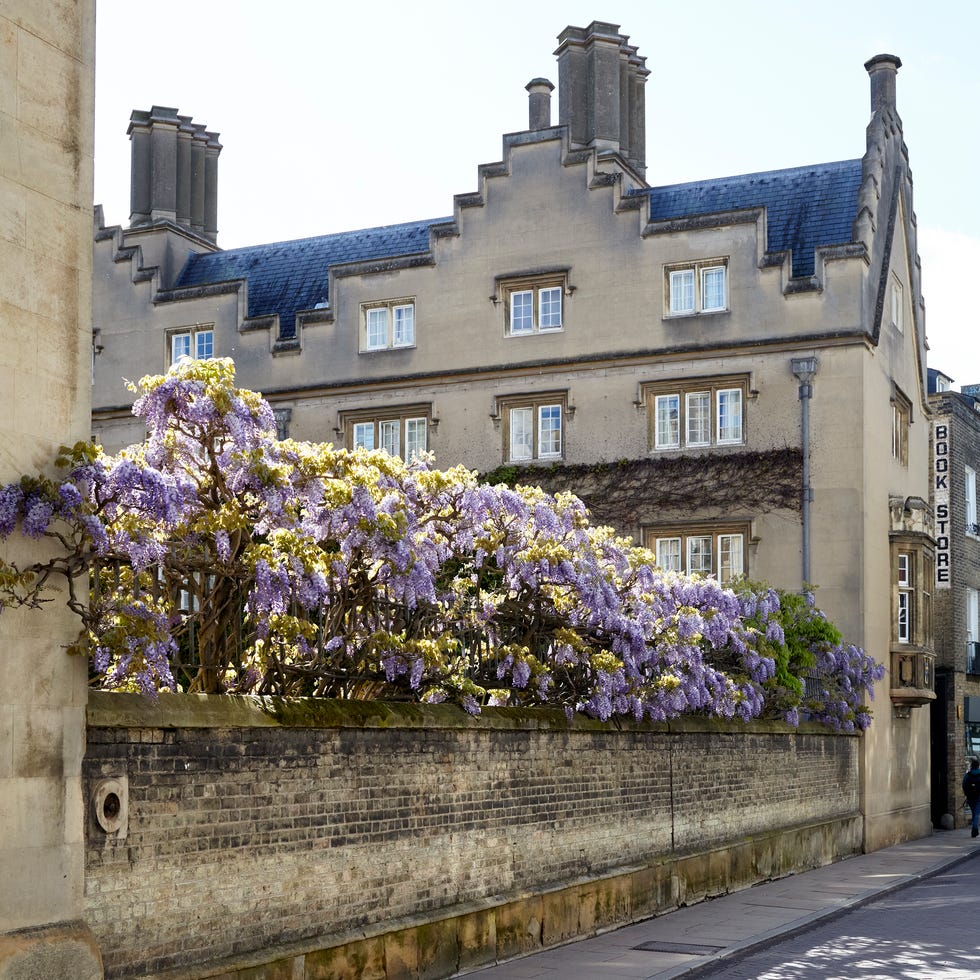
3. Oxford colleges
Oxford’s historic stonework provides an exceptional backdrop for wisteria, and two colleges in particular are worth seeking out. Magdalen College has wisteria climbing along its walls beside the Cherwell, with blooms opening gradually from late April through mid-May. New College offers a similar setting and is usually quieter, also flowering across an extended window. Access can be restricted during term time, so it’s worth checking opening hours before you go.
The advantage here: Oxford’s displays tend to stretch across a longer season than concentrated London street displays, giving you more flexibility with timing.
4. Northern and western sites
If you miss the southern peak, there are worthwhile options further north and west. Alnwick Garden in Northumberland blooms later in the season (mid to late May), making it a useful second chance if you arrived in London too late. Its plantings extend well into June, giving you a lot of flexibility.
Bodnant Garden in North Wales flowers mid to late May, with mountain views that make it feel worth the detour. Great Dixter in East Sussex is looser and more natural in style, the kind of place you’d visit even without the wisteria.

Richard Klune//Getty Images
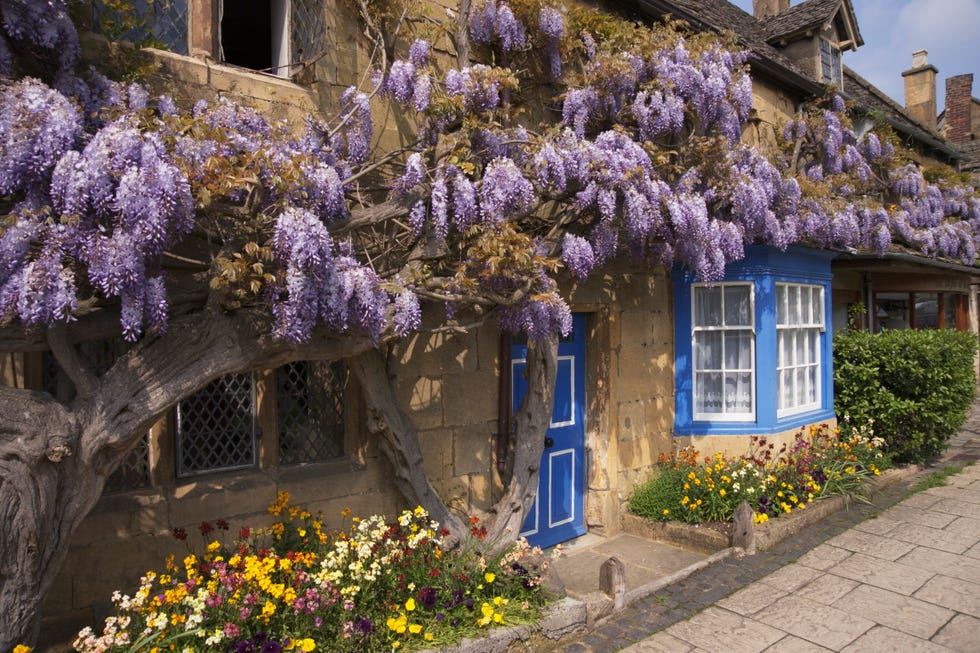
5. The Cotswolds
The Cotswolds is worth seeking out, just with different expectations. Unlike London’s all-out displays, wisteria here is more scattered, draped across honey-coloured cottages and quiet village lanes.
For the best chance of seeing it, focus on three spots. Chipping Campden is the most reliable, with strong displays along its High Street. Broadway has fewer façades, but they’re often more beautiful. Burford’s sloping medieval street also delivers wisteria in photogenic pockets.
Timing here is usually early to mid-May, slightly later than the south-east. It’s less predictable than London’s concentrated displays, but the setting more than makes up for it.
Gardening must-haves Filberts of Dorset Gardeners Hand Salve
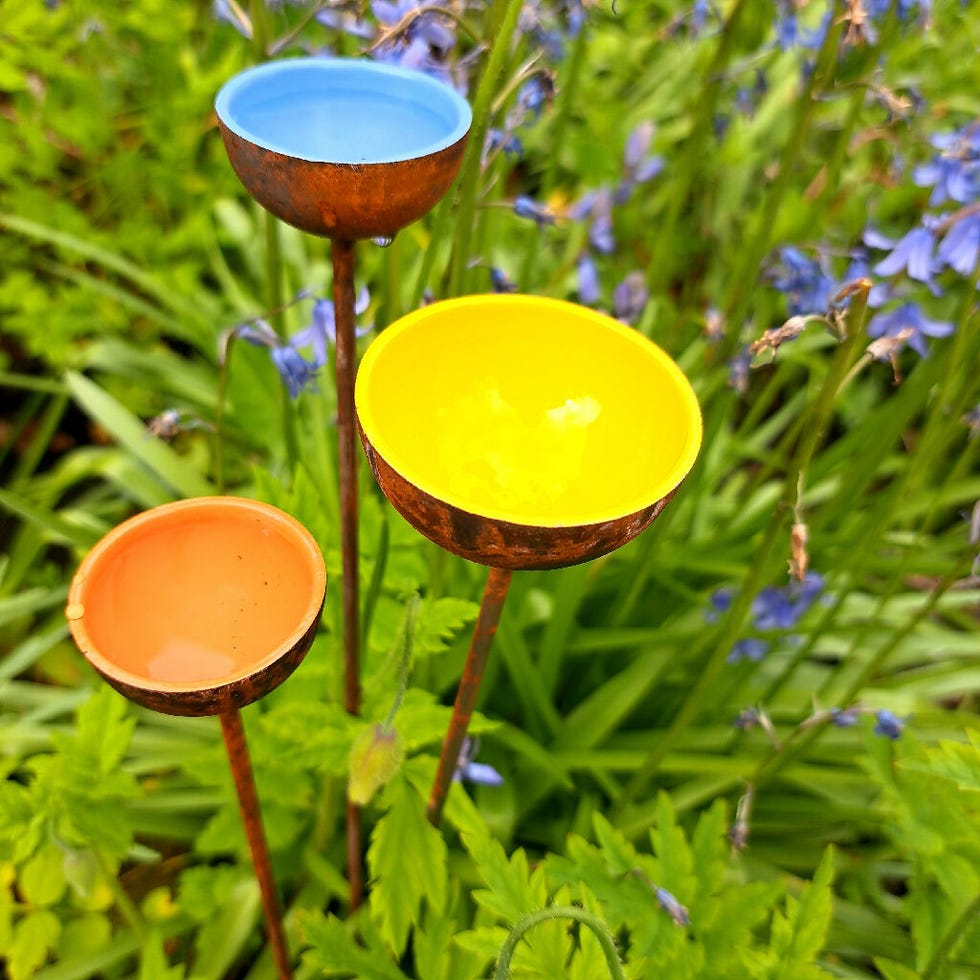 Haywards Garden Bee and Butterfly Water Stations, Garden Décor, set of three colourful bee water cups .
Now 17% Off
 Home Sussex Handmade Peg Apron
 Painted Garden Label/Marker
 The Fae Potter Wild Bird Feeder ceramic hanging
 WhinnyPoo WhinnyPoo Box of 3 Plant Feed