
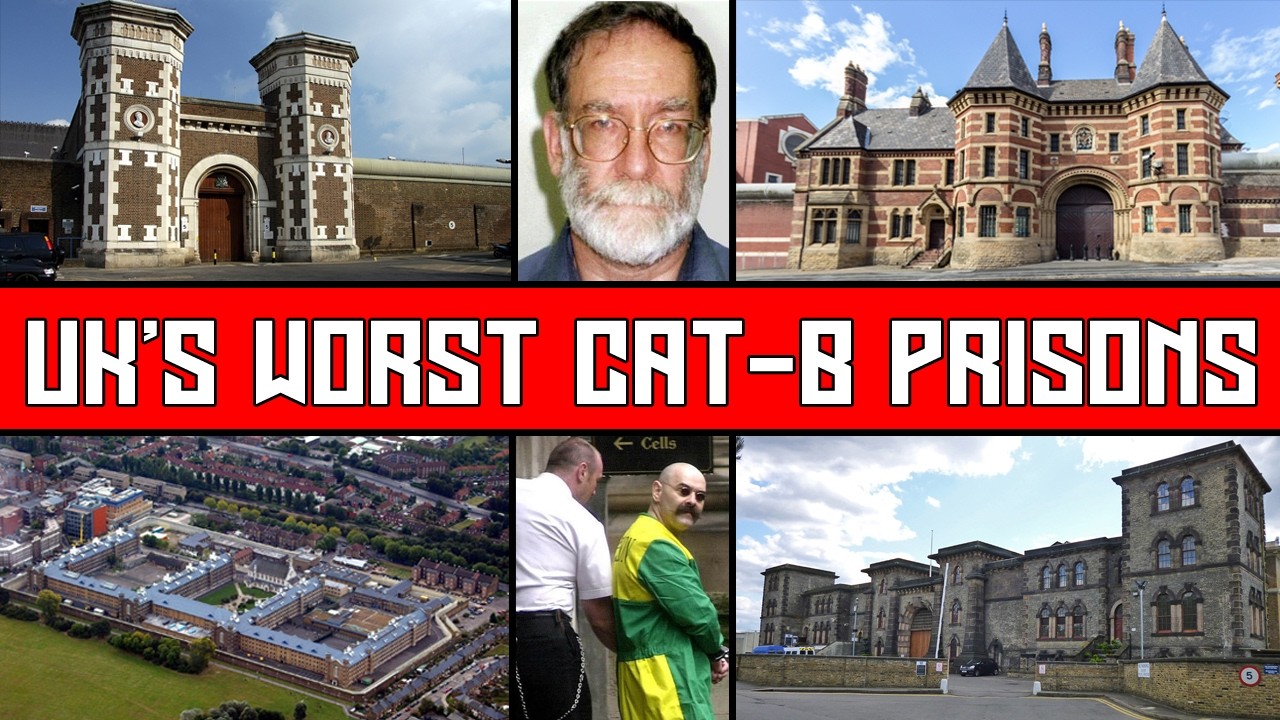
10 – Wormwood Scrubs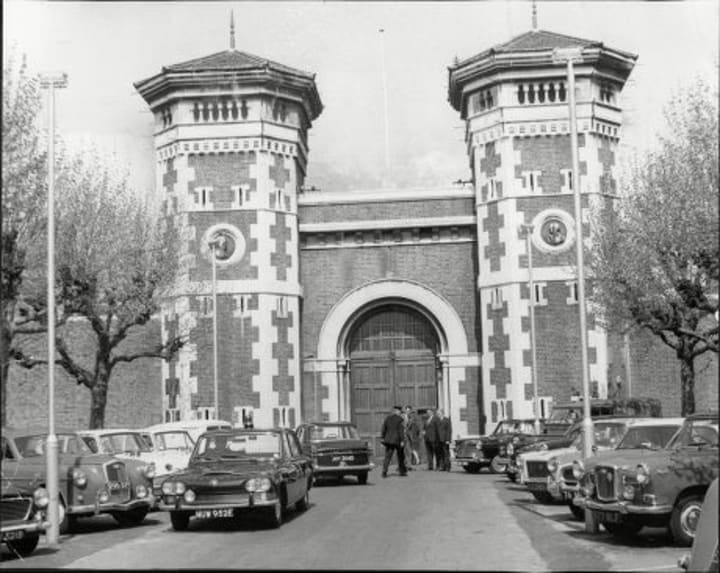
Completed in 1891, the prison was the brainchild of Sir Edmund Du Cane, who used convict labor to build the very cells that would later hold them with a revolutionary design featuring four parallel blocks linked by a central corridor.
Today, it functions primarily as a Category B local prison, holding remand prisoners and those newly sentenced, making it a high-pressure environment with a “constantly churning” population.
While the Victorian brick wall still stands, it is now bolstered by advanced CCTV, motion sensors, and frequent “pat-down” searches for all visitors.
Several notable prisoners have spent time inside Wormwood Scrubs, including George Blake, an MI6 officer turned Soviet double agent, who, in 1966, executed one of the most daring escapes in British history.
Britain’s, once, most violent prisoner, Charles Bronson has also spent time in this facility while adding to his legendary resume of roof-top protests and crazy events in various establishments.
“Moors Murderer” Ian Brady also briefly graced the walls of Wormwood scrubs but he was later moved to Ashworth Hospital due to his deteriorating mental health and security status.
As of April 2026, the prison is undergoing a massive “Action Plan” to modernize its Victorian infrastructure, but remains a Grade II listed building that preserves its grim, Gothic aesthetic and it remains one of the ultimate symbols of the London penal system.
9 – HMP Altcourse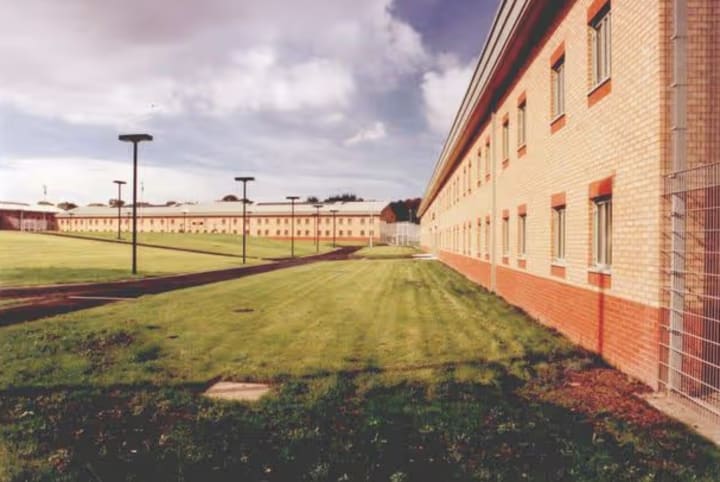
Known as the gritty, modern face of the UK’s private penal system, HMP Altcourse opened in 1997 as the first “designed, constructed, managed, and financed” private prison in Britain.
Altcourse was designed to move away from the dark, cramped corridors of 19th-century prisons and was built on a sprawling site in the city of Liverpool with a high-security double fence, motion-detection technology and a sophisticated CCTV network.
Unlike the “spoke” design of older prisons, Altcourse uses a series of self-contained units that are named after the nearby Aintree Racecourse and the prison has pioneered the use of AI-enhanced signal jamming.
Altcourse is a “reception” prison, meaning it holds a revolving door of high-profile local criminals awaiting trial or sentencing, but it also holds some of the North West’s most dangerous offenders.
One high profile prisoner is Thomas Waring, the man who helped Christmas Eve gunman Connor Chapman dispose of a stolen car after the 2022 Wallasey pub shooting.
The prison also briefly held the notorious killer Elias Morgan, whose name became synonymous with the “gangland execution” of a former prison officer in 2025 after he found a phone in his cell at Altcourse.
Altcourse also holds many of Liverpool’s organized crime syndicates inside its enhanced units with others including high-profile solicitors and former police officers caught in corruption stings.
Today, HMP Altcourse offers some of the best vocational training and family initiative programs in the country, but the overcrowded population and persistent contraband problem like many other prisons, make is a dangerous residence for any prisoner.
8 – HMP Liverpool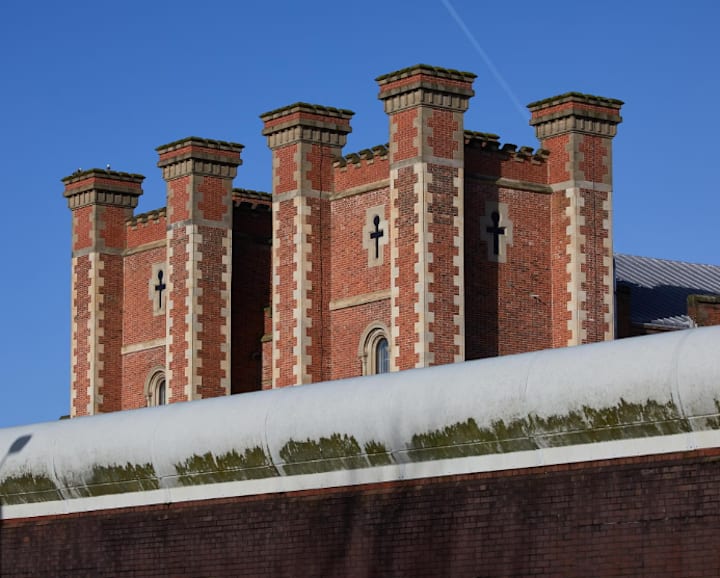
Another notorious British prison, HMP Liverpool was opened in 1855 with a towering red-brick facade and Gothic architecture and was nicknamed “The Walton.”
Serving as the primary “reception” hub for the Merseyside courts, its population is in a constant state of flux with a mix of high-risk remand prisoners and newly sentenced inmates all coming and going at the same time.
The prison follows the “radial” or “star” design common in the 19th century, allowing guards to monitor multiple wings from a single central point.
For years, HMP Liverpool was infamous for being “one of the worst prisons in the UK,” but has undergone a massive renovation project, closing entire wings to fix crumbling masonry, dampness, and outdated electrical systems.
To combat its reputation for instability, the prison has recently implemented X-ray body scanners and enhanced drone-shielding technology to prevent the “air-drop” delivery of drugs and mobile phones.
The prison, due to its age, has seen many high-profile inmates come and go, with one of the most famous being Donald Neilson, nicknamed “The Black Panther,” due to his life sentence and crimes as a serial killer and armed robber.
Another famous prisoner to have spent time here is Robert Maudsley, named the most dangerous prisoner in the UK, his mental health reportedly deteriorated before his transfer to high-security units elsewhere.
Finally, the last person executed in Britain, Peter Anthony Allen, was hanged at the prison, on August 13, 1964, for the murder of John Alan West, just fifteen months before capital punishment was abolished.
7 – HMP Pentonville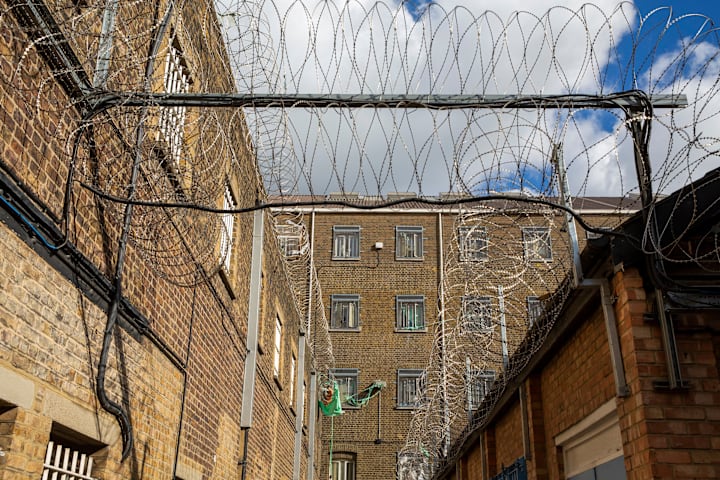
Located in Islington, North London, Pentonville was the blueprint for the modern British prison and became known as “The Ville” in criminal circles, thanks to its two centuries of overcrowding, decay, and urban crime.
Opened in 1842, Pentonville was designed by Major Joshua Jebb as the ultimate “reformatory,” and was the first to implement the Separate System, where prisoners were kept in total isolation.
It features a central hub with four wings radiating outwards, a layout that influenced over 60 other prisons globally, but this design later became its greatest security weakness.
A 2025 inspection found that 44% of inmates felt unsafe, with security so porous that wings were described as “noisy and chaotic,” and smelling pervasively of cannabis.
Another prison that has held many famous inmates, some of the more terrifying ones were held here, including its most famous resident, Dr. Hawley Harvey Crippen, hanged here in 1910 for the murder of his wife.
In the mid-20th century, Pentonville held numerous German spies before their execution, and served as London’s primary “hanging jail” until 1961.
Many celebrities have also spent their jail stints here, including Irish author, poet and playwright Oscar Wilde, who was held here before his transfer to Reading Prison.
Many notable incidents have happened at Pentonville, including the famous 2016 “Mannequin” Escape, in which inmates Matthew Baker and James Whitlock used diamond-tipped cutting equipment to saw through their cell bars.
The same year as the escape, the prison made headlines for a darker reason. Jamal Mahmoud, a young father, was stabbed to death on G-Wing with a “Rambo-style” knife that had been flown into the prison via drone.
The Chief Inspector of Prisons declared Pentonville a “failure of leadership” in 2025 and staff were found asleep or reading while they were meant to be supervising vulnerable inmates.
Today, Pentonville remains one of the most overcrowded jails in England and many have said that it is a prototype prison that has simply run out of time.
6 – HMP Wandsworth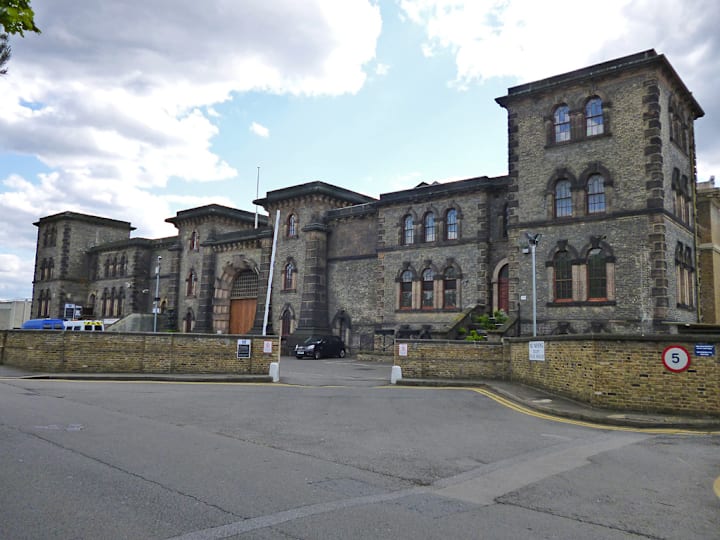
Another London Prison, Wandsworth acts as the primary intake for South London’s courts and frequently operates at nearly 160% its capacity with a massive perimeter wall and six Victorian wings.
Opened in 1851, the prison is one of the largest and most controversial correctional facilities in Western Europe, earning a modern reputation as a “powder keg” of overcrowding, administrative chaos, and security lapses.
Nearly £900,000 was spent on security upgrades at the prison in 2024 alone, including enhanced gate sensors and reinforced vehicle checkpoints, but despite this, the prison remains under “Special Measures.”
One of the most famous prisoners held inside is former British army soldier, Daniel Khalife, who escaped the prison while on kitchen duty in 2023 after hiding underneath a food truck after he was sentenced to 14-years.
One-half of the notorious Kray twins, Ronnie spent time here in the 1950s and became a well known face within the prison due to his notoriety on the outside.
WikiLeaks founder Julian Assange was also held here for several years, but spent much of his time on the healthcare wing while fighting extradition to the United States, and was later moved to Belmarsh prison.
One famous inmate, tennis legend Boris Becker, served a portion of his sentence here in 2022 for bankruptcy offenses, describing the experience as “dangerous” and “loud.”
The prison’s administrative woes hit a fever pitch in November 2025 when two prisoners, Brahim Kaddour-Cherif, and Billy Smith, were accidentally released on the same day due to “clerical errors.”
In 2025, a dedicated police task force intercepted a drone carrying over £20,000 worth of tobacco, “Spice,” and smartphones, with the prison now using “SkyFence” technology to try and curb drone incidents.
5 – HMP Bristol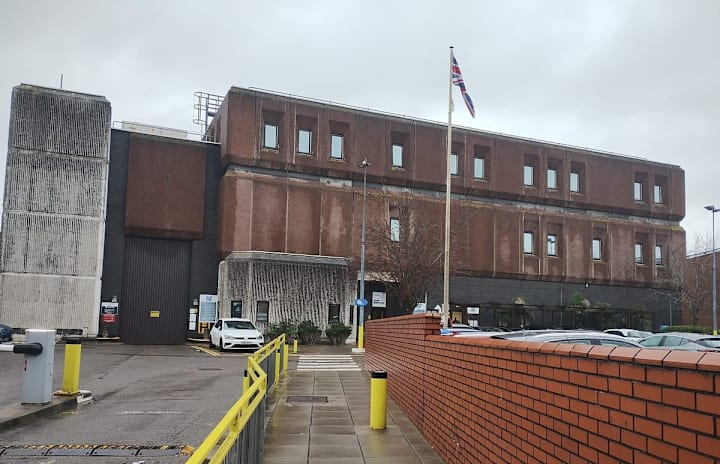
HMP Bristol is an institution that has transitioned from a Victorian site of execution to one of the most scrutinized local jails in modern Britain, and, is today known as “Horfield Prison” to many locals.
Opened in 1883, it primarily serves the courts of Bristol, Gloucestershire, and Somerset, meaning it handles a high-volume, transient population often caught in the “remand cycle.”
Like many of its era, it was built with the radial design, but today, parts of the prison have been deemed “unfit for purpose,” with many cells only recently having a toilet installed.
To combat the “Bristol Drug Trade” within the walls, the prison has recently rolled out a digital infrastructure for administrative and educational purposes, alongside advanced X-ray body scanners.
Between 1889 and 1963, 14 men were hanged at Bristol, with the final execution of Russell Pascoe in December 1963, for the murder of a Cornish farmer coming just months before the death penalty abolition.
Disgraced glam rock singer Gary Glitter spent two months in Bristol in 1999 following his conviction, before he left the country and headed to Thailand.
One of Britain’s most notorious serial killers, John Straffen, spent time in Bristol Prison in the late 1940s for theft and assault, before his later horrific crimes led to his status as the longest-serving prisoner in British history.
But the most famous prisoner to be held her is Theresa Garnett, the militant suffragette was imprisoned here after attacking Winston Churchill with a whip at Bristol Temple Meads station, later going on hunger strike inside.
During the late 20th century, major riots in 1986 and 1991 caused extensive structural damage to the wings, requiring millions in repairs during a wave of prison unrest that swept the UK.
One of the more bizarre chapters of the prison’s history was revealed in 1996 when prisoners were occasionally being transported to and from the facility in stretched limousines after it was cheaper than other transportation.
Today, Bristol is a prison that is part of he government’s “Launchpad” digital programme, aimed at modernizing inmate management, but thanks to the 140-year-old crumbling brickwork, many challenges remain.
4 – HMP Bedford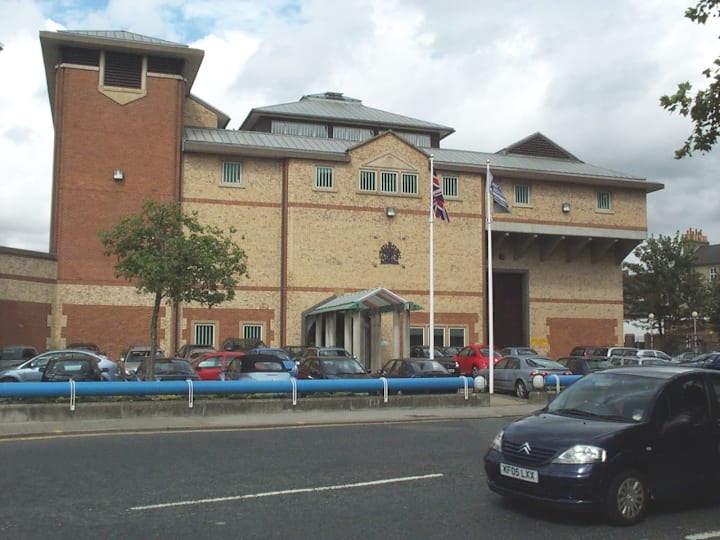
A structure that has witnessed the evolution of British justice for over two centuries, the history of Bedford Prison is arguably more representative of the raw, unvarnished struggles of the English penal system.
Bedford was built in 1801, significantly influenced by the work of the great prison reformer John Howard, whose statue stands in the town cente, and he was so appalled by the typhus and filth of the original jail that he dedicated his life to creating a better facility.
The prison’s A, B, and C wings remain gallery-style Victorian landings, but, as of April 2026, the prison is in the final stages of a critical infrastructure project that includes the rollout of the “Launchpad” digital system.
The prison’s town-center location makes it highly vulnerable to “throw-overs” and drone drops but a major window replacement scheme aims to prevent the ingress of illicit items like “Spice” and burner phones.
For a prison that is not that well-known in the system, HMP Bedford has held some pretty high-profile inmates including The A6 Murderer, James Hanratty, who was one of the final eight people executed in the UK.
Malcolm Fairley, known as “The Fox,” was also held here after his crimes that terrorized the Home Counties in the 1980s but he was moved on after his conviction.
Sarah Dazley, known as the “Potton Poisoner,” was hanged here in 1843 after being found guilty of murdering her husband with arsenic and was officially the last woman executed in Bedfordshire.
Another famous inmate, Nicholas Prosper, shot dead his mother, brother and sister and plotted to carry out a mass shooting at a school, but he has since been moved to another, higher security prison.
3 – HMP Manchester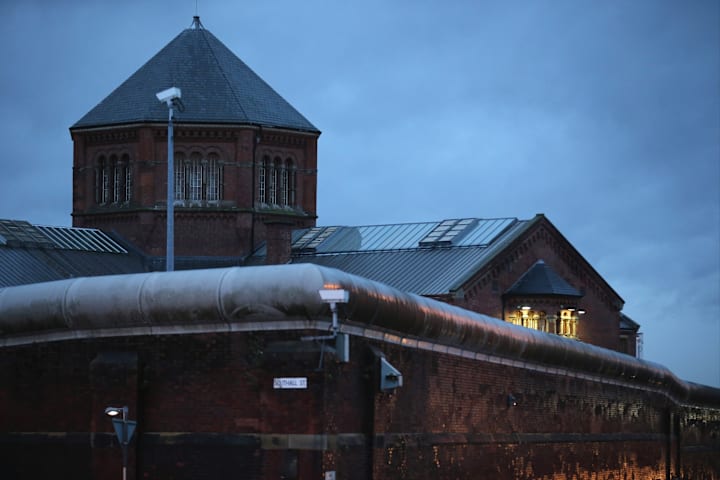
Dominating the Manchester skyline with its iconic 234-foot ventilation tower, this prison, known to most in the area as “Strangeways,” is perhaps the most famous high-security jail in the North of England.
Opened in 1868, Strangeways was designed by Manchester Town Hall architect Alfred Waterhouse and was designed in a radial style meant to provide “total visibility.”
After several major riots, the prison was effectively rebuilt from the ground up, with reinforced walls, heavy-duty steel gates added to the “Rotunda,” and a multi-layered electronic locking system introduced.
Strangeways has held some of the most notorious names in British criminal history with moors murderers Ian Brady and Myra Hindley spending time here.
Britain’s most prolific serial killer, and possibly now, the worlds, Harold Shipman, was moved through the prison following his conviction in 2000, before being moved to other high-security facilities.
Dale Cregan, the one-eyed killer of two police officers and two gangland rivals was held here under maximum security during his trial and a noticeable increase in security was apparent during his stay.
The brother of the Manchester Arena bomber, Hashem Abedi was also held inside the prisons high-security separation center but was moved after the unit closed in 2025 following attacks on staff.
The 1990 Strangeways Riot is the most famous event to happen at the prison, when, on April 1, 1990, a protest in the prison chapel exploded into a 25-day siege that saw prisoners take control of the roof.
One prisoner died, 147 officers were injured, and the repairs cost a staggering £55 million that resulted in the Woolf Report, which fundamentally changed the UK prison system by recommending the end of “slopping out.”
As of April 2026, HMP Manchester is a prison in the midst of a “forced reboot,” with new window installations to curb contraband drops and the Ministry of Justice has surged staff into the wings.
The acceleration of the “Project Storm” initiative has also seen a technology-led crackdown on the Manchester gangs that attempt to run the prison from the outside, with Strangeways still the beating heart of Manchester’s criminal history.
2 – HMP Swaleside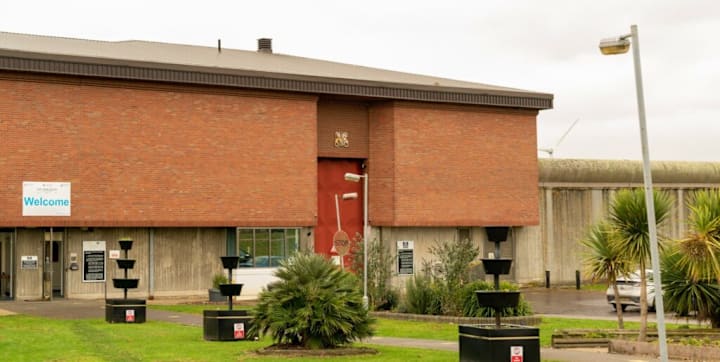
Situated on the isolated marshes of the Isle of Sheppey in Kent, HMP Swaleside is often described as the “end of the line” for some of Britain’s most dangerous men.
This CAT-B prison is situated in the Long-Term High Security Estate and is designed to hold those serving significant sentences, often for life or indeterminate periods.
Currently operating under the highest level of government intervention, the prison has been described as a “facility in disarray.”
Built in 1988 with a radial design that has expanded over decades to house approximately 1,100 inmates, it boasts high-security perimeters, “frightening levels of violence” and the wings as filthy, fire-damaged, and under the control of gangs rather than staff.
Swaleside is a battlefield for drone technology with reports suggesting that up to half of the population is estimated to be using illicit substances delivered by the air and inmates often avoiding search lines of inexperienced officers.
Because Swaleside handles long-term, high-risk offenders, its wings have housed some of the most notorious names in the British underworld, including legendary gangster and Brink’s-Mat mastermind Kenneth Noye.
Another famous prisoner, Michael Bettaney, attempted to spy for the Soviet Union while working as an MI5 officer and was later sentenced to 23 years before passing away in 2018.
Today, the prison is increasingly used to hold high-ranking members of Organized Crime Groups from London and the South East, whose rivalries often fuel the prison’s internal violence.
Many incidents have happened at Swalesaide, including one of the most bizarre disturbances in UK history, with inmates on C-Wing taking control of a prison landing and demanding money and a getaway helicopter.
While the demand was laughed off by negotiators, the riot lasted for hours and caused significant structural damage, highlighting the volatile mix of desperation and bravado among the long-term population.
During a wave of national prison unrest, over 60 inmates at Swaleside took over a wing, lighting fires and arming themselves with makeshift weapons, with the riot only quelled after a massive operation.
In March 2015, a 47-year-old inmate was murdered by two fellow prisoners in his cell with an investigation revealing exposed “blind spots” in the prison’s CCTV coverage and a failure in intelligence-led policing within the wings.
Thick with more than just the North Sea mist, Swaleside is now considered to be one of the most dangerous Category-B prisons in the United Kingdom.
1 – HMP Woodhill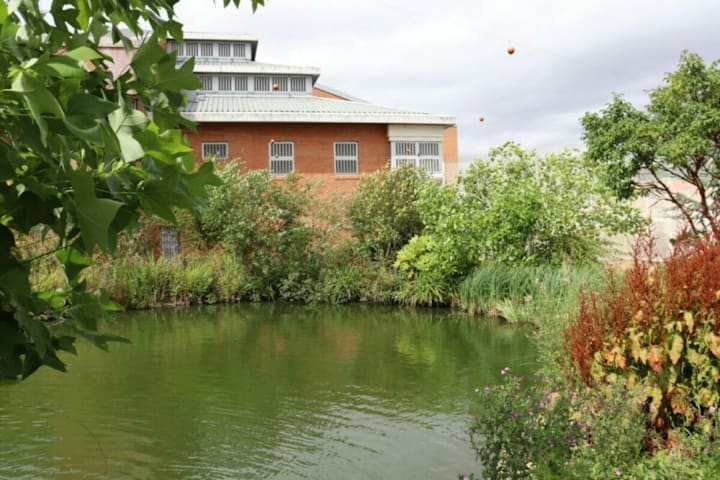
Designed to hold the “worst of the worst,” in the CAT-B system, Woodhill became the site of the UK’s first Specialized Supervision Centre, a prison within a prison for the most disruptive men in the country.
Opened in 1992, this prison was once one of elite control, with a revolutionary, featuring a modular, campus-style layout intended to prevent the mass-scale rioting seen at Strangeways in 1990.
The first to have a closed supervision center, the cells on this wing are the most secure in the UK, holding prisoners who are so violent they cannot be integrated into even the highest-security wings of other jails.
In 2026, Woodhill became one of the few prisons in history to receive a second Urgent Notification from the Chief Inspector of Prisons with violence levels remaining the highest in the long-term high-security estate.
Despite its “Supermax” reputation, and only being in the middle security setting, the prison has struggled with its physical integrity and is currently undergoing major upgrades.
Some of the more famous faces in the prison estate have spent time here including known prison murderer Robert Maudsley and the man dubbed “Britain’s most violent prisoner,” Charles Bronson who later changed his name to Salvador.
It was at this prison, where Bronson famously took a prison teacher hostage for 44 hours, resulting in a discretionary life sentence and the teacher, never able to work in the prison estate again.
In March 2025, political activist Tommy Robinson was held at Woodhill while serving a sentence for contempt of court sparking protests outside the prison gates and bringing the prison firmly into the media spotlight.
Finally, Denny De Silva, an extremist prisoner, was found to have been in receipt of SIM cards, smuggled to him by his sister, allowing him to disseminate Islamist material from within one of the most secure wings in the country.
The ingress of synthetic cannabinoids such as spice and the numerous “barricade” events where inmates have attempted to use staff members as leverage to secure transfers to other facilities, make this the most dangerous CAT-B prison in the UK.
Thanks for watching, we have more true crime videos if you enjoyed this one, on the left are the most dangerous women ever held inside the UK’s prisons and on the right we have the top 10 most dangerous prisoners held at HMP Whitemoor.