
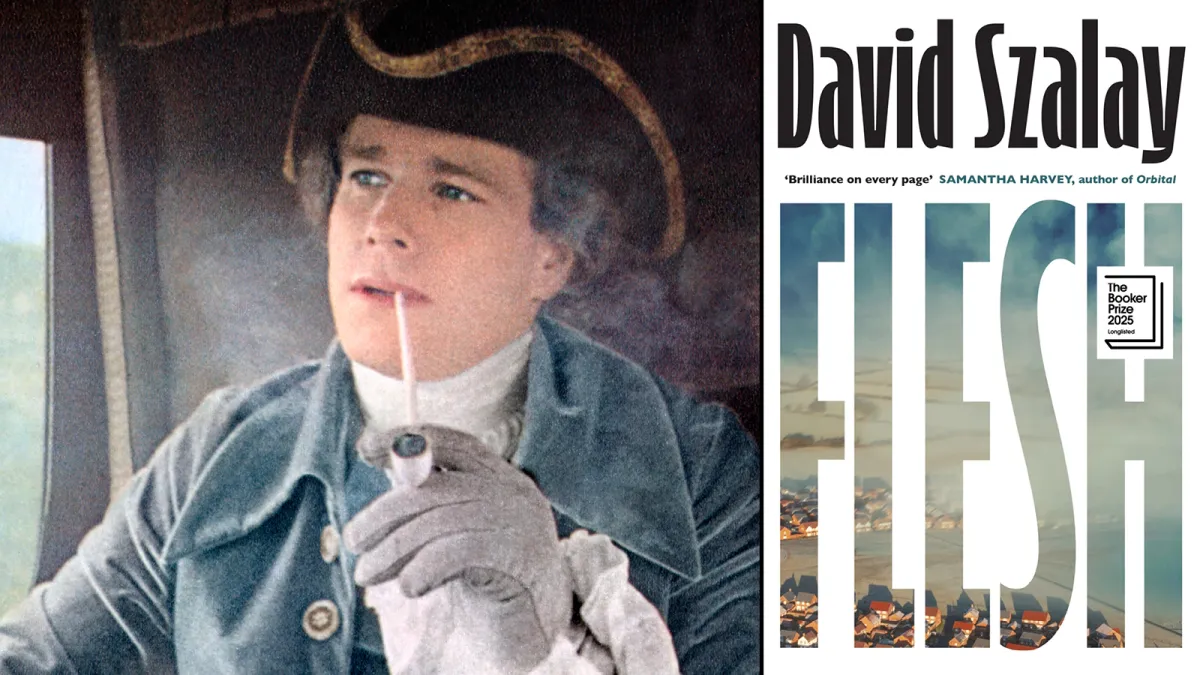
When David Szalay won the Booker prize last year for Flesh, he was praised by the judges for its originality.
The novel, which is now set to be turned into a film by the makers of Conclave, was hailed by the judging chair, Roddy Doyle, who said the judges had “never read anything quite like it”.
Yet some readers have found it strangely familiar. Critics spotted striking similarities between Flesh and Barry Lyndon, Stanley Kubrick’s 1975 adaptation of a novel by William Makepeace Thackeray. Some are flummoxed that Szalay, 50, has not acknowledged the extent of the parallels more fully, while others believe he is playing a game with readers, sending them on a literary treasure hunt to uncover all the echoes, from lines of dialogue to the arc of the main character’s rise and fall.
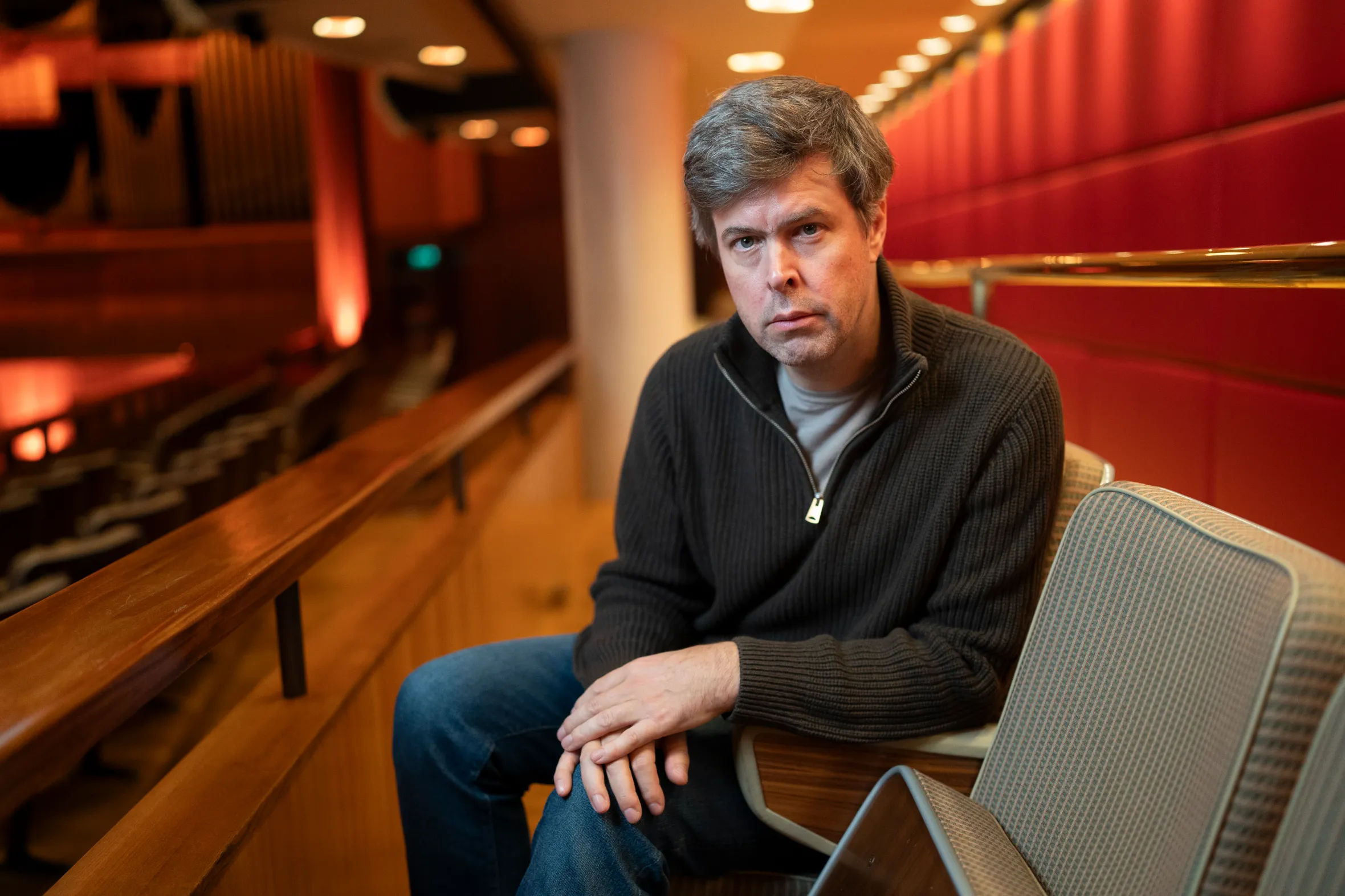 Critics do not accuse David Szalay of plagiarism but are puzzled by his evasiveness about Barry LyndonDAVID LEVENSON/GETTY IMAGES
Flesh is a rags-to-riches story that starts when the protagonist, Istvan, is a 15-year-old living on a Hungarian housing estate and ends when he is in late middle age, while Barry Lyndon is an Irish rogue. Both Istvan and Lyndon rise from criminal, impoverished beginnings, become soldiers, marry wealthy women, lose their sons, fight with mistrusting stepsons whose lives they ultimately spare, fall into financial ruin and eventually return to where they started. Although the details differ the similarities are so marked that the first critic to note them, the writer Aled Maclean-Jones, described Flesh as “almost” a retelling of the film.
Yet despite this, during a forthcoming interview for BBC Radio 4’s This Cultural Life, Szalay downplays the connection.
In the episode, which airs on Thursday, the host John Wilson asks whether the film is a “direct reference”, to which Szalay replies: “No, I wouldn’t go that far.” Szalay says that Kubrick “wasn’t really at the front of my mind, I don’t think”.
Pressed on whether the parallels might be subconscious, Szalay concedes that the film made “quite a strong impression” on him and that the overall arc “maybe was influenced by it in some way” — but he rejects the idea that it was a homage.
Yet in the novel there is at least one line that suggests otherwise. In Flesh, Istvan’s future wife, Helen, takes him to the National Gallery to try to broaden his cultural horizons. Reacting to a painting by Titian, the inarticulate Istvan says: “I like the use of the colour blue in that one.”
The title character in Kubrick’s Barry Lyndon, played by Ryan O’Neal, has become rich through marriage. He is being shown paintings when he says of another work, The Adoration of the Magi by the Florentine artist Lodovico Cardi: “I love the use of the colour blue by the artist.”
In both the book and the film, there is also a scene in which his mother warns the protagonist about the precarity of his newfound wealth, and one in which his stepson denounces him in public, a catalyst for his eventual fall from favour.
As Kubrick, who wrote the script, died in 1999, Barry Lyndon will still be in copyright although Thackeray’s novel, The Luck of Barry Lyndon, is not.
When asked about his inspirations for the book, Szalay has offered different answers at different times.
The singer Dua Lipa interviewed him for her book club podcast last autumn and, when he listed influences on Flesh, he cited Jacob’s Room by Virginia Woolf and Lord Jim by Conrad, but not Barry Lyndon. A month later he told The Observer that its rags-to-riches arc “was an influence”, while in an earlier interview with an academic journal, English Studies, he acknowledged the link with Thackeray’s novel more fully.
“[It] was an influence on elements of the plot, absolutely,” he said. “Sometimes these echoes initially creep in unconsciously, then you notice they’re there, and you like them and emphasise them further. That’s what happened with allusions to picaresque narratives in Flesh.”
David Sexton, the critic and former literary editor of the Evening Standard, said Szalay had done nothing wrong in drawing on another work but found his evasiveness puzzling.
“I don’t understand why, at this stage, he will not own up to it more,” Sexton said. “I — and everybody else who has noticed it — haven’t found anything wrong in it. It is not plagiarism, it is completely legitimate to adapt something, and I have always admired his writing, but he has been uncommunicative about it all and misled people [when questioned]. He can’t deny this: it is so close repeatedly.”
Sexton also questioned whether Szalay, whom he regards as more naturally a short-story writer, felt unable to sustain a full-length narrative. Szalay abandoned another novel shortly before starting Flesh. When he was Booker-shortlisted in 2016 for All That Man Is, detractors argued it should have been ineligible because it was a linked collection of stories rather than a unified novel.
Another critic, Anthony Cummins, sees the references to Barry Lyndon as more akin to “Easter eggs” in films, hidden messages for fans to spot.
“Szalay is a brilliant writer, and I think he more artful than people are willing to credit,” Cummins said. “I think he’s playing a game with people who know this film well, and he’s left a lot on the table for them to enjoy, the way he’s paralleled the plot and reworked different bits. It’s a bit of fun, so maybe he feels, ‘Why spoil it by talking people through the book in that way?’ There’s fun for the reader in sleuthing — it’s quite an energising feeling to feel you’re in with an author on a game. If he talked about that openly, he would close the door on that possibility.”
Szalay had told Cummins, in a February 2025 interview, that the pleasure of writing for him lay in “master[ing] the way a book manipulates the reader” and “the game that’s going on all the time between writer and reader in every context”.
Flesh, Szalay’s sixth book, is set to be adapted for film by House Productions, the team behind Conclave, Sherwood and Brexit: The Uncivil War.
Szalay, whose father is Hungarian, was born in Canada but grew up in Beirut and London. He was the first Hungarian-British author to win the Booker prize. Winners receive £50,000 and usually see a big boost in sales.
This Cultural Life is on BBC Radio 4 at 11am on Thursday