
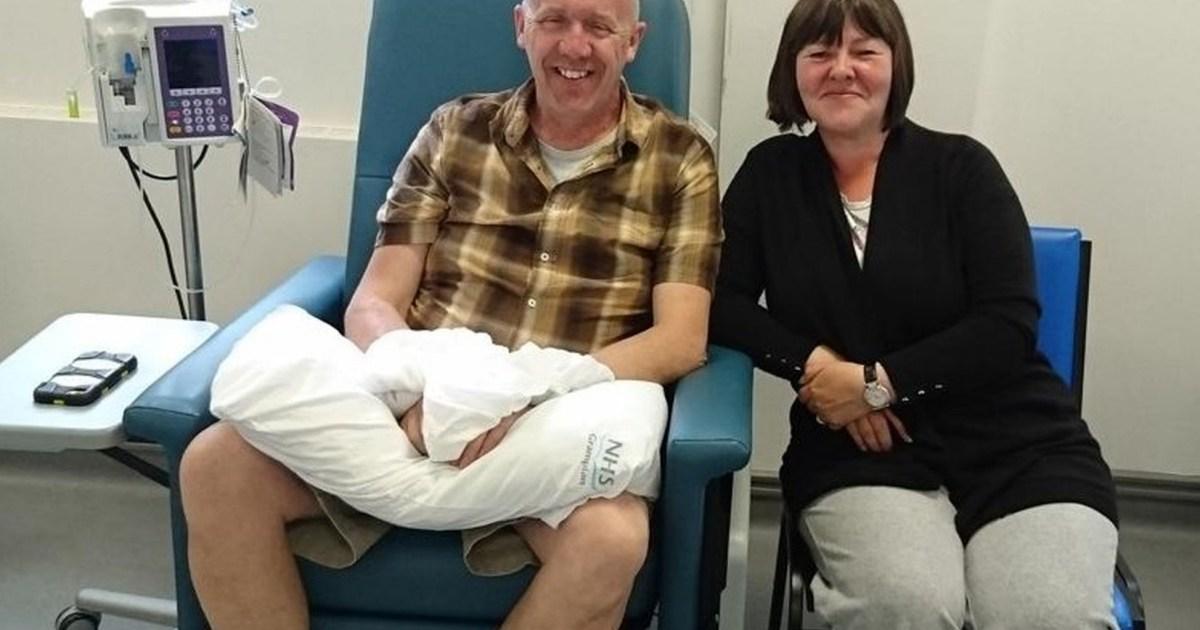
Jeff Bradford had a dormant STI for 30 years (Picture: Kennedy News and Media)
When Jeff Bradford first came down with a sore throat, he assumed it was triggered by renovations to the gym he was working in as a PT.
Two weeks later, he was still experiencing symptoms and had taken to gargling aspirin multiple times a day to cope. So, unable to shake the feeling something was wrong, he booked an appointment with his GP.
Doctors initially diagnosed him with tonsillitis and sent him away with antibiotics. But, days later, still nothing had changed. It was March 2016.
Jeff, now 62 and living in Forres in Scotland, says: ‘I had no fever, so I went back, then a different doctor gave me some stronger antibiotics.
‘He also took a throat swab as he said it could be strep throat. He was a bit suspicious of it and took some photos.’
In May 2016, two months after he’d first experienced a change, he was urgently referred for a hospital appointment, and within 10 days, he was seen by the Aberdeen Royal Infirmary.
‘I couldn’t see anything but I could feel something touching the back of my tongue, it was making me gag, he says.
One month later, in June 2016, he was sent for surgery. When he came back from the operating room, he received a diagnosis that changed everything: it was stage three throat cancer.
That wasn’t the end of the story, though. When he returned for a follow-up appointment one week later, he was told the disease had been caused by HPV16, which is an STI that can lead to cancer, including in the cervix.
At the time, Jeff had no idea what it was, but he soon found out.
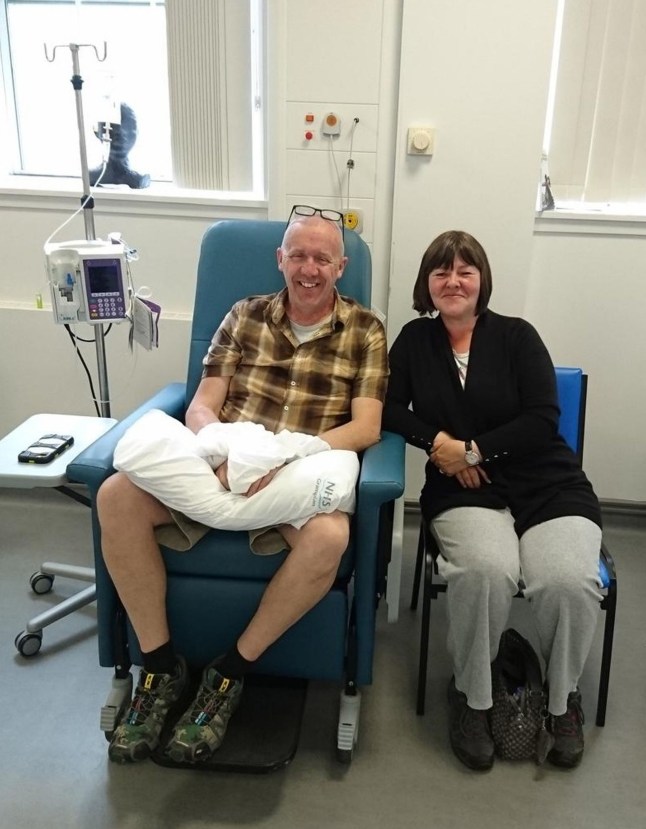
Jeff was diagnosed in 2016 (Picture: Kennedy News and Media)
‘HPV is caught through sexual transmission, it’s normally from oral sex. I was totally shocked it was from that. He said “it’s probably been in your body for over 30 years,” that’s how long it can stay dormant,’ he reflects.
‘He said the sore throat I got could have just opened it up to getting a foothold, it’s just bad luck.’
Before Jeff met his wife, 58-year-old Heidi, he’d been with a few partners, and doctors suspected he contracted HPV before he ever knew her.
Looking back on his younger years, he never realised this might’ve happened – and doesn’t want to scaremonger others, either.
‘You just go about life like everyone else. You don’t expect when you’re young “do that and I might get cancer when I’m 50-odd,”‘ he says.
Immediately referred for 35 painstaking sessions of radiotherapy, in August 2016, he was eventually given the all-clear. But that didn’t detract from the ordeal he’d experienced over the previous months.

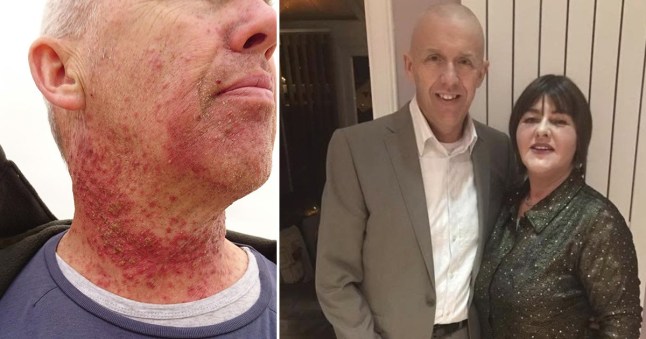
Jeff experienced ‘bad burns’ from radiotherapy (Picture: Kennedy News and Media)
He says: ‘Radiotherapy caused really bad burns. It was like someone took a blowtorch to my neck, it was horrible.’
Now, almost 10 years on, he urges the importance of getting any untoward symptoms checked out. And he’s not afraid to tell his story.
‘I’ve got no qualms talking about that at all. Everybody does it, don’t they? It’s a normal, sexual activity with somebody you love – it’s an intimate thing that couples do,’ he says.
‘I would never say to anyone “give up oral sex,” it’s just a natural thing to do, but it might put people off that.
‘I think if it’s not talked about quite candidly, it’ll get brushed under the carpet, and if people are embarrassed to talk about it, they may avoid treatment. It could be easily missed if you don’t push it.’
What is HPV, and how might it cause cancer?
According to the NHS website, HPV (or Human Papillomavirus) is a name given to a collection of viruses. In most people, they don’t cause any problems, but they can lead to things like genital warts or cancer.
The guidance explains: ‘HPV affects the skin and places like the inside of the mouth, throat, vagina and anus. There are more than 100 different types.’
There are no symptoms, and most don’t realise they have it. However, it’s possible to get HPV from ‘any skin-to-skin contact of the genital area, vaginal, anal, or oral sex, and sharing sex toys.’
Symptoms of throat cancer, listed by Cancer Research UK, include:
Symptoms might include:
Ulcers that do not heal or red and white patches in the mouth
Pain or difficulty swallowing
Change in your voice or speech
A feeling of something stuck in the throat
Other cancers directly linked to HPV include cervical, anal, penile, vulval, vaginal, and some forms of head and neck cancer.
Do you have a story to share?
Get in touch by emailing MetroLifestyleTeam@Metro.co.uk.
Arrow
MORE: He thought my vagina smelled – his penis was far worse
Arrow
MORE: The three-word phrase women use during sex that men say makes them ‘feel like a failure’
Arrow
MORE: The unexpected sex act that can make your period come early
Comments
Add Metro as a Preferred Source on Google
Add as preferred source
The Slice
Your free newsletter guide to the best London has on offer, from drinks deals to restaurant reviews.