
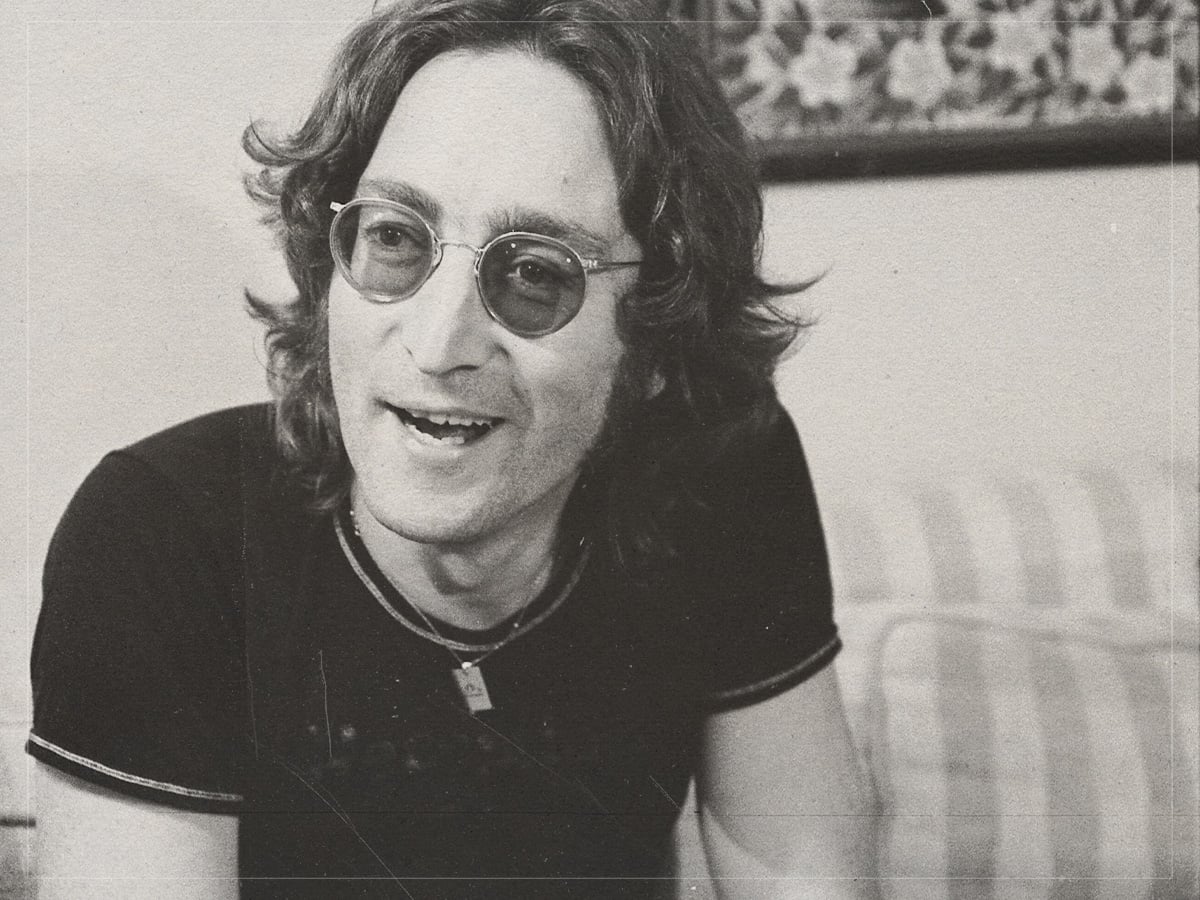
(Credits: Far Out / Tony Barnard / Los Angeles Times / UCLA Library)
Sun 12 April 2026 10:40, UK
It’s kind of remarkable that The Beatles lasted as long as they did without completely imploding, considering just how much tension there was between the two chief songwriters, John Lennon and Paul McCartney.
Or perhaps it might be better to say that it was remarkable that Lennon managed to stick things out in the band for as long as he did, considering the wealth of derogatory things he said about some of the songs that he shared credits on with his bass-playing counterpart.
It seemed that towards the end of the band’s career, nothing was safe from Lennon’s caustic remarks, and he reached a point where the band’s output did more to aggravate him than it did inspire him. So many scathing comments about the other Beatles came from Lennon’s mouth over the years, both while still in the band and during his final years as a solo artist, that it’s hard to find any track released by the band that he hasn’t found some sort of fault in, or worse, an absolute musical sin.
This growing dissatisfaction wasn’t just about creative differences—it reflected a deeper sense of disillusionment with the band itself. For Lennon, The Beatles had started to feel less like a collaborative outlet and more like a constraint, where compromise often came at the expense of his own artistic instincts.
As a result, his criticisms became increasingly indiscriminate. Whether aimed at McCartney’s sentimental leanings or his own perceived misfires, Lennon’s blunt honesty revealed an artist who was no longer interested in preserving the band’s legacy so much as tearing it down in pursuit of something more authentic.
 (Credits: Far Out / Alamy)
It’s well-documented that Lennon had absolutely no time for Paul’s “granny shit” that took inspiration from vaudeville and music hall styles from several decades before, and he would hurl insults at many of McCartney’s more whimsical songs in the band’s catalogue, such as ‘When I’m Sixty-Four’ (“I would never dream of writing a song like that”), ‘Rocky Raccoon’ (“I just thanked God it wasn’t one of mine”), and ‘Birthday’ (“It was a piece of garbage”).
That being said, despite levelling so much harsh criticism at McCartney’s stylistic differences, some of his most hated moments in the Beatles’ discography were songs of his own, proving that not only was he his bandmates’ worst critic, but his own as well.
There are many John Lennon songs that the man himself hated, and seeing as he had nobody else to harm in saying so except for his own ego, he held back even less when it came to slagging off his own material. The same “garbage” line he would slander McCartney’s work with was brought out again in reference to his own songs on multiple occasions, with him dismissing ‘Sun King’ as “a piece of garbage I had around” and extending his trash-talking vocabulary by referring to ‘Mean Mr. Mustard’ as “a bit of crap I wrote in India”.
However, despite not having much faith in these two Abbey Road classics as well as some other brilliant tracks the band would release, he was even more unsympathetic towards earlier songs of his, and while he would express outright vitriol for the Help! cut ‘It’s Only Love’, saying to writer David Sheff, “I always thought it was a lousy song. The lyrics were abysmal. I always hated that song,” he’d go one step further in his loathing of Rubber Soul’s closing track ‘Run For Your Life’, heralding it as his “least favourite Beatles song”.
Given that he said so many disparaging things towards songs that McCartney wrote over the years, for him to call his own (admittedly creepy and stalker-ish) effort the worst of the worst from a pool of over 200 Beatles tracks really speaks to how much he disliked ‘Run For Your Life’. While it’s far from his best work, there are certainly some far more heinous examples of the band at their most atrocious. However, if he was still alive today, you can bet he’d have disowned virtually all of the band’s back catalogue by now.
