
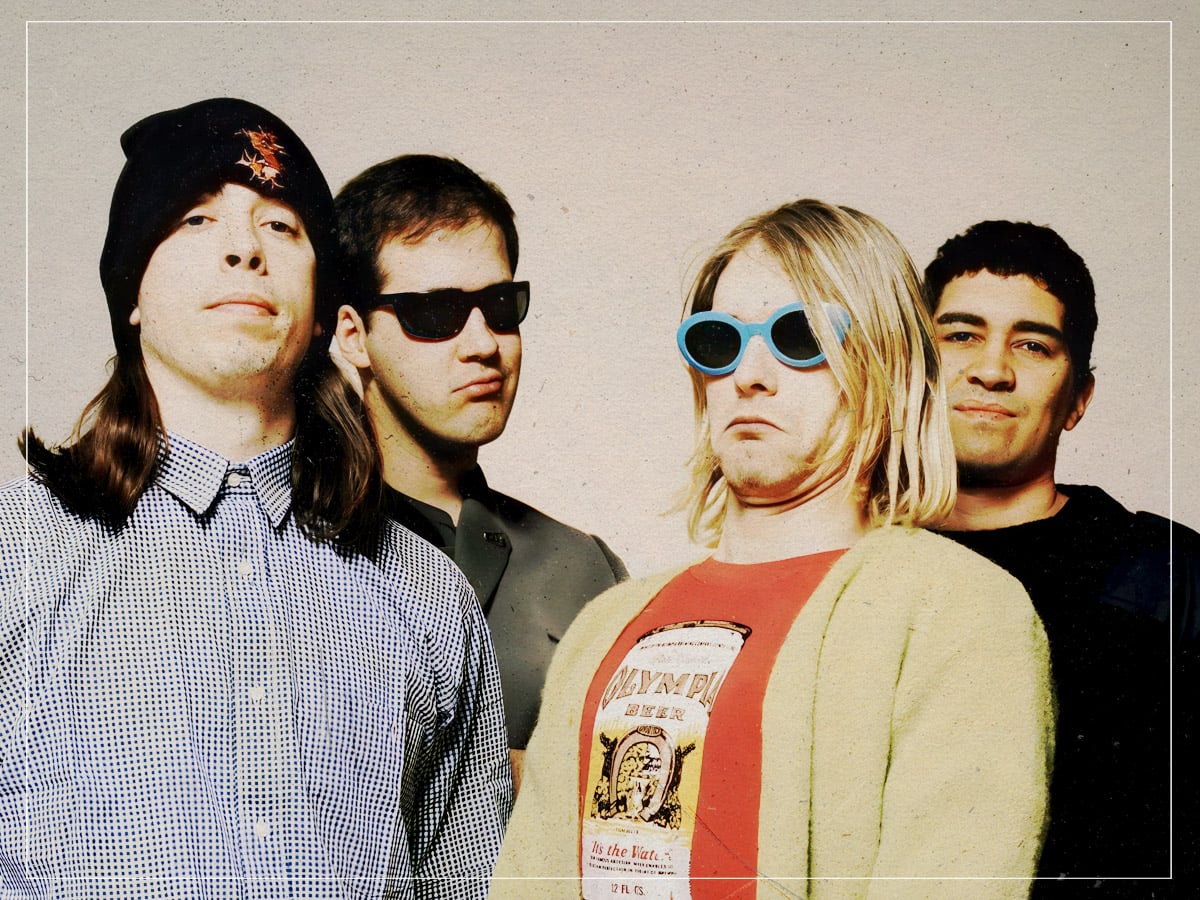
(Credits: Far Out / Geffen Records)
Sun 12 April 2026 13:00, UK
One thing that comes up time and time again when interviewing artists is a prevailing sense of confusion. If things have grown fast, or grown beyond where they expected, there is always a clear tone of ‘how did we get here?’ and the band themselves rarely know the answer. For Nirvana, that feeling didn’t just hit heavy, but it all landed in the same 24 hours.
Part of the reason why the story of Nirvana is so mythological is exactly that it started so normally. Especially in the modern industry of label intervention, social media and fabricated acts, music fans have always been obsessed with a band built from nothing, and Kurt Cobain and co embodied that.
After Cobain and Krist Novoselic met in high school, it truly was your classic garage band, moving through different iterations and picking up new members simply as they made new friends, and when Dave Grohl joined in 1990, they might have just needed a new drummer, but the decision was made mostly through their chemistry as mates, enjoying each others company and hanging out for hours on that first day.
It was your standard story of a local band making noise in their small scene. Slowly, though, their small scene began to be more and more important, incorporating acts like Soundgarden and Alice in Chains. Other bands would tour through town and make friends, giving them connections to the likes of Sonic Youth. Suddenly, the industry at large was paying attention, and it was building with more suits attending their shows, labels talking to them afterwards, and the crowds growing.
Eventually, it led to contracts being signed as they were brought into their first major label, DGC. With that backing, they started making Nevermind.
All of that is a story enough, it’s the sort of rise from hometown heroes to the next big thing where a band would be scratching their heads already, wondering how they got from one to the other. But in the case of Nirvana, they didn’t just stop there. Soon after, and pretty suddenly, they weren’t just a subculture act; they were big.
On January 11th, 1992, that became vividly clear all within the same 24 hours. While in New York, they woke up to a call from their team telling them that Nevermind had hit number one on the Billboard charts. Months on from its release, where it had debuted at only number 144, the impact of ‘Smells Like Teen Spirit’ had been huge and made the album a must-have. By January, they were not only number one, but they’d just knocked Michael Jackson, one of the most famous artists in the whole world, off the top spot.
That alone would be proof, but they couldn’t celebrate for too long as they had to perform the same night on Saturday Night Live, again facing up to an achievement that spoke to their breakthrough into the mainstream. Invited onto the television to perform for a nationwide audience on the biggest Saturday night show, there was no way for the band to deny that things had changed.
They were no longer a small rock band from Washington. They were no longer just leaders of a particular subculture. Suddenly, and clearly, they were one of the biggest names in American mainstream music.
