
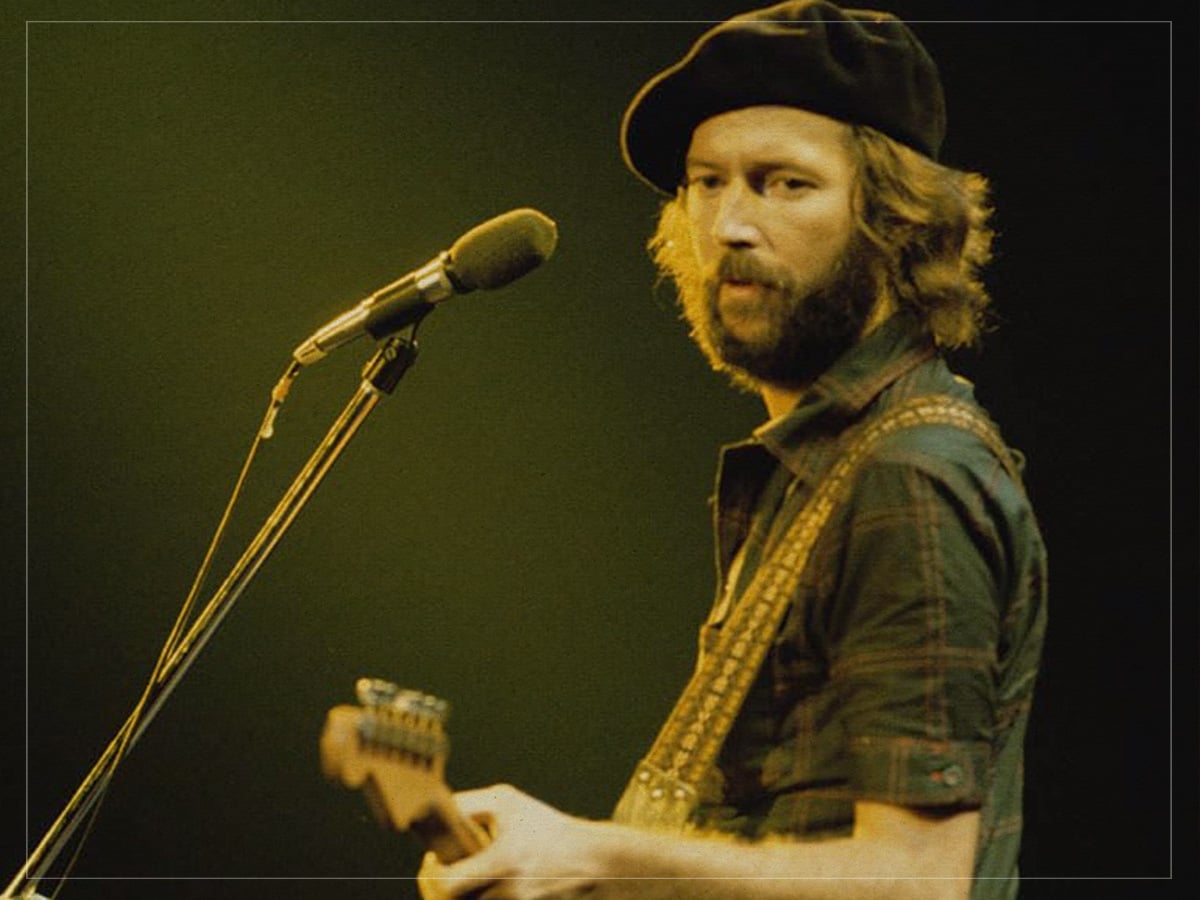
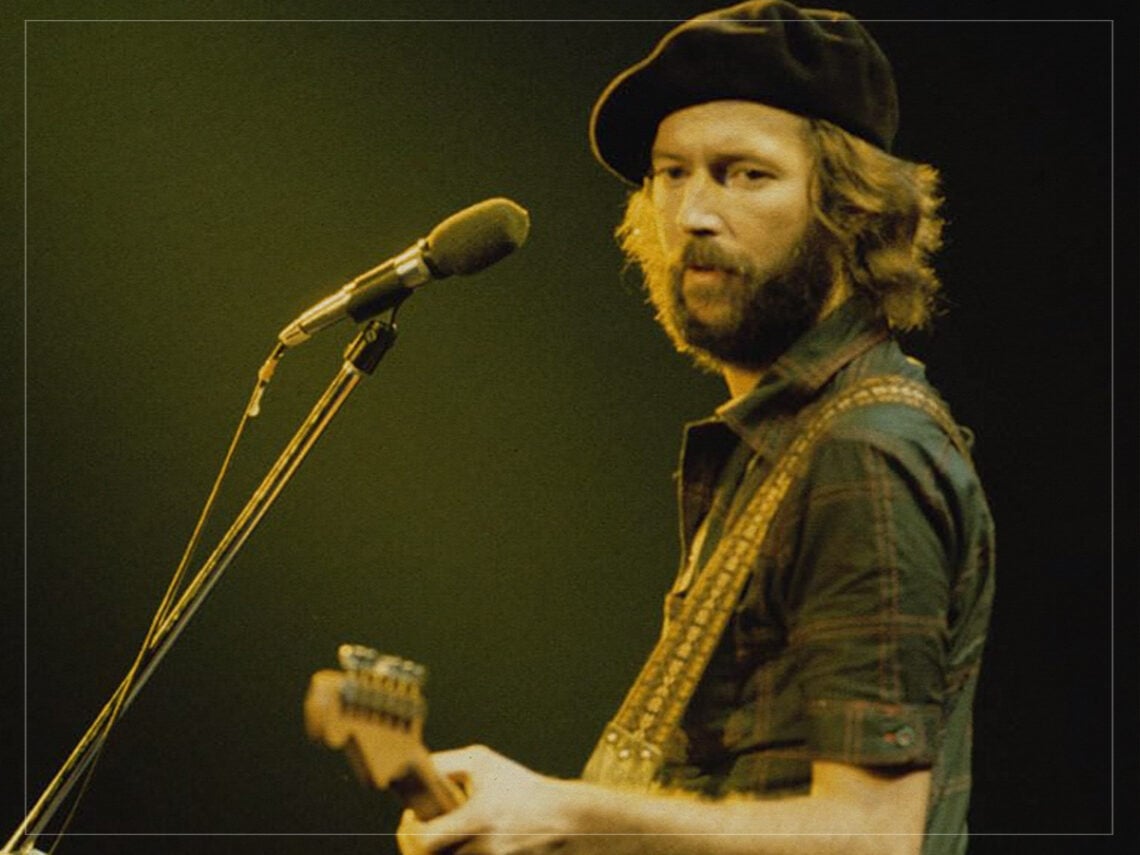
(Credits: Far Out / Showtime Documentary Films)
Sun 12 April 2026 14:30, UK
Throughout the late 1960s, it seemed like Eric Clapton didn’t really know what he wanted.
He liked the idea of being in a band, but the minute that he joined a new one, he always seemed to go back to his tendencies of being a loner, always going the way of the bluesy drifter and making sure that he was making the music on his terms without having to cower to what everyone else was doing. But when looking through the new faces coming out in the 1970s, Clapton could at least find himself working with bands that prioritised the music above everything else.
Granted, any other guitarist would have been happy to be in ‘Slowhand’s position. There was already an idea of him replacing George Harrison in The Beatles for about five nanoseconds when ‘The Quiet One’ quit the group, but even when he was working his magic in a band like Cream, there was going to be far more layers to what he could once he heard groups like The Band.
He had become fixated on playing guitar to serve the song, and while there are many diamonds across his 1970s era, there’s a good chance that everyone was wondering where his bite went. He had the power of making some of the most triumphant guitar solos known to man, and he didn’t need to spend the rest of his career making pop-driven drivel. But the fact that he had this problem at all didn’t make any sense compared to what he saw in the Allman Brothers Band when he first heard them.
Sure, Duane Allman was already bringing some of the best lead licks to Derek and the Dominos’ masterpiece, but even with everyone working together, Clapton felt that there was a synergy that the Allmans had that he hadn’t seen before. They had bent all stripes of American music under one roof, and given how long they could extend their jams for, he felt that was the kind of band that he belonged in.
Compared to what Cream had been doing, Clapton saw himself fitting a lot better in the band than his own group, saying, “The impression that I got was how much hard work they’d put into their presentation, and the fact that it wasn’t really blasted all over the airwaves. They had just quietly gone about doing a fantastic job of making really, really good music that was really well thought out. It influenced my music at the time.” If you looked at them side by side, though, Cream and the Allmans’ approaches to the stage couldn’t have been more different.
Oh, there were still solos across everything that they were making, but At Fillmore East is a far more complex affair than anything off Wheels of Fire. Each member of Cream was still working to make every single song work well, but whereas their jams ended up sounding like a bunch of people playing a solo all at once, The Allmans found a way of communicating without using words whenever they launched into their versions of ‘Whipping Post’.
They had been playing so long that they pretty much had an idea of what their jams were going to sound like, but Duane was practically a conductor as much as he was a guitar player. You can hear him building up a lot of his greatest solos, but just when he reaches this epic zenith during one of his lead breaks, he and the band could change dynamics on a dime and come back to the same groove that they had been playing without even thinking about it.
A lot of it was about finding the right chemistry between band members, but there’s no way that anyone could have found that same kind of band by just walking into a room with the best players. Clapton would have gladly worked with the band if he could have found his place, but this is the kind of chemistry that no one can truly measure to no matter how many years they’ve honed their craft.
