
(Credits: Far Out / Alamy)
Sun 12 April 2026 17:27, UK
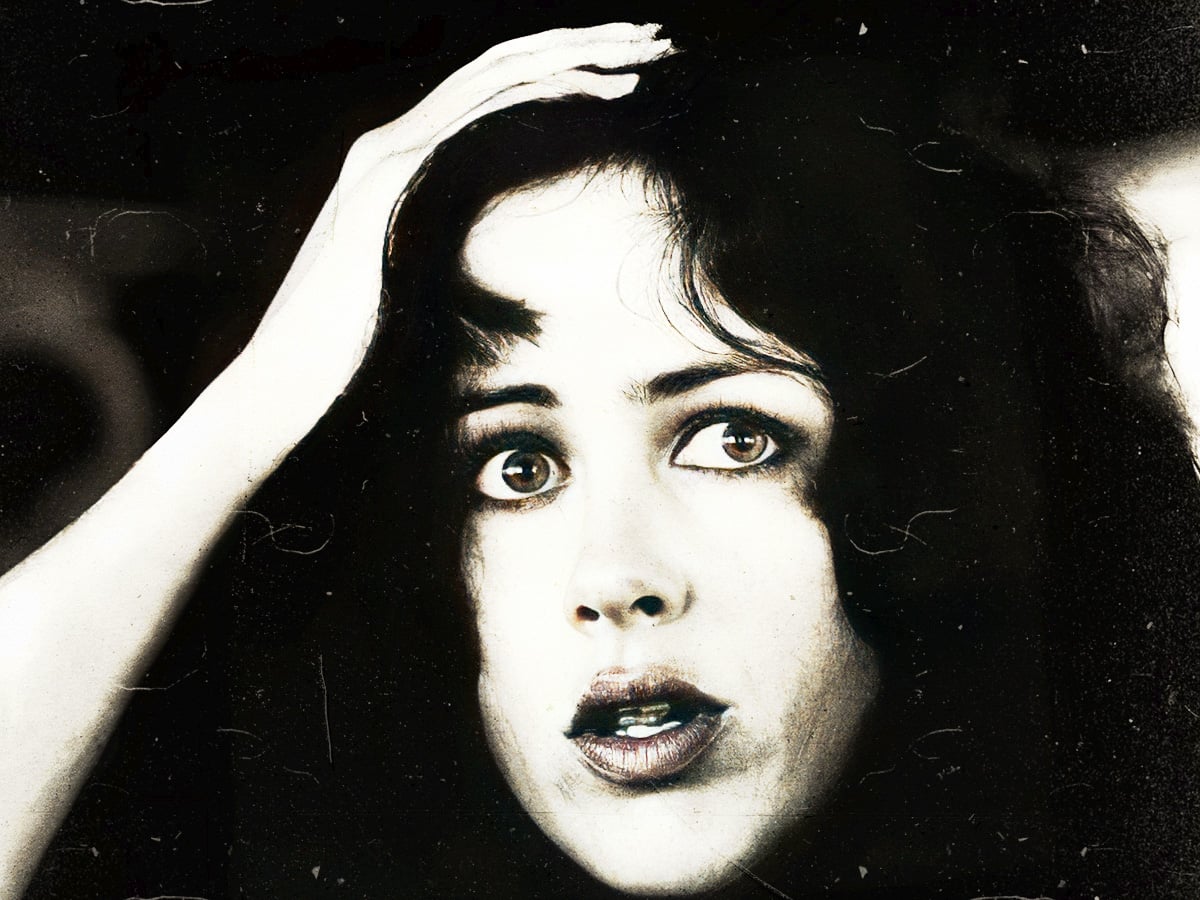
Grace Slick had a voice that could haunt an empty house.
With an octave range that could easily stretch from D3-G5, she could either part clouds or summon a hurricane with her booming bellow. She does the latter on the stunning ‘White Rabbit’, just about encapsulating the most elusive zeitgeist, whose soul is still fussed over half a century on, in the process.
Slick was widely known as one of the most prominent voices of the scene, which flourished out of San Francisco in the ’60s, professing free thought and the utmost pursuit of creativity. She used that voice to flesh out a truly wonderful career that spanned over four decades across a multitude of different acts, before resting her vocal cords and taking up her current professional pastime of painting.
Grace Slick has traversed genre and decade on a long creative journey, pitted with the odd pothole. The beauty of being such a longstanding performer means that different fans will love Slick for different reasons, she will have soundtrack different times, different parties in different eras. Having performed with The Great Society, Jefferson Aeroplane, Jefferson Starship and Starship, she is a mainstay of the music scene and the ace up the sleeve of any DJ.
Slick, over time, has provided vocals on a host of iconic rock and roll tunes, including ‘Somebody to Love’, ‘Triad’, ‘Nothing’s Gonna Stop Us Now’ and a host of other party-starting hits. But perhaps her most poignant number was her ode to the psychedelic movement which was sweeping the Western world at the time with the ecstatic ‘White Rabbit’.
 (Credits: Far Out / Noord-Hollands Archief / Fotoburo de Boer)
Slick, undeterred by the repercussions, was one of the first artists to sneak drug references under the censor’s noses and into pop songs. The track may have later become an anthem for narcotics but Slick says that beyond drugs the song “is about following your curiosity. The White Rabbit is your curiosity.” Especially if you’re curious about drugs.
The singer also revealed that the song’s references may have been shocking to some but seemed a natural progression to her, suggesting it may well be because of the previous generation’s own experimentations, “Our parents read us stories like Peter Pan, Alice in Wonderland and The Wizard of Oz,” Slick recalled.
These tales were heavily psychedelic in their own, if only idle parents, worn-out from work, weren’t too tired to realise as they read the maddening prose to their nippers each night. As Slick added, “They all have a place where children get drugs, and are able to fly or see an Emerald City or experience extraordinary animals and people… And our parents are suddenly saying, ‘Why are you taking drugs?’ Well, hello!”
While the composition of the song still resonates to this day as a masterpiece it is Slick’s vocal that truly make it a timeless classic. She manages to convey the kaleidoscopic tones of the song’s content while maintaining an ethereal standoffishness that wouldn’t look out of place in the world of Cheshire Cat smiles. As clean as a bell, the vocals are like the crystalline lucidity of a swirling dream.
Given its almost melody-less nature, Slick was allowed to indulge her often overlooked lower chest range. As the lead female voice in Jefferson Airplane, she was often asked to be lilting, but here, she summons up the drugged-up howl of an inevitable revolution borne from the pages of perturbed children’s books and a desire to do things differently.
As David Crosby would later opine, “Slick reigned with Janis Joplin as queens of rock at that time, and the force of both her voice and her personality made her a ceiling-shattering feminist counterculture icon and an inspirational model for many to follow. When they got Grace in the band, that was just beyond belief.”
Personality and prowess are what make her ‘White Rabbit’ performance stand out as unique. She doesn’t just belt out the track with supreme technicality; she also imbues it with the narrative weight of a revolution coming to a heady conclusion, as she gathers from a reserved purr to a growl that could empty a forest.
It was far too bizarre to be a conventional hit, so you suspect its improbable presence in the US top ten – it peaked at eighth – can be pinned down the credibility that Slick’s performance granted the performance. And the success of that was important for classic rock. It now stands out in the history books as a symbol for how ready for weirdness the world was in the ‘60s.
