
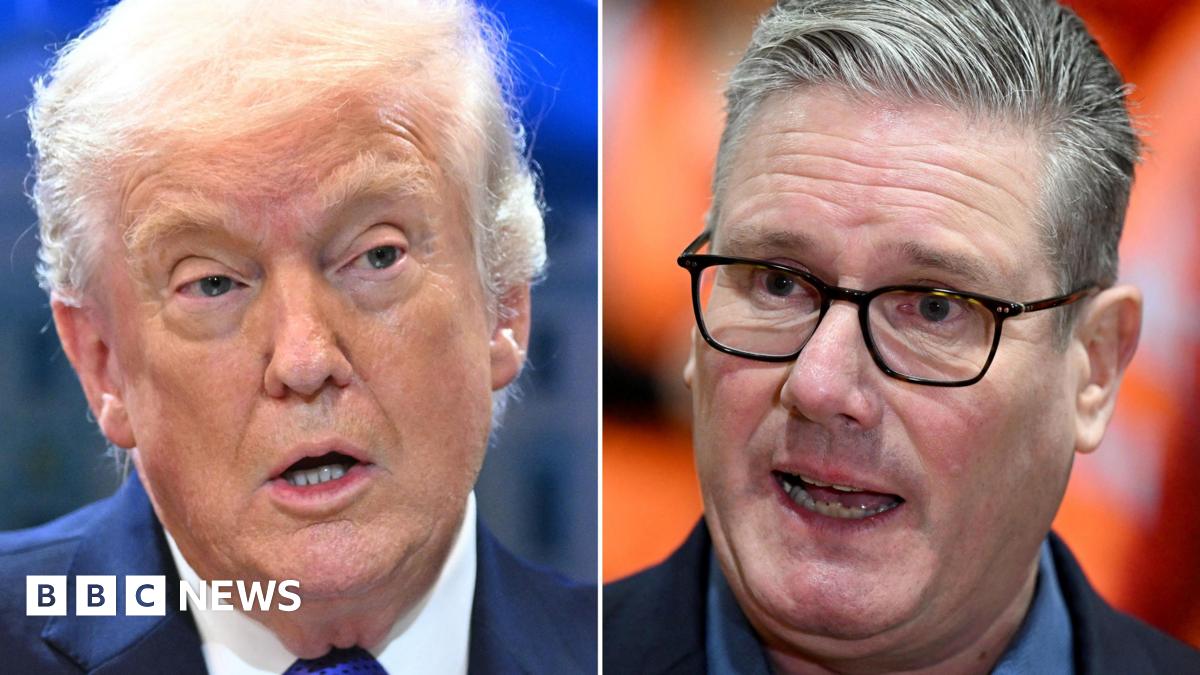
After US and Iran negotiators met in Pakistan’s capital Islamabad, President Donald Trump said the US would start “BLOCKADING any and all Ships trying to enter, or leave, the Strait of Hormuz”.
The US Central Command (Centcom) later confirmed its forces would enforce the blockade “impartially” on vessels leaving and entering Iranian ports, including those located in the Arabian Gulf and Gulf of Oman.
Centcom added that US forces would not impede the freedom of vessels transiting to and from non-Iranian ports, and that additional information would be provided to commercial mariners via a formal notice before the blockade starts.
Trump told Fox News that other countries would be involved in blockading the strait, but did not say which ones.
He added that Nato offered to help “clean out” the strait, adding that it would be free to use again “in not too long a distance”.
Trump said the US would bring in minesweepers, and that the UK – a member of Nato – would too.
“I understand the UK and a couple of other countries are sending minesweepers,” Trump said.
Around one-fifth of global oil and liquified natural gas shipments pass through the Strait of Hormuz, with Iran effectively cutting off the waterway since US-Israeli strikes began on 28 February.
Sir Keir has repeatedly ruled out direct UK military involvement in the conflict.
Instead, the UK has repeatedly called for the Strait to be re-opened as oil prices surge under Iran’s embargo.
Global benchmark Brent crude oil rose above $US100 following the blockade announcement.