

Having worked as an economics teacher, John Wells has always grasped the concept that once you start taxing people over a certain amount, they think to themselves: “What is the point in working?”
The 67-year-old has reached that point of frustration with imminent changes in inheritance tax (IHT) and says people will now be left thinking: “What is the point of being sensible and saving for retirement – I may as well blow all my money.”
John was head of business and economics at a secondary school and retired three years ago after working for 30 years as a teacher in the state system.
New FeatureIn ShortQuick Stories. Same trusted journalism.
As well as getting a teacher’s final salary pension, John saved money into a self-invested personal pension (SIPP) as a precaution in case he lived into a very old age and needed care.
However, he has been angered by the Government’s decision to drag unused pension savings into inheritance from 6 April 2027, which has thrown his best-laid plans into disarray.
The changes, which were announced in the autumn 2024 Budget, mean that most unused pension funds and death benefits will be included in a person’s estate for IHT purposes, subject to the standard 40 per cent rate if their total estate exceeds tax-free thresholds.
John, who has two grown up children and lives with his partner in the south west, said: “If you have worked very hard and made an effort to pay for a pension and have put money away in savings to prepare for your older years, I think you should be entitled to have that money without being penalised in any form by an increase in tax.
“I don’t think anyone is too worried about paying tax, as it is an inevitability. But the amount of tax you pay should be fair.
“The thing that bugs me the most is that the goalposts have changed and I object to the latest changes in inheritance.”
John said that since retiring, he receives his final salary teaching pension, downsized to a three-bedroom semi-detached home, and put his savings into a SIPP as a tax-efficient way to save money.
“The way I viewed it, my teacher’s pension is to live on now, and my SIPP and my property are my care home fees in the future if I carry on living a number of years and get to the point where I need care,” he said.
“My mother lived into her 90s, but we were lucky because we did have the money for her care in place.
“To me, the money in my SIPP was something that I wouldn’t touch for a while, and I hoped to live a certain amount of time, and it would be there for care if I needed it. If I didn’t, my thinking was that my children and any future grandchildren would be able to inherit it.
“However, it seems this new policy hitting IHT means you can work as hard as you like all your life in order to have a nice standard of living and a certain level of assets, so you don’t burden anyone else – but with this new policy coming in, the Government is saying: ‘We want that instead of you.’
“I spent a lot of time and money talking to financial advisors about my best options and how to make things work if, fingers crossed, I carried on living for a certain amount of time so I could try not to burden the current taxpayers by having enough money to pay for my own care and look after myself.”
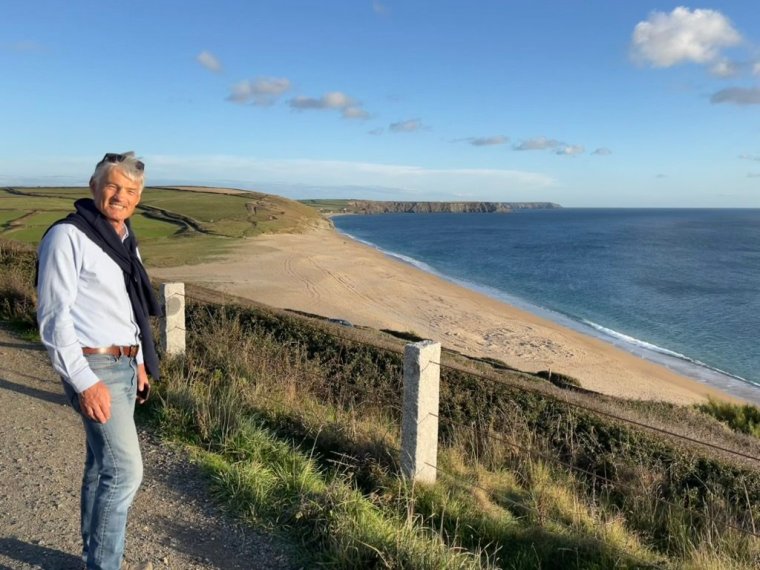 John says he saved money in case he needed care in the future – but the Government has moved the goalposts
John says his home is worth around £500,000, and once his SIPP and savings are factored in, the value of his estate will exceed £1m, meaning it will be subject to IHT for his family.
As John is divorced, he will get the standard IHT tax-free allowance, or nil-rate band, of £325,000. If he leaves his main residence to direct descendants (children or grandchildren), an additional residence nil-rate band of £175,000 would apply, potentially raising the total tax-free allowance to £500,000.
“It means that the value of my house might just about be exempt from IHT, but any savings and pension would be hit by it,” said John. “This seems deeply unjust when I have paid tax throughout my working life and been working since the age of 19.
“Having been taught all my life that unless you work hard, you won’t see the results, the bottom line now is that the reality is that you are penalised through things like IHT, capital gains tax and massive amounts of income tax.
“Anything in life where you have been successful, the Government thinks ‘we’ll take that away.’ And I am not very wealthy – I have friends who have considerably more money than I do. I am comfortable, but nowhere near wealthy.
“Once you get over a certain level of wealth, the amount you spend on tax gets less and less as richer people are able to put it out of harm’s way.
“It is the people who have around £1m and up to about £2m who are really going to be hit and the middle classes. The impact on them will be greater.
“People like me will have the thought that if this is what they are doing with IHT, I may as well go and spend my money.
“People will look to spend their savings and SIPP portfolios, which will become leakages from the economy.
 John says people like him may as well spend their hard earned money rather than see the Government waste it
“As people go abroad on holidays, purchase higher value assets manufactured abroad such as cars and imported white goods, that will be a withdrawal from the income spending flow in this country.
“This country has a massive welfare bill and all the Government seems to be doing is looking for ways to grow that welfare bill and pay for benefits, without actually doing anything to stimulate the economy.
“With this IHT change, they are penalising a high majority of people who aren’t that wealthy, but have worked hard to make provision to look after themselves in old age and hopefully pass on something to their children and grandchildren.
“It really is a very poor understanding by the Government of how to help the economy grow.
“After my death, the burden would be on my children, who might have young children of their own by then, to find tens of thousands of pounds to pay an IHT bill. Why should that money go towards bad economic planning and administration by the Government?”