
Home
»
Airline News In Asia
»
Asia, Africa and United Kingdom: London Heathrow Traffic Soars on Eastern Routes as Middle East Passenger Numbers Slump 51 Percent
Published on
April 14, 2026
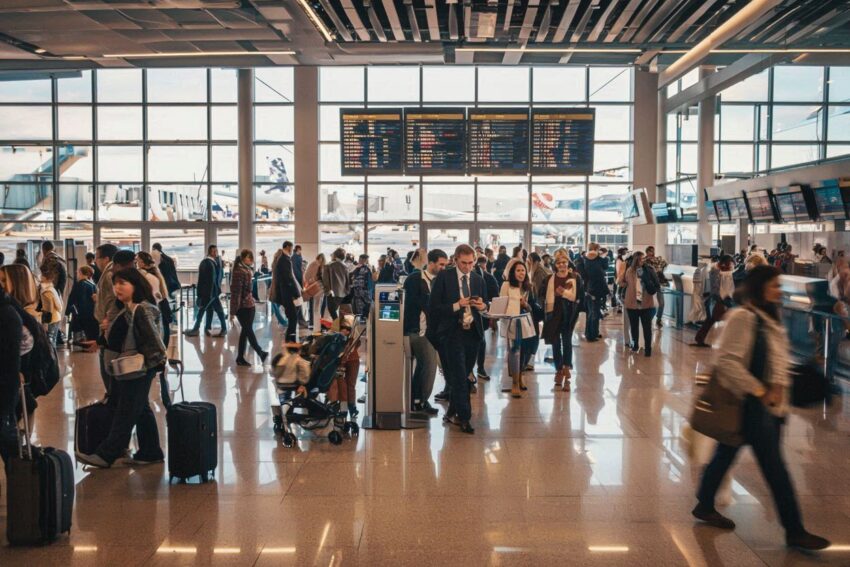
Image generated with Ai
London Heathrow Airport has been portrayed as a key barometer of long‑haul travel trends between the United Kingdom, the Middle East, Asia, Africa, and the United States, and its latest figures underline how rapidly routing patterns can shift under geopolitical stress. In March 2026, traffic linked to the Middle East was reported to have fallen by 51 percent year on year, even as demand on Asia/Pacific and Africa routes via the United Kingdom surged, highlighting a pronounced redistribution of passenger flows that also affects connectivity between Europe, India, and other parts of Asia. This development coincides with an intensifying conflict involving Iran, Israel, and the United States, where missile and drone activity over the Persian Gulf prompted airspace closures and heightened safety concerns for travellers transiting through Middle Eastern hubs that connect Europe, Africa, and Asia.
At the same time, long‑haul network adjustments have driven more passengers through Heathrow on services to and from Asia-Pacific and Africa, while premium travel expectations on transatlantic routes between the United States and Europe continue to evolve as Delta Air Lines prepares a next‑generation Delta One suite for its future Airbus A350‑1000 fleet. Against this backdrop, Heathrow’s fully utilised capacity and the planned cabin upgrades at a major US carrier illustrate how both infrastructure in the United Kingdom and product investments in the United States are being used to absorb demand shifts and maintain competitiveness across some of the world’s most strategically important air corridors.
London Heathrow’s Middle East collapse and global context
In March 2026, London Heathrow Airport in the United Kingdom recorded a steep decline in passenger volumes on routes linked to the Middle East, with traffic falling by about 51 percent compared with March 2025. The number of passengers travelling between Heathrow and Middle Eastern destinations such as those in Iran, the Gulf region, and wider Asia was reported to have dropped from around 600 million in March 2025 to 294 million in March 2026, underscoring the severity of the contraction in this key market that connects Europe, Africa, and India.
This downturn has been associated with a joint offensive by the United States and Israel on Iran, which intensified regional instability, triggered closures of airspace across the Persian Gulf, and raised the perceived risk of flights routed through parts of the Middle East that traditionally serve as gateways between Europe, Asia, and Africa. Despite the continued operation of multiple daily services by carriers such as Emirates, Qatar Airways, and Etihad Airways between the Middle East and the United Kingdom, the erosion of passenger confidence has been evident in booking patterns and has reinforced how sensitive long‑haul traffic can be to conflict and security concerns affecting travellers from Europe, India, and other Asian markets.
Advertisement
Advertisement
Shifting flows toward Asia and Africa
While routes to the Middle East contracted, Heathrow’s long‑haul network showed resilience by capturing rising demand on other intercontinental sectors that link the United Kingdom with Asia-Pacific and Africa. Passenger numbers on non‑stop Asia/Pacific routes increased by roughly 31 percent in March 2026 compared with the previous year, reflecting a combination of rerouted itineraries and changing travel preferences among passengers travelling between Europe, India, East Asia, and the broader Asia-Pacific region.
Africa‑bound traffic, connecting the United Kingdom with a range of destinations across Africa and indirectly with Asia and the Middle East, was also reported to have grown by about 23 percent, with passenger volumes rising from around 262 million in March 2025 to 323 million in March 2026. Heathrow attributed this growth to network realignments and a strengthening of point‑to‑point demand across emerging markets, where travellers from Europe, India, and Africa increasingly opted for itineraries that avoid potentially volatile airspace yet still maintain connectivity between continents.
Advertisement
Advertisement
Transit trends and operational constraints in the UK
The shift away from Middle Eastern hubs has also altered the role of Heathrow as a transfer gateway between Europe, the United States, Asia, and Africa. The airport reported that transit traffic increased by around 10 percent in March 2026, as passengers deliberately rerouted journeys to avoid connecting at airports in the Middle East while still seeking efficient links between regions such as India, East Asia, the United States, and continental Europe.
These additional transfer flows have been accommodated within a broader context of rising overall volumes, with Heathrow handling around 6.6 million passengers in March 2026, marking a year‑on‑year increase of approximately 6.9 percent for the United Kingdom gateway despite the sharp Middle East decline. However, Heathrow has indicated that runway capacity remains fully utilised and that the airport has limited scope to absorb sustained additional transit growth over the medium term, which could pose challenges if routing away from the Middle East continues for travellers linking Europe, Africa, Asia, and the United States.
Geopolitical risk and outlook for Europe, the Middle East, and beyond
Heathrow’s management has acknowledged that the near‑term outlook remains uncertain, as the Middle East conflict and associated airspace issues continue to influence travel behaviour across markets connecting Europe, the United States, Asia, and Africa. While fuel supply for the United Kingdom hub has not been disrupted and core operations have remained stable, the persistence of missile and drone threats in and around Iran has kept risk perceptions elevated for routes over the Persian Gulf, reinforcing the shift in demand away from some Middle Eastern transit hubs relied upon by travellers from India, wider Asia, and Europe.
Heathrow has emphasised that continued coordination with airlines and government authorities in the United Kingdom and partner states in Europe, the United States, and affected Middle Eastern countries will be required to safeguard passenger journeys during this period of disruption. Under these conditions, the balance between point‑to‑point demand and connecting traffic remains fluid, with the potential for further adjustments in how travellers move between Africa, Asia-Pacific, Europe, and North America if tensions involving Iran, Israel, and the United States either escalate or ease.
Delta’s A350‑1000 business suite and transatlantic implications
Parallel to these network shifts involving the United Kingdom, the United States, and key markets in Europe and Asia, Delta Air Lines has been preparing an upgraded long‑haul premium product for its future Airbus A350‑1000 fleet. The carrier has 20 A350‑1000 aircraft on order and plans to introduce a new Delta One business class suite based on the Thompson Aero VantageNOVA seat, with the first aircraft expected to enter service from 2027 on long‑haul routes between the United States, Europe, and other global markets including Asia.
Approximately 50 business class suites are to be installed on each A350‑1000, configured in a 1‑2‑1 reverse herringbone layout in which window seats face toward the windows and centre seats face inward, positioning Delta to offer one of the densest premium cabins in its fleet on transatlantic and transpacific links connecting the United States with Europe, India, and Asia-Pacific. Each suite is set to feature a 24‑inch 4K OLED screen, Bluetooth audio, USB‑A ports, AC power, and wireless charging, with a fully flat bed of about 80 inches and an enhanced cushion design, placing the product in direct competition with the latest offerings from American Airlines and United Airlines on routes between the United States, Europe, and other regions.
Product comparison and fleet strategy in the US and Europe
Among US carriers, Delta’s choice of the VantageNOVA platform for the A350‑1000 contrasts with American Airlines and United Airlines, both of which have adopted the Elevate Ascent seat for upcoming business class products that will serve markets connecting the United States with Europe, Asia, and Africa. Both seats support herringbone and reverse herringbone layouts, and Delta has aligned with American Airlines in selecting a full reverse herringbone configuration across the cabin, although neither of these next‑generation suites is yet in regular commercial service on US–Europe or US–Asia routes.
United Airlines currently leads US carriers in absolute premium seat count, with up to 64 business class seats on reconfigured Boeing 787‑9 aircraft that operate across the Atlantic and to Asia, whereas Delta’s planned 50 suites on the A350‑1000 represent a substantial increase over its existing widebody fleet but still trail United’s maximum capacity on certain long‑haul routes linking the United States, Europe, and Asia-Pacific. Thompson Aero has also promoted a potential business class plus concept using the VantageNOVA platform, yet Delta has not signalled any intention to introduce such a tier, suggesting that the airline is prioritising a single, consistent Delta One product for long‑haul services between the United States, Europe, and wider Asia-Pacific markets.
Retrofit limitations and future premium landscape
The introduction of the A350‑1000 Delta One suite is expected to reshape the premium landscape on select international routes between the United States, Europe, Asia, and Africa, even though retrofits of existing aircraft are not anticipated. The VantageNOVA seat is not designed for installation on Delta’s current Airbus A330 or Boeing 767 fleets, and a retrofit across the A350‑900 fleet has been regarded as unlikely to yield sufficient returns, indicating that the new product will be focused on the incoming A350‑1000s that will likely serve premium‑heavy markets linking the United States with Europe and Asia.
A self‑service snack bar near the second set of doors has been planned for business class passengers on the A350‑1000, reflecting an effort to enhance the onboard experience on long‑haul sectors between the United States, Europe, and Asia-Pacific, where competition among full‑service carriers has intensified. As Heathrow and other major hubs in the United Kingdom, Europe, Asia, and Africa adjust to rerouted flows caused by Middle East tensions, these premium cabin developments at a leading US airline demonstrate how product strategy is being used alongside network changes to retain high‑yield demand on intercontinental routes between the United States, Europe, and the broader Asia-Pacific region.
Advertisement
Advertisement
