
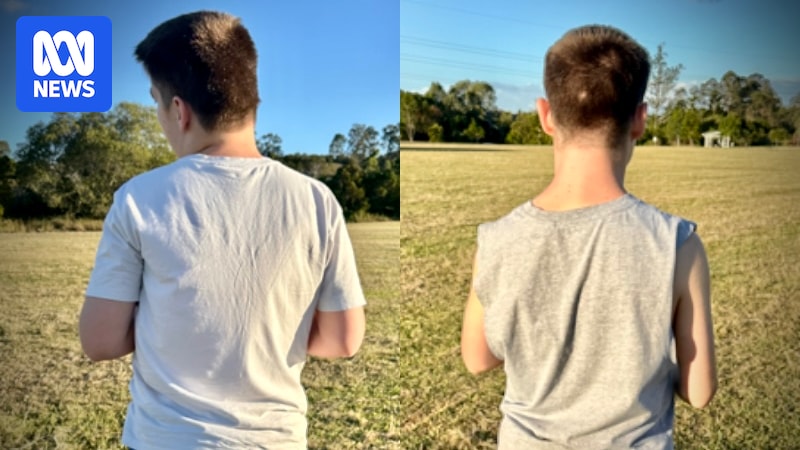
Queensland Health staff missed multiple opportunities — across 15 years — to report child safety concerns about two brothers with disabilities found severely malnourished and locked in a room naked, an official probe has found.
Warning: This story contains content that readers may find distressing.
A 48-page report by the Queensland Ombudsman has been released on the interactions between health care workers and the siblings, known by the pseudonyms Kaleb and Jonathon, who were discovered living in squalor in May 2020.
Emergency services also found their father, who was their carer, dead in the Brisbane home.
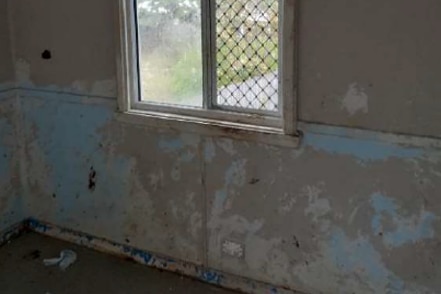
The brothers were found locked in a room. (Supplied: Royal Commission into Violence, Abuse, Neglect, and Exploitation of People with Disability)
The ombudsman’s report found Kaleb and Jonathan — who were diagnosed with “significant global development delay” and intellectual disability — missed multiple appointments with Queensland Health specialist services between 2005 and 2020.
However, health workers did not always follow up on their non-attendance.
Despite this, and reports to child protection services between 2000 and 2005, Queensland Health did not make any other referrals to Child Safety.
The shocking case was examined by the disability royal commission to determine how and why they experienced violence, abuse, neglect, and a deprivation of human rights during their childhood and adolescence.
The commission recommended that the Queensland government should apologise for omissions in preventing the harm they experienced.
A formal apology was delivered in September 2023.
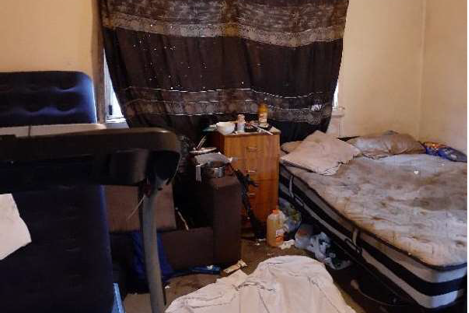
The royal commission recommended the Queensland government should apologise for omissions in preventing the harm the boys experienced. (Supplied: Royal Commission into Violence, Abuse, Neglect, and Exploitation of People with Disability)
The Queensland ombudsman has conducted an independent review into the powers and responsibilities of all departments and agencies that engaged with Kaleb, Jonathon, and their father.
That has resulted in three reports, including one into Queensland Health, which was tabled on Tuesday.
His first report in April 2025 to Education Queensland found special school staff had “almost daily interaction” with the boys during their school years.
Staff noticed Kaleb and Jonathon did not always have adequate clothing or food, sometimes needed bathing because they smelled of urine and dog odour, and at times passed “rocks and pebbles” in their bowel motions.
The staff made notes in the education department’s information system about the brothers, but only one student protection report was submitted to the department of child safety.
Ombudsman Anthony Reilly’s third report found the health department wanting across a range of areas, citing limited guidance and information to staff about recognising that missed health appointments could be a sign of neglect.
It said Queensland Health also did not ensure staff received “consistent and regular” child protection training.
“Queensland Health told us that one hospital and health service does not offer any child protection training,” the ombudsman noted.
His investigation also found the department allowed hospital and health services to store child protection information in paper-based or electronic forms, or a combination of both.
“If child protection information is stored in paper-based records, it is confined to one hospital and health service,” the report stated.
“This could limit a staff member’s ability to properly assess a child protection concern or to identify potential patterns of harm or cumulative harm.”
In his written response to the ombudsman, Queensland Health director-general David Rosengren said the department “continues to face challenges associated with information systems across a geographically dispersed and decentralised health system”.
“Queensland Health will continue efforts to progress the Digital Hospital Program, with the intent of transitioning all hospital and health services to a world-class, digitally enabled health system,” Dr Rosengren said.
The department told the ombudsman that in recent years, “almost one child in 10 has not attended an outpatient appointment”.
“This is higher than the rate of non-attendance for the general population, regardless of age,” the report said.
“We found this concerning.”
After their discovery in 2020, Kaleb and Jonathon — both now aged in their 20s — were treated in hospital for two weeks for severe malnutrition.
They were then released into state care with supports funded through the National Disability Insurance Scheme (NDIS).
The ombudsman’s office visited the brothers when preparing the latest report, which made 13 recommendations.
Among them were that Queensland Health introduce regular audits of a sample of outpatient appointments that children fail to attend.
The ombudsman also recommended the department assists hospital and health services to implement more contemporary information management systems.
Another recommendation calls for changes to procedures so that when staff identify a child protection concern, they consult with “their child protection unit if they have queries and it is practical to do so”.
“This should be promoted as best practice,” the report said.