
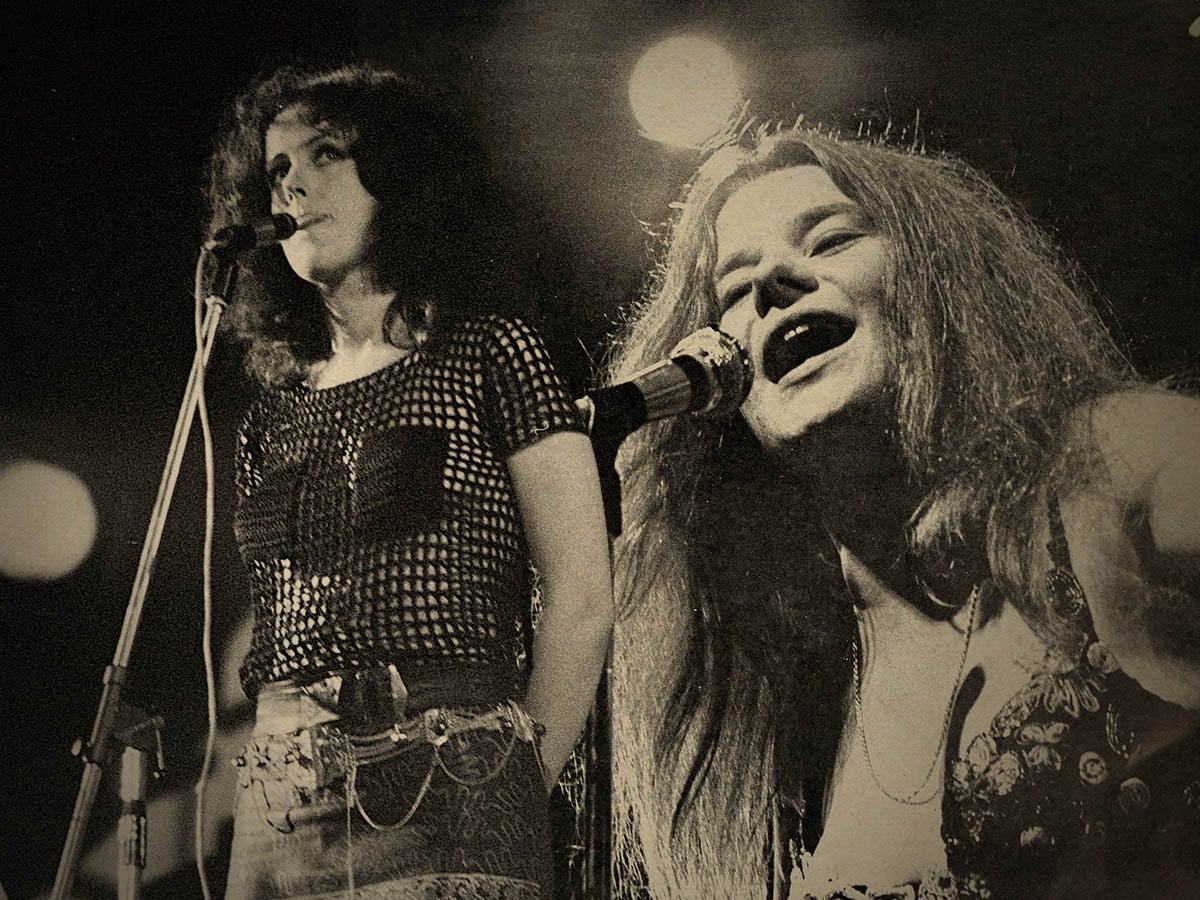
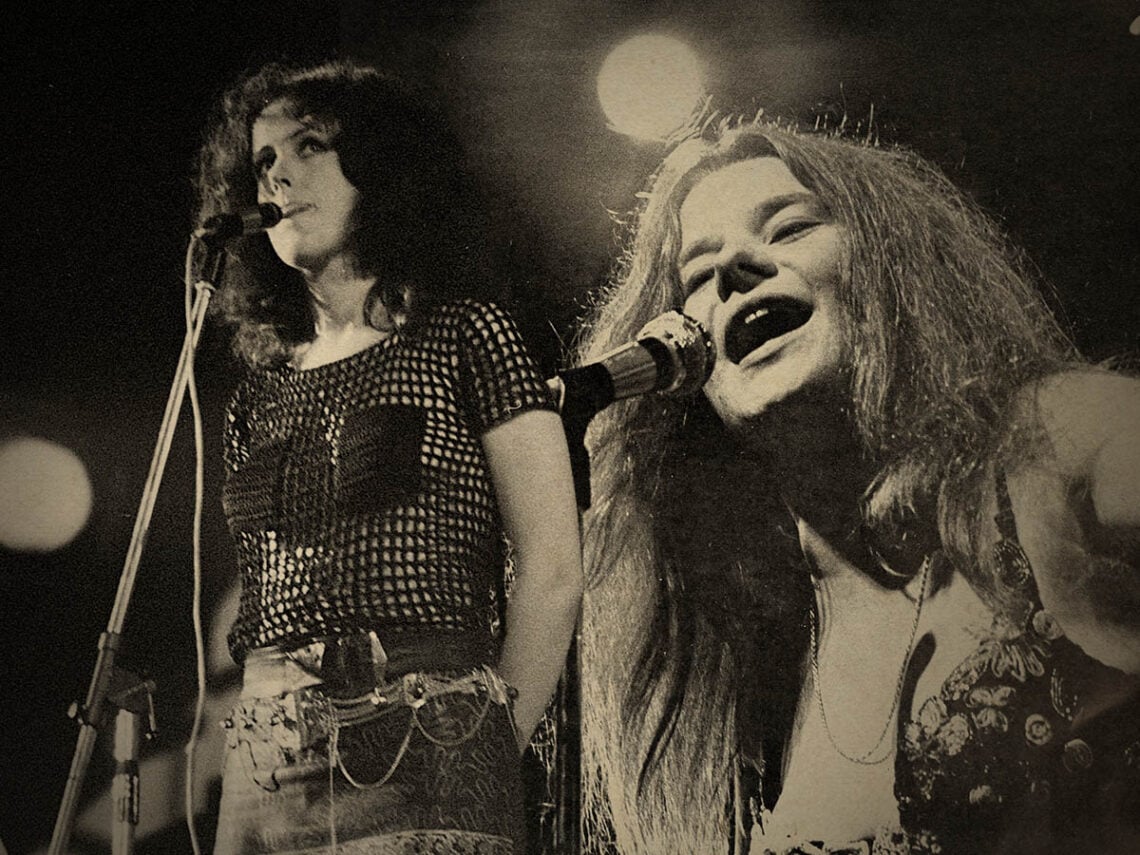
(Credits: Far Out / Fotopersbureau De Boer / Columbia)
Tue 14 April 2026 21:30, UK
“Print the legend,” Tony Wilson once famously declared, and although there are countless figures within rock and roll history who don’t require any embellishment, some are nonetheless misremembered and misrepresented: people like Janis Joplin, whose tragic and highly publicised death did something of a disservice to the life that preceded it.
As with any rock star who died before their time, Joplin’s life in retrospect lends itself quite easily to a fabled idea of a tragic hero and tortured artist who transformed the pain of her existence into some of the greatest art of the counterculture age.
While that description might appeal to Hollywood biopic writers, it is rather at odds with the recollection of people who were actually present during Joplin’s rise to prominence, and those who forged friendships with the legendary vocalist during that time, such as Grace Slick.
Two of the defining voices of the hippie age, Slick and Joplin, defined the sounds of the San Francisco scene during the late 1960s, and so it was only natural that the pair became close friends in spite of their fast-paced, rather anarchic lifestyles. Despite having very different voices, the two singers shared a lot in common in other areas of their lives, as Slick once recalled during a 2019 chat with Uncut.
“People who write books really get Janis wrong,” the Jefferson Airplane frontwoman declared. Dismantling the dark, tragic image that has been built up around her friend, Slick continued, “The woman I knew would cackle, she’d laugh so hard, and was fun to be with. Very vocal, very outspoken, very funny. Texas women tend to be like that.”
“They called us fire and ice. I was the ice and she was the fire,” she added. While Slick didn’t immediately delve into her archive of anecdotes to pluck out a situation that summed up that unique relationship between the pair, it doesn’t take much of a stretch to imagine the two hippie queens roaring around the Bay Area in Joplin’s psychedelic Porsche, typifying the fast-living, free-loving lifestyle that the acid age carved out.
With that tightly-knit friendship, there was an inevitable darker element. Namely, both vocalists were falling deeper into the clutches of addiction. Slick has always been open about her struggles with drugs and alcohol, and her behaviour eventually became destructive enough to have her booted out of Jefferson Starship in 1978, before becoming sober some years later. Tragically, Joplin wasn’t given quite so long to battle with her own addictions, succumbing to a heroin overdose in 1970.
Although that tragically short life tends to lead to an overly romanticised reputation in later years, Slick made sure to clarify that Joplin is more than deserving of her reputation as an icon of that countercultural age.
“I think she is more of a symbol of those times than I,” the vocalist shared. “She had more style. My voice is OK, but she really pushed the envelope.”
According to Grace Slick, then, the music world should remember Janis Joplin for what she truly was: a gifted vocalist and musical revolutionary, as well as somebody who knew how to enjoy life, as opposed to the tragic, tortured artist that she has so often been reduced to since her death.
