
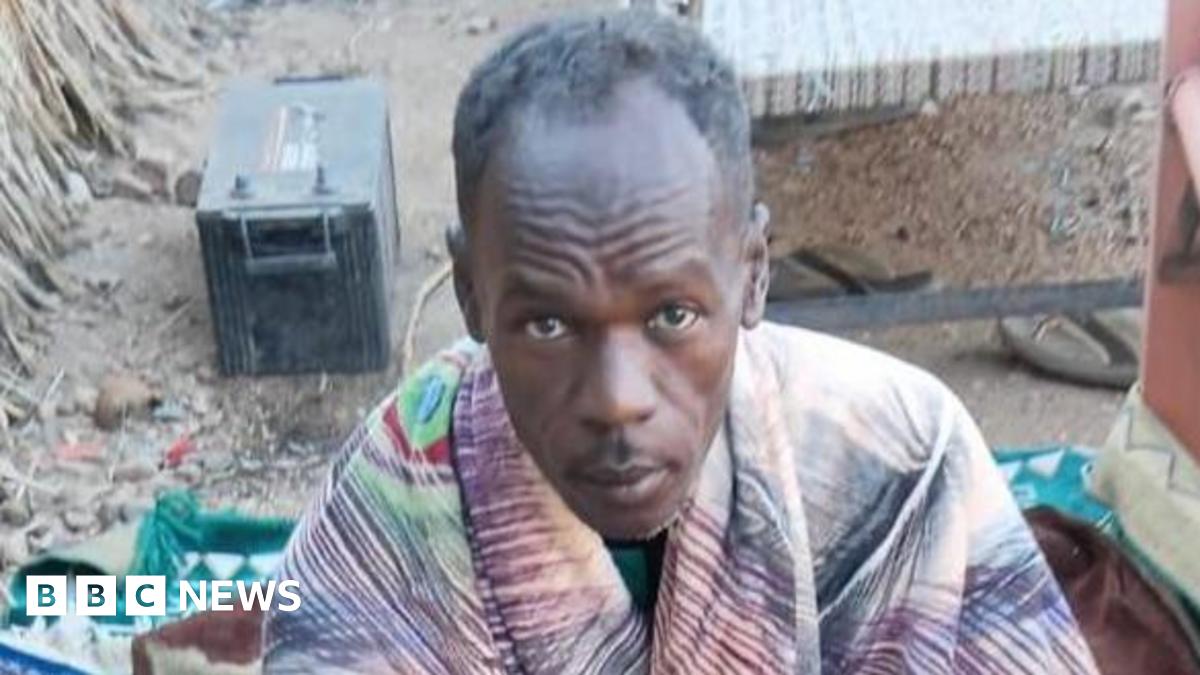
Suleiman prayed again when he finally reached Port Sudan, headquarters of the military-backed government for most of the war, in January this year after a journey of more than two months that took him through Chad.
“As soon as I arrived in Port Sudan, I prostrated in the airport and cried intensely because I never imagined I would reach a safe haven,” he said.
Although Suleiman had reached safety, he had lost all his identification documents. Retrieving them made him feel like a person again, but that was another kind of fight, with bureaucracy.
“I spent 22 days going around offices,” he says. “The last regrettable thing they said to me was to bring my mother. And to bring a number of witnesses. Thank God I have witnesses and I brought them, but what happens to the person who comes out of the war and has no one?”
Special procedures for exceptional cases announced by officials were just talk, Suleiman says, calling on the state to provide identification documents to people coming out of war zones without charge.
Suleiman is reconnected to the world, but, he says, after what he has witnessed and experienced, it feels like the world has not returned to him.
“There is no international law in the world,” he says bitterly.
“There is no such thing as the United Nations. If there were human rights international organisations, no day would pass in el-Fasher with people dying, hungry and thirsty, bombed by shells and drones.
“There is no ceasefire, no medicine, no basic necessities of life.”
The world has failed to meet Sudan’s enormous humanitarian need – hindered by the fighting, bureaucratic restrictions from both sides, and a lack of money – only 16.2% of the UN’s $2.87bn (£2.13bn) needs assessment for 2026 has been met so far.
And it has failed at efforts to stop the fighting.
A peace plan put forward last September by the so-called Quad nations – the United States and the regional countries most involved in the war, Saudi Arabia, the United Arab Emirates and Egypt – has gone nowhere.
In the meantime, the US envoy Massad Boulos is trying to get agreement on at least a humanitarian ceasefire.
The Sudan that Mohamed Suleiman now experiences is a different country – fragmented, with its peoples scattered. But, he says, telling their story gives him a sense of purpose.
“There are events that happened that no-one is left to narrate, and the memory remains only with us… until we die, we will convey the truth to correct the situation for the next generation, so they live dignified and honoured in their homeland.”